
What Do Water Bugs Look Like?
Knowing what water bugs look like allows homeowners and pest control professionals to correctly identify the type of pests. Misidentifying these bugs as another pest can lead to using ineffective control methods, wasting time and resources, and potentially worsening infestations.
Targeted Treatment Planning: Water bugs have specific habits, preferences, and vulnerabilities. They thrive in damp, dark areas like basements, crawl spaces, and drains. Recognizing them ensures that treatments are applied in the right locations and with products suited to this species, rather than relying on generic methods that may not penetrate their preferred habitats.
Early Detection Reduces Infestation Severity: Water bugs reproduce relatively slowly compared to other bugs, but they are still prolific in ideal conditions. Spotting them early allows for intervention before their population grows significantly, minimizing structural damage, contamination risks, and overall control costs.
Health and Sanitation Awareness: Water bugs are known carriers of bacteria, pathogens, and allergens. Being able to visually identify them helps homeowners and professionals understand the risk they pose to human health, prompting proper sanitation, exclusion, and monitoring strategies.
Monitoring and Verification of Control Measures: Correct identification allows people to track the effectiveness of treatments over time. By distinguishing water bugs from other pests, people can adjust control methods, ensuring that any residual or recurring infestations are addressed appropriately.
Public Education and Prevention: Homeowners who can recognize water bugs are better equipped to prevent future infestations. Awareness of the species encourages proactive measures such as sealing entry points, reducing moisture, and maintaining clean, dry environments.
Proper recognition of water bugs is the foundation of effective, safe, and efficient pest management. It directly impacts treatment success, cost efficiency, and health protection.
Learn more: Water Bugs vs Cockroaches
What Size Are Water Bugs?
Adult water bugs typically measure 1 to 1¼ inches (about 25–32 mm) in length. Males are usually slightly smaller and have short, non-functional wings, while females are broader, heavier, and wingless but still fall within the same general size range. Newly hatched nymphs are very small—only a few millimeters long—and grow through multiple molts before reaching adult size. When comparing them to household objects, adults are roughly the length of a quarter, making them one of the larger cockroach species encountered around homes.
How Big Can Water Bugs Get?
Water bugs can grow up to about 1¼ inches long, making them one of the larger household cockroach species. Females are typically broader and heavier than males, though both fall within the same maximum size range. Their substantial size, combined with their dark, glossy appearance, makes them relatively easy to recognize compared to smaller roach species.
How Small Can Water Bugs Be?
Newly hatched water bugs can be extremely small, typically starting at just 3–4 millimeters in length—about the size of a grain of rice. As early-stage nymphs, they appear dark, oval-shaped, and wingless, making them easy to overlook in damp or cluttered areas. Their small initial size allows them to hide in cracks, crevices, and drains, which is why early infestations often go unnoticed until nymphs mature into larger, more visible stages.
What Color Are Water Bugs?
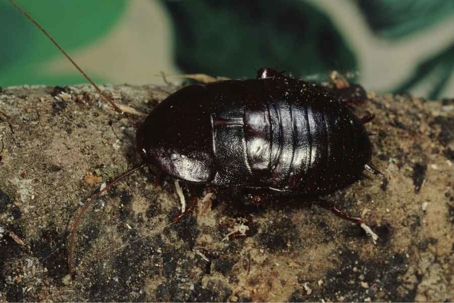
Water bugs are typically dark brown to nearly black in color. Adults often appear glossy, while younger nymphs tend to look more uniformly dark and matte. Their consistent dark coloration is a key feature that helps distinguish them from lighter brown cockroach species found in homes.
Are Water Bugs Black?
Water bugs appear black when they reach full adulthood, as their bodies develop a deep, glossy, almost jet-black coloration. Younger nymphs start out dark brown and gradually darken with each molt, becoming their darkest at the mature stage. Environmental factors like high humidity and age can also make adults look even darker, giving them that characteristic black appearance.
Are Water Bugs Brown?
Water bugs nymphs are typically brown during their early developmental stages. Newly hatched nymphs have a lighter, matte brown color that gradually darkens with each molt. This brown coloration is most noticeable in immature individuals before they reach full adult size, at which point they turn glossy black.
Are Water Bugs White?
Water bugs appear white or pale immediately after molting. During this brief stage, their new exoskeleton has not yet hardened or darkened, making them look almost ghostly. Within a few hours to a day, their bodies gradually darken to the typical brown of nymphs or black of adults as the exoskeleton fully sclerotizes.
What Shape Are Water Bugs?
Water bugs have a broad, oval, and somewhat flattened body shape, which allows them to squeeze into narrow cracks and crevices. Adults are wider and more rounded than most other cockroach species, with a slightly flattened dorsal surface. Nymphs share this oval form but appear more compact and less glossy, while the overall body shape remains consistent throughout development.
What Water Bugs Look Like
In addition to their size, shape, and color, water bugs have several distinctive features:
Wings: Adult males have short, stubby wings that do not fully cover the abdomen and cannot be used for flying. Adult females are wingless, with a smooth, rounded back.
Antennae: They possess long, slender, and segmented antennae that extend forward, often sweeping continuously as they move to sense their environment.
Legs: Their legs are spiny and adapted for crawling, with small claws at the tips to grip surfaces. Unlike some cockroaches, they are not strong jumpers.
Pronotum: The shield-like structure behind the head (pronotum) is smooth, rounded, and lacks the distinctive markings found on some other cockroach species.
Body Texture: Adults have a glossy, slightly oily-looking exoskeleton, while nymphs appear matte and less shiny.
Behavioral Cues: They move slowly compared to other cockroach species, often preferring damp, dark, and sheltered areas such as basements, drains, or leaf litter.
These characteristics, combined with their habitat preferences, make water bugs recognizable even without considering their size, shape, or color.
Do Water Bugs Have Wings?
Adult water bugs have limited wing development. Males possess short, stubby wings that cover only part of the abdomen and are incapable of flight, while females are completely wingless. Nymphs, regardless of sex, have no wings at all, making wing presence a feature of only mature males.
What Do Water Bug Nymphs Look Like?
Recognizing water bug nymphs allows homeowners and pest control professionals to identify an infestation before it becomes severe, as nymphs appear long before adults are present.
Species-Specific Identification: Nymphs of different cockroach species can look similar, but knowing the distinguishing features of water bug nymphs ensures accurate identification, which is critical for choosing effective control strategies.
Targeted Treatment Timing: Control measures are often more effective against nymphs because they are smaller, more exposed, and less mobile than adults. Early intervention can reduce the overall population more efficiently.
Monitoring Population Growth: By recognizing nymphs, professionals can track the development and spread of the infestation, evaluating whether treatments are working and adjusting strategies as needed.
Preventing Property Contamination and Health Risks: Nymphs, like adults, can carry bacteria and allergens. Identifying them early helps minimize health risks and sanitation issues before the population grows.
Treating an infestation at the nymph stage generally requires less effort, fewer chemicals, and lower costs than waiting until a large adult population has established.
What Water Bug Nymphs Look Like
The immature stages of water bugs, known as water bug nymphs, generally look similar to adult water bugs, but there are several differences between them:
Coloration: Adult water bugs are typically glossy black, while nymphs are dark brown to black but have a matte, less shiny appearance. Nymphs gradually darken with each molt until reaching adult coloration.
Wings: Adults show sexual dimorphism in wing development. Males have short, stubby wings that do not cover the abdomen, while females are wingless. Nymphs have no wings at all.
Size and Proportions: Adults are larger, broader, and heavier, with fully developed body proportions, whereas nymphs are smaller, more compact, and gradually increase in size through multiple molts.
Exoskeleton Hardness: Adult water bugs have a fully hardened, firm exoskeleton, giving them a glossy look. Nymphs have a softer exoskeleton that hardens progressively with each molt.
Behavioral Differences: Adults tend to move slowly but purposefully, often staying near damp areas, while nymphs are more likely to hide in tiny crevices and may be less visible due to their smaller size and lighter color.
Pronotum and Body Features: The pronotum in adults is fully developed, smooth, and shiny, whereas in nymphs it is smaller and less prominent, matching their overall undeveloped body structure.
Generally speaking, the larger the nymph, the closer to adulthood it is, and the smaller the nymph, the closer it is to where it hatched.
What Do Water Bug Eggs Look Like?
Recognizing water bug eggs (oothecae) allows homeowners and pest control professionals to identify infestations before nymphs or adults appear, enabling proactive management.
Accurate Species Identification: Water bug eggs have distinct shapes, sizes, and textures compared to other cockroach species. Knowing what they look like ensures correct species identification, which guides the most effective control strategies.
Targeted Treatment Planning: Eggs are often hidden in dark, damp areas. Being able to locate them allows treatments to be applied precisely where they are needed, increasing efficacy and efficiency.
Preventing Population Growth: Removing or treating eggs before they hatch prevents new nymphs from emerging, effectively reducing the overall population and slowing the spread of infestation.
Monitoring Infestation Status: Identifying eggs provides a way to track reproduction and infestation severity, helping pest control professionals assess whether interventions are working or need adjustment.
Detecting and addressing eggs early minimizes the time, effort, and chemical usage required to control an infestation, reducing long-term costs and damage.
What Water Bug Eggs Look Like
Water bug eggs are enclosed in an ootheca, a small, capsule-like case. The ootheca is elongated, slightly curved, and has a rigid, protective shell.
Size: Each ootheca typically measures about 8–10 mm in length and 3–4 mm in width, roughly the size of a small grain of rice.
Color: Freshly laid oothecae are light brown to tan in color, darkening slightly as they age.
Texture: The ootheca surface is smooth but segmented, with visible ridges along its length.
Contents: The eggs are small, whitish, and oval, but they are usually not visible unless the casing is opened.
Female water bugs typically deposit oothecae in dark, moist areas such as cracks, leaf litter, or near drains. The ootheca is often left loose rather than glued to a surface, unlike some other cockroach species.