
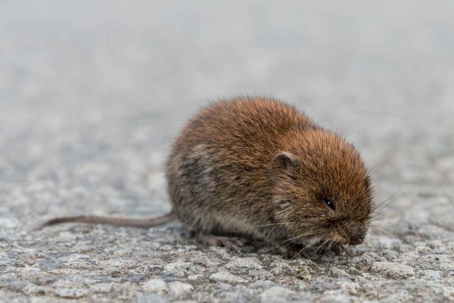
What Do Voles Look Like?
Many small mammals, such as moles, mice, rats, and shrews, can be mistaken for voles. Misidentifying the animal can lead to using the wrong control strategies, which wastes time, effort, and resources. Knowing what voles specifically look like ensures you target the correct species.
Behavior and Habitat Differences – Voles have unique behaviors and preferred habitats compared to other rodents. For example, they create surface runways through grass and leave small shallow burrows, unlike mice, which prefer more hidden nesting areas. Recognizing their appearance helps predict where damage is likely to occur.
Damage Assessment and Prevention – Voles cause specific types of damage, including gnawing bark on young trees, tunneling in lawns, and consuming roots. Correct identification allows for early intervention before significant harm occurs. Misidentification could result in overlooking the subtle signs unique to voles.
Targeted Control Measures – Different rodents require different management tactics. Voles may respond best to habitat modification, exclusion, or specific traps, whereas other rodents might require alternative approaches. Knowing what a vole looks like ensures that control methods are both effective and efficient.
Monitoring and Population Tracking – Voles reproduce rapidly and can quickly escalate from minor nuisance to major infestation. Being able to visually identify them allows for accurate population monitoring and timely action, which is critical in preventing widespread damage.
Certain control measures, such as rodenticides, also have legal restrictions or safety considerations. Identifying voles correctly ensures that the most appropriate, safe, and compliant methods are used, minimizing risks to non-target species, pets, and humans.
Learn more: Voles vs Mice || Voles vs Moles
What Size Are Voles?
Voles are small rodents, and their size can vary slightly depending on the species and geographic location. On average, voles typically measure around 4 to 8 inches (10 to 20 centimeters) in length, including their short tails. Here's a more detailed breakdown of their size:
Body Length – Voles are small rodents, typically ranging from 3 to 8 inches (7.5 to 20 cm) in total body length, including the tail. Their bodies are stout and compact compared to mice, giving them a stockier appearance.
Tail Length – One distinguishing feature is their short, barely noticeable tail, usually 1 to 2 inches (2.5 to 5 cm)long. This helps differentiate them from mice, which have proportionally longer tails.
Weight – Adult voles generally weigh between 1 to 3 ounces (30 to 90 grams), depending on the species and environmental conditions.
Comparison to Other Rodents – Compared to mice and rats, voles are smaller than rats but slightly more robust than mice, with a rounded snout and small, inconspicuous ears. Their size and shape make them particularly adapted for moving through grass and tunnels near the soil surface.
Voles are often mistaken for other small rodents like mice and shrews due to their size. However, their short tails and specific physical features, such as their stocky bodies and rounded ears, help distinguish them from similar-looking rodents.
How Big Are Voles?
Most common vole species reach a body length of 3 to 6 inches (7.5 to 15 cm). Some larger species can grow slightly longer, up to 8 inches (20 cm) including the tail.
Tail Length – Their tails remain short relative to their bodies, usually 1 to 2 inches (2.5 to 5 cm). Even in the largest species, the tail does not approach the length of a mouse or rat’s tail.
Weight – Typical adult voles weigh 1 to 3 ounces (30 to 90 grams), though the largest species may reach up to 4 ounces (115 grams).
Even at their maximum size, voles remain smaller and stockier than rats but more robust than mice. Their compact body and short tail remain key identifiers.
How Small Are Voles?
Even at their smallest, voles are stockier and more compact than mice of similar length, with a blunt snout, small eyes, and partially hidden ears.
Body Length – The smallest vole species can have a body length of about 3 inches (7.5 cm) from nose to base of tail.
Tail Length – Their tails remain very short, around 1 inch (2.5 cm) or slightly less in the smallest species.
Weight – Small voles may weigh as little as 1 ounce (30 grams), depending on species and age.
Their small size makes early infestations easy to overlook, especially when they are in dense grass or under snow, so recognizing tracks, runways, and plant damage is critical.
What Color Are Voles?
The coloration of voles can vary depending on the species, geographic region, and environmental factors. Voles exhibit a range of colors, primarily within the brown to gray spectrum, but some species and individuals may have different shades or variations. Here's a more detailed description of the typical colors of voles:
Brown: Many vole species have brown fur, which can vary from light tan to dark brown. This brown coloration helps them blend in with their natural habitat, such as grassy fields and meadows.
Gray: Some voles may have grayish fur, which can range from pale gray to a more muted, earthy gray-brown. This coloration is also adapted to their surroundings and provides camouflage.
Reddish or Chestnut: In certain species, such as the pine vole, you may observe a reddish or chestnut hue in their fur. This reddish coloration can be more prominent on the back and sides.
Underbelly: The underbelly of voles is typically lighter in color than their dorsal (back) fur. It is often a creamy or light gray color, which helps differentiate them from their darker upper parts.
Seasonal Variation: The color of a vole's fur can also vary seasonally. In some cases, voles may appear darker in winter to provide better insulation, and their fur may lighten during the warmer months.
Species Variation: Different vole species may exhibit slightly different color patterns. Meadow voles, prairie voles, and pine voles, for example, may have subtle variations in their fur colors and patterns.
The specific coloration of voles can be influenced by their habitat, genetics, and the local environment. While brown and gray are common colors, variations do exist among different species and populations.
What Shape Are Voles?
Voles have a stout, compact, and cylindrical body. Unlike mice, which are slender and elongated, voles appear more rounded and stocky.
Head Shape – Their head is short and slightly blunt with a rounded snout. The small, inconspicuous ears often appear hidden in their fur, giving the head a smooth, rounded appearance.
Tail Shape – Voles have a short, thick tail that tapers slightly but is much less prominent than the long, thin tails of mice.
Limbs and Feet – Their legs are short and strong, suited for digging shallow burrows and running through grass. The feet are small but broad enough to aid movement on soft soil.
From a distance, a vole’s silhouette is essentially a rounded oval or “cigar-shaped” body with a small tail and rounded head, making it distinct from the sharper, more angular outline of mice or shrews.
Do Voles Have Tails?
Yes, voles do have tails:
Length – Vole tails are very short, usually only 1 to 2 inches (2.5–5 cm), much shorter than a mouse or rat’s tail relative to body size.
Appearance – Their tails are thick and covered in fur, not long and skinny or scaly like a rat’s. This makes the tail appear almost as an extension of the body rather than a separate appendage.
Function – The tail is not used for balance as much as in climbing rodents; it primarily serves minor functions like temperature regulation and communication.
Visibility – Because the tail is so short and fur-covered, it may look almost hidden, especially when the vole is moving through grass or low vegetation.
Voles have tails, but they are short, furry, and unobtrusive, which is a useful identification feature.
What Voles Look Like
Fur Texture – Voles have dense, soft fur that often appears plush and uniform. Unlike rats, their fur doesn’t have a greasy or coarse appearance. The coat provides insulation for their ground-level lifestyle.
Ears and Eyes – Their ears are small, rounded, and partially hidden by fur, giving them a low-profile look. The eyes are also small and black, not prominent like in mice, which contributes to a more “compact” facial appearance.
Tail and Limbs – They have a short, barely visible tail and small, nimble feet adapted for digging shallow tunnels and running along grassy surfaces rather than climbing.
Facial Features – The snout is rounded and blunt, lacking the pointed, delicate nose of a house mouse. Their whiskers are relatively short but functional for navigating in low vegetation.
Behavioral Cues as Appearance Indicators – Even without considering color or size, voles often leave visible surface runways in grass, small burrow entrances, and gnaw marks on plant roots or bark, which are indirect visual clues to their presence.
When active, voles have a low-to-the-ground, waddling gait with short hops, in contrast to the more agile, bounding motion of mice. Their body looks steady and grounded rather than sprightly.
Do Voles Have Eyes?
Yes, voles do have eyes:
Size – Vole eyes are small and not very prominent, especially compared to mice, which often have large, round eyes.
Position – Their eyes are positioned on the sides of the head, giving them a wide field of vision to detect predators, but they do not protrude noticeably.
Functionality – Voles rely more on their sense of smell and touch (whiskers) than vision, so their eyes are adequate for low-light conditions but not highly developed for detailed sight.
Appearance – From a casual glance, their eyes might seem almost hidden within their fur, contributing to their low-profile, compact facial look.
Voles have eyes, but they are small, unobtrusive, and adapted more for detecting movement than detailed vision.
What Does A Vole Hole Look Like?
Vole holes, also known as burrow entrances or vole runways, are distinctive and can be recognized by several key characteristics. These holes are typically associated with the extensive tunneling and burrowing behavior of voles. Here's a more detailed description of what a vole hole looks like:
Size: Vole holes are relatively small, usually around 1 to 2 inches (2.5 to 5 centimeters) in diameter. The size can vary slightly depending on the vole species and the age of the burrow.
Shape: Vole holes are often rounded or slightly oval in shape. They are typically more cylindrical than the entrance holes of other rodents like gophers or groundhogs.
Location: Vole holes are commonly found in grassy areas, fields, meadows, gardens, and along the edges of woodlands. They are frequently located in areas with dense vegetation and are often hidden within the tall grass or ground cover.
Surrounding Area: The area around a vole hole may show signs of wear and tear, as voles use these openings to access their extensive tunnel systems. You may notice flattened grass or vegetation near the entrance.
Multiple Holes: Vole burrows often have multiple entrance holes, which are interconnected by a network of underground tunnels. These additional openings serve as escape routes and allow voles to access different parts of their territory.
No Mound or Pile: Unlike some burrowing rodents, voles do not create conspicuous mounds of soil or dirt around their burrow entrances. The openings typically appear as holes in the ground without a mound or pile of excavated material nearby.
Frequent Use: Voles are active year-round, so their burrow entrances remain in use throughout the seasons. This means you may find open holes regardless of the time of year.
Fresh Openings: When voles are actively using a hole, the entrance may appear well-maintained and free of debris. They often keep the area around the entrance clean.
While voles are responsible for these holes, they are not the only burrowing rodents in some regions. Other animals, such as moles and pocket gophers, may also create burrows and mounds that can resemble vole holes. To confirm the presence of voles, you may need to observe vole activity or examine the tunnels inside the burrow system.
Learn more: How To Get Rid Of Voles