
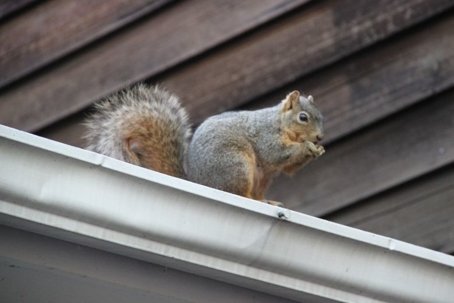
Squirrel Lifespan
Knowing the lifespan of a squirrel helps property owners understand whether ongoing activity is coming from the same animal or from multiple generations. Since most squirrels live only a few years in the wild, repeated noise or damage over time usually indicates new squirrels moving in—not a problem that “never got solved.”
Avoiding false assumptions about “waiting it out”: Some owners assume the issue will resolve itself when the squirrel dies. In reality, squirrels often reproduce quickly, and vacant territories or nests are rapidly reused. Understanding lifespan prevents costly delays and reinforces that passive waiting almost always leads to continued damage.
Improving financial planning and risk management: Squirrels can cause cumulative damage over their lifespan—chewing wiring (fire risk), destroying insulation, and compromising ventilation or roofing. Knowing how long squirrels typically live highlights why early intervention is far less expensive than repeated repairs over several years.
Making informed exclusion and repair decisions: Lifespan knowledge supports long-term solutions such as sealing entry points and reinforcing vulnerable areas. If a squirrel could live several years in an attic space, exclusion becomes a clear priority rather than repeated trapping or cosmetic repairs.
Understanding breeding cycles and escalation risks: Because squirrels reach maturity quickly and can reproduce multiple times within their short lifespan, a single squirrel presence can turn into a family problem within one season. Property owners who understand this are more likely to act before nesting and population growth increase damage and noise.
Protecting business continuity and reputation: For commercial properties, squirrels can disrupt operations, damage inventory, and create health or safety concerns. Lifespan awareness clarifies that unmanaged squirrel issues are not temporary inconveniences but long-term liabilities if ignored.
Knowing the lifespan of a squirrel helps property owners recognize that squirrel problems are predictable, repeatable, and solvable—but only when addressed strategically and promptly, not emotionally or reactively.
How Long Do Squirrels Live?
The lifespan of a squirrel can vary depending on several factors, including the species, environmental conditions, and predation risks:
What Is The Lifespan Of An Eastern Gray Squirrel?
The eastern gray squirrel typically has a relatively short lifespan in the wild due to predators, disease, vehicles, and environmental hazards. Most eastern gray squirrels live about 3 to 6 years in natural outdoor conditions, with a large percentage dying within their first year of life. Juvenile mortality is especially high, which is why the species relies on frequent breeding to maintain stable populations.
In protected or low-risk environments—such as urban neighborhoods with abundant food and few predators—some eastern gray squirrels live longer. It is not uncommon for individuals in these settings to reach 8 to 10 years of age, and in rare, well-documented cases, eastern gray squirrels have lived up to 12 years.
In captivity, where threats are minimized and food and medical care are consistent, eastern gray squirrels can live even longer, sometimes reaching 15 to 20 years. These extended lifespans, however, are not representative of what occurs in attics, trees, or other outdoor environments and should not be used to judge how long a squirrel-related problem may persist on a property.
What Is The Lifespan Of A Flying Squirrel?
Flying squirrels have a longer average lifespan than many people expect, largely because of their nocturnal behavior, agility, and ability to avoid predators. In the wild, most flying squirrels live about 4 to 6 years, though many do not survive their first year due to predation, harsh weather, or competition for nesting sites.
When flying squirrels establish themselves in protected environments—such as wall voids, attics, or other sheltered structures—their lifespan often increases. In these low-risk settings, it is common for flying squirrels to live 8 to 10 years, and some individuals may survive even longer.
In captivity, where threats are minimal and food is consistent, flying squirrels have been recorded living up to 12 to 15 years. As with other wildlife species, these extended captive lifespans are not reflective of outdoor conditions but help explain why flying squirrel infestations can persist for many years if structural access points are not permanently sealed.
What Is The Lifespan Of A Fox Squirrel?
Fox squirrels, the largest species of tree squirrel in North America, have a lifespan that varies significantly depending on their environment. In the wild, most fox squirrels live around 6 to 8 years, though high juvenile mortality and threats from predators, vehicles, and disease mean many do not survive past their first few years.
In urban or suburban areas, where food is plentiful and predators are fewer, fox squirrels can live longer, often reaching 10 to 12 years. Rarely, in exceptional circumstances or captivity, individuals have been known to live up to 18 years. Understanding these lifespan ranges is important for property owners, as it helps explain why fox squirrel activity—such as nesting in attics or raiding bird feeders—can be a persistent, long-term issue if access points are not properly secured.
What Is The Lifespan Of A Ground Squirrel?
Ground squirrels, which include species such as the thirteen-lined ground squirrel and the California ground squirrel, generally have relatively short lifespans compared to tree-dwelling squirrels. In the wild, most ground squirrels live about 2 to 6 years, with many succumbing to predators, disease, or environmental hazards within their first year. High juvenile mortality is common, making population turnover fairly rapid.
Some ground squirrels in protected or low-risk environments—such as burrows on private property or research settings—can live up to 8 years, though such cases are uncommon. Unlike tree squirrels, ground squirrels do not typically enter human structures, but understanding their lifespan is important for landowners and pest managers because it influences population dynamics, breeding cycles, and the timing of control measures.
What Is The Lifespan Of A Red Squirrel?
Red squirrels, which are smaller and more territorial than many other squirrel species, generally have a relatively short lifespan in the wild. Most red squirrels live around 3 to 5 years, with high juvenile mortality contributing to population turnover. Predation, harsh weather, food scarcity, and disease are the main factors limiting their natural lifespan.
In protected or low-risk environments, such as urban parks or areas with abundant food and few predators, red squirrels can occasionally live up to 7 or 8 years. In captivity, where threats are minimized and nutrition is consistent, some individuals have been known to survive 10 years or slightly longer. Understanding the lifespan of red squirrels helps property owners and wildlife managers anticipate population cycles and plan for coexistence or control measures when necessary.
What Impact Does Disease Have On Squirrel Lifespans?
Disease is one of the primary factors limiting squirrel lifespans in the wild. Pathogens such as mange mites, bacterial infections, parasites, and viral diseases can significantly increase mortality, often killing juveniles before they reach reproductive age or shortening adult lifespans by several years. A squirrel population heavily affected by disease may see its average lifespan drop well below the species’ typical range.
Impact on reproductive success: Illness can reduce fertility and the ability to care for young. Squirrels weakened by disease may produce smaller litters or fail to successfully rear offspring, which indirectly affects population stability even if some adults survive. This can cause a local population to experience frequent turnover and irregular growth patterns.
Behavioral changes and vulnerability: Diseased squirrels often exhibit lethargy, disorientation, or unusual aggression. These behavioral changes increase vulnerability to predators, accidents, and environmental stressors, further reducing effective lifespan. In urban environments, sick squirrels may also enter homes or structures more readily, creating nuisance issues for property owners.
Spread of zoonotic or secondary diseases: Diseases in squirrels can indirectly shorten lifespan through secondary infections. For example, parasitic infestations can weaken the immune system, making squirrels more susceptible to bacterial or viral pathogens. Some diseases, such as leptospirosis or tularemia, can also pose risks to humans or pets, prompting intervention that removes affected squirrels from the population.
Population-level regulation: While disease can be devastating for individual squirrels, it also serves as a natural regulator of populations. In dense or overpopulated areas, disease outbreaks often reduce numbers and prevent long-term overcrowding, which indirectly affects lifespan by limiting competition for food and nesting sites.
Disease not only shortens the life of individual squirrels but also influences reproduction, behavior, and population dynamics, making it a critical factor in understanding both squirrel ecology and effective management strategies.
What Impact Do Environmental Factors Have On Squirrel Lifespans?
Food availability and nutrition: Squirrels rely on nuts, seeds, fruits, and vegetation, and their lifespan is strongly influenced by the abundance and consistency of food. In areas with scarce or seasonal food, malnutrition can reduce growth, weaken immune systems, and increase susceptibility to disease. Conversely, urban or park environments with plentiful human-provided food can extend lifespan by improving overall health and reproductive success.
Climate and seasonal extremes: Harsh weather—such as severe winters, droughts, or storms—can directly shorten squirrel lifespans. Cold temperatures increase energy demands, leading to starvation if fat reserves are insufficient. Excessive heat can also cause dehydration and stress. Seasonal fluctuations affect juvenile survival rates and can result in higher mortality during extreme conditions.
Habitat quality and nesting safety: Availability of secure nesting sites—trees, tree cavities, or roof voids—plays a major role in lifespan. Squirrels with safe, stable shelters avoid exposure to predators and harsh weather, reducing stress and injury risk. Conversely, habitat loss or degradation forces squirrels into riskier areas, increasing mortality.
Population density and competition: Environmental carrying capacity affects how long squirrels live. High-density areas increase competition for food and nesting sites, raising stress levels and reducing survival, especially for juveniles and weaker individuals. Lower-density habitats allow more consistent access to resources, improving health and longevity.
Environmental factors interact to determine both the average and maximum lifespans of squirrels. Understanding these influences is essential for predicting population trends and designing effective management strategies.
What Impact Do Humans Have On Squirrel Lifespans?
Humans often inadvertently extend squirrel lifespans by providing abundant, high-calorie food sources. Bird feeders, trash, gardens, and intentional feeding reduce the risk of starvation and improve overall health, allowing some squirrels to survive several years longer than they would in the wild. Urban and suburban squirrels often live longer than rural counterparts for this reason.
Exposure to hazards: Conversely, humans create risks that can shorten lifespans. Vehicles, power lines, and roads contribute to significant mortality, especially among juveniles. Squirrels may also encounter harmful chemicals, such as pesticides or rodenticides, which can weaken or kill them. Improperly sealed attics and structures can lead to entrapment or injuries.
Habitat alteration: Urbanization, deforestation, and construction reduce natural habitats, limiting safe nesting sites and forcing squirrels into high-risk environments. Loss of tree cover increases vulnerability to predators and weather extremes, reducing lifespan. On the other hand, some urban areas provide artificial nesting options, such as attics or eaves, which can extend life if access is maintained safely.
Disease dynamics: Human activity can influence disease exposure. High-density urban populations and food provisioning can facilitate the spread of parasites or viral infections, potentially reducing lifespan. Conversely, veterinary intervention or wildlife rehabilitation can prolong life in individual squirrels that are injured or ill.
Behavioral and ecological adaptation: Long-term human presence encourages behavioral changes that may indirectly affect lifespan. Squirrels in cities often become less wary of predators and more active during daylight, which can increase risk. However, adaptation to human-modified environments may also reduce predation and starvation risk, allowing certain individuals to live longer than they would in entirely natural settings.
Humans have a dual impact: they can both increase and decrease squirrel lifespans depending on whether the environment is made safer and more resource-rich, or more hazardous and stressful.
What Impact Does Predation Have On Squirrel Lifespans?
Predation is one of the most immediate and significant factors limiting squirrel lifespans. Birds of prey (hawks, owls), mammals (foxes, bobcats, domestic cats), and snakes frequently target juvenile and adult squirrels. Many squirrels never reach their species’ maximum potential age because they fall victim to predators early in life, with first-year mortality often exceeding 50% in some populations.
Juvenile vulnerability: Young squirrels, particularly those recently weaned, are especially susceptible to predation. Their smaller size, lack of experience, and dependence on trees or ground cover make them easy targets. High juvenile mortality caused by predators ensures rapid population turnover, which affects the average lifespan of the species in the wild.
Behavioral adaptations and trade-offs: The threat of predation shapes squirrel behavior, which indirectly influences lifespan. Squirrels may spend more time in trees, reduce ground foraging, or increase vigilance, which conserves life but may reduce feeding efficiency. Conversely, risk-taking in search of food can increase predation chances, shortening life expectancy.
Population regulation: Predation acts as a natural population control mechanism. While it reduces individual lifespans, it prevents overcrowding, competition for food, and disease spread. In areas with high predator density, squirrels tend to have shorter lifespans but stable populations, whereas in low-predator urban areas, squirrels often live longer and reproduce more, potentially leading to nuisance issues.
Indirect effects on survival: Predation risk also affects nesting choices and habitat selection. Squirrels forced to nest in suboptimal locations to avoid predators may face harsher weather, lower food access, or human conflicts, which can further reduce lifespan.
Predation is a critical factor that both directly limits the lifespan of individual squirrels and indirectly influences their behavior, reproductive strategies, and population dynamics, making it one of the most important ecological forces shaping their life history.