
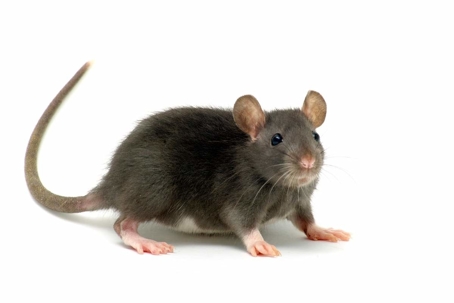
What Do Rats Look Like?
Knowing what rats look like helps distinguish them from mice, squirrels, voles, or even young opossums. Misidentification can lead to using the wrong control methods, which wastes time, money, and effort while allowing the real problem to worsen.
Rats present serious health risks that require fast response: Rats are known carriers of diseases such as leptospirosis, salmonella, hantavirus, and rat-bite fever. Recognizing a rat early allows for quicker intervention, reducing the risk of disease transmission to people, pets, and livestock.
Rats cause significant structural and property damage: Rats have strong incisors and can chew through wood, drywall, insulation, plastic, and even electrical wiring. Identifying a rat infestation early helps prevent fire hazards, water damage, and expensive structural repairs.
Different rat species behave differently: Norway rats, roof rats, and other species have distinct appearances and habits. Knowing what rats look like helps determine where they nest, how they travel, and what control strategies will be most effective.
Early detection limits population growth: Rats reproduce rapidly. Spotting one rat often means others are nearby. Being able to visually identify a rat enables quicker action before a small problem becomes a large, entrenched infestation.
Effective pest control depends on proper recognition: Professional-grade control strategies rely on accurate identification of the pest species. Knowing what rats look like supports better decisions about trapping, exclusion, sanitation, and long-term prevention.
Public safety and compliance considerations: In many environments—such as food facilities, rental properties, and commercial buildings—rat activity can lead to health code violations or legal liability. Correct identification helps ensure proper documentation and compliance with regulations.
When people know what rats look like, they are more likely to recognize warning signs such as rat droppings, rub marks, and gnaw damage. This awareness leads to better sanitation practices and fewer infestations overall.
What Size Are Rats?
Understanding average rat size helps with proper trap selection, bait placement, exclusion gaps, and identifying entry points, since rats can squeeze through openings as small as ¾ inch:
Average body length (excluding the tail): Most adult rats measure 7 to 10 inches long from nose to the base of the tail. Size varies by species, age, and food availability.
Tail length: A rat’s tail is typically as long as, or slightly longer than, its body, adding another 7 to 10 inches. This makes the total length of an adult rat commonly 14 to 20 inches.
Average weight: Adult rats generally weigh 8 ounces to 1 pound, though well-fed individuals can exceed this range. Large Norway rats may weigh 1.5 pounds or more in ideal conditions.
Juvenile vs. adult confusion: Young rats are often mistaken for mice. However, even juvenile rats have proportionally larger feet and heads than mice and grow rapidly, reaching near-adult size in just a few months.
Access to consistent food, water, and shelter directly affects rat size. Urban and agricultural environments often produce larger rats than rural or resource-poor areas.
How Big Can Rats Get?
Rats can grow significantly larger than most people expect, especially under favorable conditions. The largest commonly encountered species in urban and suburban environments is the Norway rat. Adult Norway rats typically reach 9 to 11 inches in body length, with an additional 7 to 9 inches of tail. Well-established individuals frequently weigh between 1 and 1.5 pounds, and exceptional specimens have been documented at nearly 2 pounds when food and shelter are abundant.
Roof rats generally appear longer and more slender than Norway rats, though they are usually lighter in weight. Large adult roof rats can measure 8 to 10 inches in body length, with tails that often exceed the length of their body. Their weight usually ranges from 6 to 12 ounces, but older, well-fed individuals can approach or exceed 1 pound, particularly in warm climates where breeding occurs year-round.
In rare cases and controlled environments, rats have been recorded at extreme sizes due to genetics, abundant nutrition, and lack of predators. While sensational reports of “cat-sized” rats are exaggerated, it is realistic for mature rats in ideal conditions to reach a total length of 18 to 20 inches from nose to tail. These unusually large rats are typically older adults that have survived long enough to fully mature and dominate food sources.
Size also varies based on environment and human activity. Urban, agricultural, and food-rich settings tend to produce larger rats than rural or resource-limited areas. Continuous access to high-calorie food waste, livestock feed, or commercial refuse allows rats to grow larger, live longer, and reproduce more successfully, which increases the likelihood of encountering oversized individuals.
How Small Can Rats Be?
Rats can be surprisingly small, particularly at early life stages, which often leads to confusion with mice. Newborn rats, called pups, are extremely small—typically only about 1 to 2 inches long, hairless, pink in color, and weighing just a few grams. At this stage they are entirely dependent on the mother and are usually hidden deep within nesting material.
As young rats develop, they grow rapidly. By two to three weeks of age, juvenile rats are furred, mobile, and generally measure about 3 to 4 inches in body length, not including the tail. At this size they are frequently mistaken for adult mice, but their larger feet, thicker tails, and broader heads are key differences.
Even among adults, some rats remain relatively small. Fully grown roof rats and smaller adult females may have body lengths of only 6 to 7 inches and weigh as little as 5 to 6 ounces, especially in environments with limited food or high competition. These small adults are still capable of breeding and causing damage despite their size.
Environmental factors play a major role in how small rats remain. Limited access to food, high population density, disease, and environmental stress can all restrict growth. However, even the smallest rats are highly adaptable and can exploit very small openings, with juveniles able to pass through gaps as small as ½ inch, making early identification and exclusion especially important.
What Color Are Rats?
- Brown and gray tones are the most common: Most wild rats range from light brown to dark brown or gray. Norway rats typically appear brownish-gray with coarse fur, while roof rats are often darker gray to nearly black. These colors provide natural camouflage in urban and outdoor environments.
Black and very dark gray rats occur frequently: Some rats, especially roof rats, can appear almost solid black. This darker coloration is more common in warmer climates and older individuals, and it often causes people to describe them as “black rats,” even when the species identification is uncertain.
Tan, buff, and reddish-brown variations exist: Rats can also appear tan, sandy, or reddish-brown depending on genetics and environmental factors such as dust, oil, and staining from their surroundings. These lighter shades are still normal for wild rats and should not be considered unusual.
White, cream, and albino rats are rare in the wild: Pure white rats or albino rats with pink eyes are almost exclusively domesticated or laboratory animals. In outdoor settings, these colors offer poor camouflage and greatly reduce survival, making them extremely uncommon in natural infestations.
Mixed or mottled coloration can occur: Some rats have lighter bellies with darker backs, or subtle color banding in the fur. This contrast is normal and helps distinguish rats from mice, which often have more uniform coloration.
As rats age, their fur may become darker, duller, or patchy. Exposure to grease, dirt, moisture, or chemicals can also alter their apparent color, making accurate identification dependent on more than color alone.
What Shape Are Rats?
Rats have a long, cylindrical body that tapers slightly at the head and tail. This streamlined shape allows them to move quickly, squeeze through tight spaces, and fit into narrow crevices. Their flexible spine enhances their ability to bend and twist while navigating obstacles.
Pointed snout: A rat’s head is characterized by a pointed, slightly conical snout. This shape helps them forage efficiently, explore small openings, and gnaw with precision. The snout houses sensitive whiskers that aid in spatial awareness in the dark.
Rounded body contours: While the overall body is elongated, rats have rounded shoulders, hips, and midsections. This gives them a stocky appearance, especially Norway rats, which appear more robust than the slender roof rats.
Long, cylindrical tail: The tail is typically as long as or longer than the body and is thin, flexible, and mostly hairless. Its cylindrical shape aids in balance, thermoregulation, and climbing.
Proportional limbs with small feet: Rats have short, strong limbs with clawed toes. The forelimbs are smaller and used for grasping, while the hind limbs are longer and muscular for jumping and running. The limbs blend seamlessly with the elongated body, enhancing agility.
he combination of a tapered head, elongated torso, cylindrical tail, and flexible limbs gives rats a body shape optimized for climbing, burrowing, and navigating complex environments. This shape is a key factor in their ability to infest buildings, vehicles, and storage areas.
What Rats Look Like
In addition to their size, color, and the shape of their body, rats also have the following characteristics:
Eyes: Rats have relatively small, dark, beady eyes that provide limited vision, particularly in bright light. Their eyesight is adapted more for detecting movement than detail, and they rely heavily on other senses in dim or dark environments. Roof rats often have slightly larger, more prominent eyes than Norway rats, reflecting their climbing and nocturnal habits.
Ears: Rats possess large, thin, rounded ears relative to their head size. Their ears are sensitive to high-frequency sounds, allowing them to detect predators, communicate with other rats, and locate prey or food. Roof rats typically have larger ears than Norway rats, which contributes to their more alert and agile appearance.
Whiskers (vibrissae): Prominent, long whiskers line both sides of a rat’s snout. These whiskers are highly sensitive and help the rat navigate in complete darkness, judge gaps, and detect textures. The whiskers provide tactile feedback that is crucial for burrowing, climbing, and exploring tight spaces.
Teeth: Rats have sharp, ever-growing incisors that are yellow-orange in color due to iron in the enamel. These teeth are strong enough to gnaw through wood, plastic, and even soft metals. Constant gnawing is necessary to prevent overgrowth and maintain dental health.
Tail features: Beyond its cylindrical shape, a rat’s tail is scaly, hairless or sparsely haired, and flexible. It functions in balance during climbing, in thermoregulation to release heat, and sometimes as a tactile guide.
Fur texture: While excluding color, rat fur is generally coarse and dense. Norway rats have thicker, rougher fur, while roof rats tend to have sleeker, softer fur. The fur provides insulation, protection, and some resistance to moisture.
Claws and paws: Rats have small, dexterous paws with sharp claws. Their forepaws are highly manipulative, used for holding food, grooming, and climbing, while the hind paws provide traction and jumping power.
Tail-to-body ratio cues: Even without considering length, the relative thinness and scaly texture of the tail are distinctive features. The tail gives rats a unique silhouette compared with other small rodents like mice or squirrels.
These characteristics can help positively identify a rat in situations where size, color, and overall body shape aren't enough.
Learn more: How To Get Rid Of Rats
Last Updated: 12/16/2025