Black Widow Spiders
Are Black Widow Spiders Harmful?
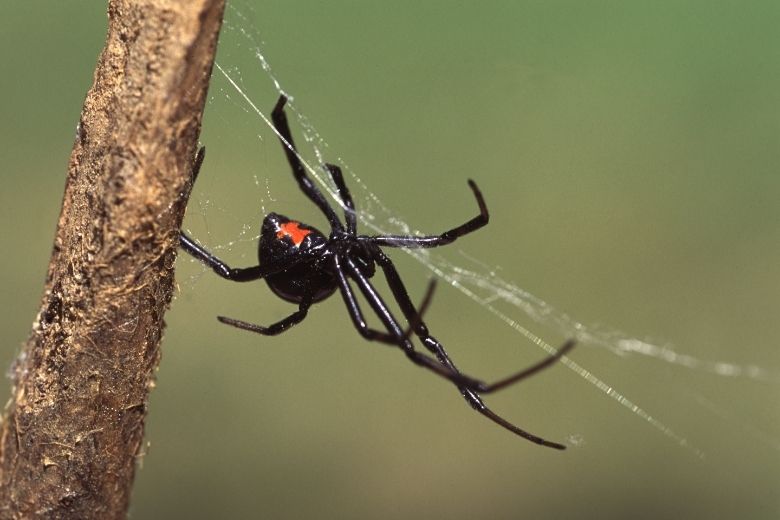
Black widow spiders (Latrodectus spp.) are widely known for their reputation as dangerous arachnids. There are several reasons why they are considered dangerous:
- Venomous Bite: Black widows possess venom that is neurotoxic. Their bites can cause severe pain and discomfort at the site of the bite, along with a variety of systemic symptoms. While fatalities are rare, severe envenomations can be life-threatening, especially in vulnerable individuals such as the very young, elderly, or those with compromised immune systems.
- Neurotoxic Effects: The venom of black widows contains neurotoxins, including latrotoxins. When injected into a human, it can lead to muscle pain and spasms, abdominal cramping, nausea, sweating, and a variety of other symptoms, collectively known as latrodectism. Severe cases can result in high blood pressure, respiratory distress, and even unconsciousness.
- Painful Symptoms: Black widow bites are exceptionally painful, and the pain often spreads from the bite site to other parts of the body. This intense discomfort can persist for several hours to a few days.
- Systemic Reactions: In addition to pain, black widow bites can lead to systemic symptoms such as fever, chills, headaches, and weakness. These symptoms can be particularly distressing, especially in children and the elderly.
- Allergic Reactions: While allergic reactions to black widow bites are rare, they can occur and, in some cases, may lead to severe anaphylactic responses. Allergic individuals should be especially cautious.
- Secondary Infections: Bites can become infected, especially if they are not treated properly. The venom can also damage tissue at the site of the bite, which may require medical attention to prevent secondary infections.
- Emotional Impact: The fear of black widow spiders can have a significant psychological impact on individuals. The knowledge that a venomous spider can be found in their environment can cause considerable anxiety and stress.
- Economic Impact: Black widow spiders are considered pests in some regions due to their venomous nature and potential to harm humans. Their presence can impact outdoor activities and may necessitate pest control measures, leading to economic costs.
- Preventive Measures: Due to the danger they pose, it is essential to take preventive measures to avoid black widow bites. These measures may include keeping outdoor areas clear of debris, shaking out shoes and clothing before putting them on, and seeking our professional pest control if an infestation is suspected.
Black widow spiders are considered dangerous due to their potent venom, the painful and sometimes severe symptoms of their bites, the risk of systemic reactions, potential for allergic responses, and the psychological and economic impact of their presence. While fatalities are rare, their bites should be taken seriously, and immediate medical attention is recommended in case of a bite, particularly in high-risk individuals.
Learn more: What Do Black Widow Spiders Look Like? || What Do Black Widow Spiders Eat?
Black Widow Spider Removal
Getting rid of black widow spiders is important primarily because of the serious health risks they pose, combined with their ability to establish themselves quickly in residential and commercial spaces. Here’s why black widow spider control is crucial:
- Venomous Bite: Black widow spiders are among the most venomous spiders in North America. While their bites are rarely fatal to healthy adults, they can cause severe medical issues. Symptoms can include intense pain and muscle cramps, nausea and vomiting, sweating and chills, rapid heart rate and elevated blood pressure, and severe discomfort lasting for hours to days. Children, elderly individuals, and people with compromised immune systems are particularly vulnerable, and in rare cases, bites can be life-threatening if left untreated.
- Hidden and Hard-to-Detect Habits: Black widows are reclusive and often live in dark, undisturbed areas like garages, sheds, basements, woodpiles, and under outdoor furniture. This makes accidental encounters more likely, especially when reaching into storage areas. Because they are small and non-aggressive, people often don’t notice them until a bite occurs.
- Rapid Reproduction: Female black widows can produce multiple egg sacs containing hundreds of eggs each. If left unchecked, a small infestation can quickly escalate, increasing the risk of bites around your property.
- Property and Business Liability: For homeowners, unaddressed infestations increase the risk of family members or guests being bitten. For businesses, particularly those with public access (like warehouses, restaurants, or offices), the presence of black widows can create liability issues and potentially violate health and safety standards.
- Psychological Stress: Even if an actual bite doesn’t occur, knowing black widows are present can create anxiety and affect how people use certain areas of a property. It can lead to avoidance of storage spaces, sheds, or workshops.
- Preventing Secondary Pests: Black widows feed on other insects, which might seem beneficial, but a healthy insect population can attract other pests, including rodents. Removing black widows in the context of broader pest control helps maintain overall safety and sanitation.
Due to their potent venom, tendency to hide in human-use areas, and ability to multiply rapidly, black widow spiders should not be ignored. Prompt and professional removal minimizes health risks, prevents infestation growth, and ensures both physical safety and peace of mind.
Learn more: How To Get Rid Of Black Widow Spiders
Black Widow Spider Control
Hiring our professional pest control for black widow spiders is strongly recommended because of the serious risks, challenges, and specialized knowledge involved in handling these dangerous spiders. Here’s why our professional services are the safest and most effective option:
- Safety First: Black widow spiders are venomous, and their bites can cause severe pain, muscle cramps, nausea, and in rare cases, life-threatening complications, especially in children, elderly individuals, or those with compromised health. Our professionals are trained to safely locate and remove these spiders without risking bites. We also use protective equipment and techniques to minimize exposure.
- Accurate Identification: Not every dark-colored spider is a black widow. Misidentification can lead to ineffective treatments or unnecessary concern. Our pest control professionals can accurately identify black widows, differentiate them from other harmless spiders, and determine the scope of the infestation.
- Thorough Inspection: Black widows are nocturnal and shy; they often hide in dark, undisturbed areas like garages, basements, and sheds, woodpiles and cluttered storage areas, and under outdoor furniture or eaves. Our professionals know exactly where to look and can identify both adult spiders and their egg sacs, which are critical to remove for complete control.
- Effective Eradication: Black widows are resilient and often difficult to eliminate with DIY sprays alone. Our professionals have access to specialized insecticides that are effective specifically for spiders, tools to safely reach hidden areas, and strategies to target egg sacs and prevent re-infestation. This ensures that the problem is dealt with completely, not just temporarily.
- Prevention and Long-Term Control: Our professionals don’t just remove existing spiders—we implement preventative measures such as sealing cracks and gaps in the home, reducing clutter and debris around the property, and setting up safe barrier treatments. These steps greatly reduce the likelihood of black widows returning, providing long-term peace of mind.
- Minimizes Risk of DIY Mistakes: Attempting to handle black widows without training can be dangerous. Common mistakes include disturbing a hiding spider and triggering a bite, using ineffective sprays that do not reach egg sacs, failing to treat surrounding areas, and allowing spiders to return. Our professional treatments help mitigate all of these risks.
- Peace of Mind: Knowing that our trained experts have fully assessed and treated the problem offers a level of reassurance that DIY methods cannot provide. Especially with venomous spiders, safety and certainty are paramount.
Hiring our professional pest control for black widow spiders ensures the problem is handled safely, effectively, and permanently. It reduces the risk of bites, targets hidden spiders and egg sacs, and provides preventative measures to keep your home and family safe.
Black Widow Spider Exterminators
Hiring our local exterminators instead of a national company for black widow spider control has several distinct advantages, especially when dealing with this venomous species that requires precise handling:
Expertise in Local Spider Populations
Our local exterminators have years of experience with the specific pests in your region. Black widow species vary by area, and our local professionals know:
- Typical habitats in your neighborhood or property type
- Seasonal behavior and peak activity times
- Effective treatment methods suited for local conditions
National companies apply generalized protocols that aren’t optimized for your specific climate, landscaping, or building type, potentially reducing effectiveness.
Rapid Response
Black widow infestations require swift attention because of their venomous nature and reproductive potential. Our local exterminators can usually:
- Respond more quickly than national chains with rigid scheduling
- Provide emergency treatments if a bite occurs or spiders are concentrated in high-risk areas
This rapid response can prevent more bites and limit population growth before it becomes unmanageable.
Tailored, Site-Specific Solutions
Our local professionals inspect your property in detail and develop a strategy specific to your situation. This may include:
- Targeted exterior and interior treatments
- Habitat modification recommendations (woodpile storage, garage organization, shed maintenance)
- Safe application techniques that reduce risk to pets and children
National companies often rely on standardized treatment plans that may overuse chemicals or miss key hiding spots, reducing long-term effectiveness.
Ongoing Support and Follow-Up
Spider populations, especially black widows, require monitoring over time. Our local exterminators:
- Can provide flexible follow-up visits based on your property’s unique conditions
- Provide advice on seasonal prevention
- Are more accountable for long-term success because our reputation is tied to the community
National chains typically have limited follow-up flexibility and often prioritize schedule efficiency over comprehensive care.
Community Reputation and Accountability
Local team thrives on our reputation within the community. When hiring our local exterminators:
- You receive personalized attention and thorough service
- Our customer reviews and word-of-mouth in the area reflect the quality and reliability of our work
- We have a vested interest in education and prevention, instead of just routinely spraying pesticides.
National companies often operate more impersonally, with rotating staff and less incentive for individualized service.
For venomous spiders like black widows, the stakes are high: bites can be medically serious, and infestations grow quickly. Our local exterminators provide faster, more precise, and tailored interventions with long-term support, whereas national companies often rely on standardized approaches that do not fully address your specific risk factors.
Black Widow Spider Solutions
Our exterminators use Integrated Pest Management (IPM) to control black widow spiders because these venomous spiders pose a significant health risk to humans, especially in homes, garages, sheds, and outdoor structures. IPM begins with a thorough inspection to identify spider activity, web locations, and environmental conditions that attract them, such as dark, undisturbed areas, clutter, moisture, and abundant insect prey. Management strategies focus on habitat modification by removing debris, trimming vegetation, reducing clutter, sealing cracks and crevices, and minimizing insect populations to make areas less hospitable for black widows. Physical controls, including careful web removal and exclusion methods, help limit spider presence, while targeted insecticide applications are used selectively in high-activity areas. Ongoing monitoring allows our exterminators to track populations, evaluate the effectiveness of control measures, and prevent reinfestation. By integrating inspection, habitat management, selective treatment, and monitoring, IPM provides a long-term, safe, and environmentally responsible approach to managing black widow spider populations.
Where Are Black Widow Spiders Found?
Black widow spiders are found in various regions around the world, but their distribution can vary depending on the species. Here are some common places where you might find black widow spiders:
- North and South America: In the United States, black widow spiders are most commonly found in the southern and western regions, but they can also be encountered in other parts of the country. In South America, they are also present in countries like Brazil and Argentina.
- Outdoor Locations: Black widow spiders often prefer outdoor habitats. You may find them in woodpiles, rock crevices, sheds, barns, and other undisturbed, dark, and secluded areas. They can also be found in gardens, especially in and around plant debris or in dense vegetation.
- Indoor Environments: Black widow spiders occasionally make their way indoors. They can be found in basements, crawl spaces, garages, and cluttered areas. Check for them in dark corners, behind objects, and in areas where they can build their webs without disturbance.
- Human-made Structures: Black widow spiders are known to hide in man-made structures such as outhouses, outdoor toilets, and unused sheds or buildings.
- Natural Habitats: In natural environments, you may encounter black widow spiders in rocky areas, caves, and under tree bark. They can also be found near bodies of water like streams or ponds.
- Urban and Suburban Areas: These spiders are adaptable and can thrive in both rural and urban environments, so encounters are possible in various settings.
- Climatic Preferences: The specific types of black widow spiders you encounter may depend on your geographical location and climate. For example, the Southern black widow (Latrodectus mactans) is more common in the southeastern United States.
- Protective Measures: To reduce the risk of encountering black widow spiders, it's advisable to wear gloves when working in potential hiding spots like woodpiles or outdoor storage areas. Be cautious when reaching into dark or cluttered areas and inspect shoes and clothing left outside. Regularly clean and organize indoor and outdoor spaces to minimize hiding spots for spiders.
While black widow spiders can be found in these locations, it's important to note that they are generally reclusive and not aggressive. Encounters and bites are relatively rare, but taking precautions and being aware of their potential presence can help ensure safety in areas where they might be found.
Black Widow Spider Life Cycle
The life cycle of black widow spiders (genus Latrodectus) is a fascinating and intricate process that involves several stages, from hatching as tiny spiderlings to reaching maturity. Here's a comprehensive overview of the life cycle of black widow spiders:
- Egg Stage: The life cycle begins when a mature female black widow spider lays her eggs. She produces a silken egg sac, which is usually cream-colored or light brown. The female carefully guards the egg sac, which can contain hundreds of eggs, and often suspends it within her web or hides it in a sheltered location.
- Spiderling Emergence: After an incubation period of about two to four weeks, the spiderlings (young spiders) hatch from the egg sac. They are tiny and pale in color at this stage. Initially, the spiderlings remain close to the egg sac, where they receive some protection and nourishment from the female.
- Early Instar Stages: As spiderlings grow, they go through a series of instar stages, molting and shedding their exoskeletons as they increase in size. During these early stages, spiderlings disperse from the maternal web and become more independent.
- Juvenile Stage: As spiderlings continue to molt and grow, they enter the juvenile stage. During this phase, they develop more distinctive markings on their abdomens. The juvenile black widow spiders build their own webs, albeit smaller and less complex than those of mature females.
- Sexual Maturation: Black widow spiders are sexually dimorphic, with females being larger and more robust than males. Males mature more quickly than females. Male black widow spiders typically reach sexual maturity after several molts, while females take longer to develop, undergoing additional molting stages.
- Mating: When a male reaches maturity, he actively seeks out a female for mating. Mating can be a dangerous endeavor for males, as females sometimes exhibit cannibalistic behavior. If successful, the male transfers sperm to the female's reproductive organs.
- Egg Laying: After mating, the female constructs one or more egg sacs, which she fills with fertilized eggs. The female carefully guards the egg sacs until the spiderlings hatch, which can take a few weeks.
- Lifespan: The lifespan of a black widow spider varies depending on factors such as environmental conditions and predation risk. Typically, males have a shorter lifespan, often living for several months to a year, while females can live for up to three years or more in optimal conditions. Female black widow spiders can produce multiple egg sacs during their lifetime, contributing to the next generation of spiders. The life cycle repeats itself as the newly hatched spiderlings grow and mature into adults, continuing the species.
Black widow spiders are known for their solitary behavior, and the interactions between males and females are often brief and can be perilous for the males. Female black widows invest more time and energy in reproduction, as they produce and guard the egg sacs, ensuring the survival of their offspring.

Hear From Our Happy Customers
-
"Fantastic & Patient"
Jarvis was fantastic and patient. He answered my questions with an in-depth explanation and addressed all of my areas of concern. Would love for him to be my assigned tech going forward. Well done!
- Yonnette M. -
"Very Knowledgeable"
The tech that arrived was courteous, professional, and very knowledgeable. He was Great.
- Uerial I. -
"Wonderful Service"
Wonderful service. Jarvis is great. Took care of everything I needed. Thank you!
- Henry P. -
"Professional & Considerate"
I’m pleased with Miche services. Jarvis came today. Professional and considerate. Thank you!
- Judy B. -
"Great Communication"
Tech was on time, communication was great, and he accommodated my needs.
- Alonzo W. -
"Exceeds Expectations"
I can’t say enough positive things about this company... The tech that came out, Jarvis went above and beyond my expectations. Thank you guys, I will continue using your services.
- Jake M.