Bristletails
Are Bristletails Harmful?
Bristletails, which include both silverfish (common in homes) and firebrats, are generally not dangerous to humans—they don’t bite, sting, or transmit disease—but they can be considered harmful in several ways, mostly related to property damage and nuisance behavior:
- Damage to Paper and Books: Bristletails feed on starchy substances, including the glue in book bindings, paper, wallpaper paste, and old documents. This can damage books, important papers, and collectibles over time.
- Damage to Fabrics and Textiles: They are known to chew on natural fibers like cotton, linen, silk, and even synthetic fabrics if they are stained with sweat, food, or oils. Clothing, upholstery, and stored fabrics can be affected.
- Damage to Food Storage: Bristletails are attracted to carbohydrate-rich foods, particularly dry goods like flour, cereal, and grains. They can contaminate food if they get into pantries or cupboards.
- Aesthetic and Psychological Nuisance: Even if they cause minimal structural damage, their presence can be unsettling. Seeing small, fast-moving insects in dark, humid areas of a home can cause stress or anxiety for some homeowners.
- Allergens: While they don’t transmit disease, bristletails can contribute to household allergens. Their shed skins, scales, and fecal matter may trigger allergic reactions or exacerbate asthma in sensitive individuals.
- Damage to Stored Materials: In attics, basements, or storage areas, bristletails can feed on cardboard, paperboard, and even adhesives in packaging, causing gradual deterioration.
Bristletails are primarily harmful because they damage materials in the home, contaminate food, and create a nuisance, rather than posing a direct health risk.
Learn more: Do Bristletails Bite?
Bristletail Removal
Bristletails may look harmless at first glance, but removing them is important for several practical and preventive reasons. These insects thrive in damp, dark areas and often indicate underlying moisture problems inside a building—issues that can lead to structural damage, mold growth, and other pest activity if ignored. Their presence also signals that organic debris, decaying materials, or insulation gaps may be providing the perfect conditions for broader infestations.
While bristletails don’t bite or spread disease, they can still become a nuisance as their populations grow. They feed on starchy substances, paper products, fabrics, and even stored items, which means they can damage books, cardboard, linens, and archival materials. In commercial settings, especially in food-related or hospitality environments, their appearance can undermine sanitation standards and negatively affect a business’s reputation.
Eliminating them helps restore control over the environment, prevents long-term property damage, and reduces the chance of secondary infestations from pests attracted to similar conditions. Addressing bristletails isn’t just about removing the insects—it’s about identifying and correcting the conditions that allow them to thrive.
Learn more: How To Get Rid Of Bristletails
Bristletail Control
Hiring our professional bristletail control can be crucial because, while bristletails are often considered less harmful than other pests, they can still pose problems in certain situations. Here’s a detailed breakdown of why our professional intervention is usually the best approach:
- Accurate Identification: Bristletails are small, wingless insects that can resemble other pests. Our professionals can accurately identify the species, which is important because different species may require different treatment strategies. Misidentification can lead to ineffective control efforts.
- Targeted Treatment Plans: Our professionals use proven methods to address the root of the infestation, not just the visible insects. This includes inspecting hidden areas like basements, attics, and crawl spaces, where bristletails thrive in moist, dark environments. DIY methods often overlook these spots.
- Integrated Pest Management (IPM): We use IPM strategies, combining preventive measures with treatments. This can include moisture control, sealing entry points, and reducing favorable habitats, which ensures long-term prevention rather than just temporary removal.
- Safe and Effective Products: Our professionals have access to insecticides and treatment methods that are more effective than over-the-counter options. We also know how to use these products safely, minimizing risks to people, pets, and the environment.
- Preventing Secondary Damage: While bristletails don’t bite humans, they can damage books, papers, wallpaper, and fabrics. Our professionals not only remove the current infestation but also help prevent future property damage by addressing the environmental conditions that attract these insects.
- Time and Peace of Mind: Attempting to handle a bristletail infestation on your own can be time-consuming and frustrating. Our professionals provide a thorough solution, allowing you to resolve the problem efficiently and with confidence that it won’t recur.
Hiring our professionals ensures accurate identification, effective treatment, long-term prevention, and safety for your home or business. Bristletails may seem minor, but their persistence can cause structural and aesthetic issues if left unchecked.
Bristletail Exterminators
Choosing our local exterminators over a national company delivers a more effective, more personalized solution for bristletail problems. Our local professionals work in the same climate, soil conditions, and building types day after day, which gives us a practical advantage in identifying the exact environmental factors that allow bristletails to spread. Moisture patterns, seasonal humidity swings, and common structural issues in the area are things they know firsthand, and that knowledge translates into faster, more precise treatment.
You’ll also find that our local team provides more attentive service. Instead of standardized procedures applied the same way across the country, we tailor our approach to your specific property, spending the time needed to diagnose hidden moisture pockets, insulation gaps, or ventilation issues that national providers may overlook. Because our business depends on community reputation rather than a distant corporate model, we're more accountable, more responsive when issues recur, and more invested in long-term results rather than quick, one-size-fits-all applications.
Another important advantage is flexibility. Our local exterminators can often schedule services sooner, adjust treatments based on the architecture of older or region-specific homes, and follow up promptly if bristletails reappear. We're also more accessible for questions and preventive guidance, helping you correct the environmental conditions that cause bristletails to flourish. Our local professionals bring sharper insight, personalized care, and stronger commitment to solving the problem thoroughly and keeping your property protected.
Bristletail Solutions
Our exterminators use Integrated Pest Management (IPM) to control bristletails because these primitive insects, often found in damp, dark environments, can become household nuisances and indicate underlying moisture problems. IPM begins with a thorough inspection to identify areas of activity, such as basements, crawl spaces, and cracks in walls or foundations, as well as environmental conditions that support them, like high humidity and accumulated organic debris. Management strategies focus on habitat modification, including reducing moisture through improved ventilation, sealing entry points, and removing debris or food sources that attract bristletails. Targeted interventions, such as localized insecticide treatments, are used only when necessary. Ongoing monitoring allows exterminators to track activity, assess treatment effectiveness, and prevent reinfestation. By integrating inspection, environmental management, exclusion, and selective control measures, IPM provides a long-term, precise, and environmentally responsible solution for managing bristletail populations.
What Do Bristletails Look Like?
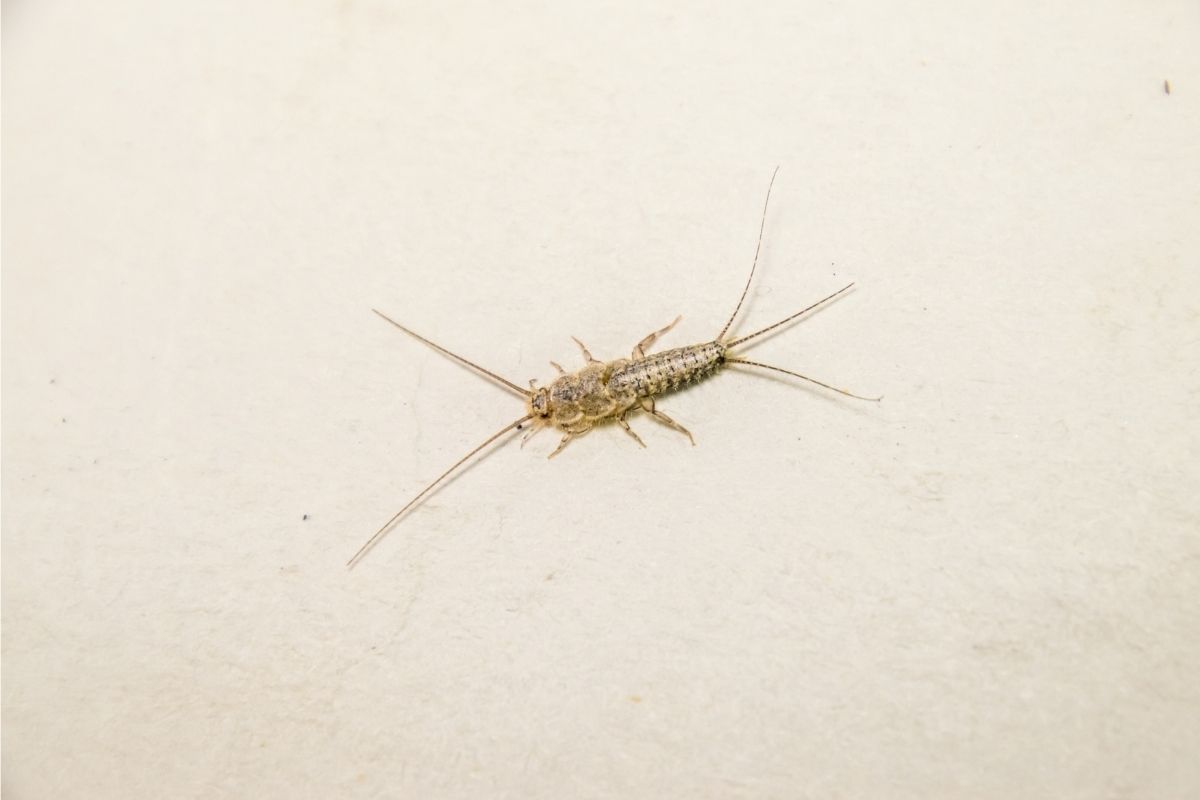
Bristletails are small, primitive insects that are wingless and have a very distinctive appearance:
- Size and Shape: Adults are typically ½ to 1 inch long (12–25 mm). They have a slender, elongated, and somewhat flattened body, which allows them to slip into narrow crevices.
- Color: Most bristletails are gray, silver, or brown, often with a metallic or shiny appearance due to their scales. Some species may appear slightly speckled.
- Antennae and Tail: They have long, threadlike antennae on their head. The most distinctive feature is the three long “tails” at the rear end: two lateral cerci and a central terminal filament, which gives them the “bristletail” name.
- Movement: Bristletails are fast movers and can dart quickly when disturbed. They are primarily nocturnal, so sightings during the day are rare.
- Habitat Clues: While not part of appearance, it helps identification: they are often found in moist, dark areas like basements, crawl spaces, bathrooms, and leaf litter outdoors.
Silverfish and firebrats are similar, but firebrats often have mottled brown patterns, whereas silverfish are more uniform silvery-gray. Bristletails tend to be slightly larger, with a more cylindrical body and a rougher, scale-covered texture.
Where Are Bristletails Found?
Bristletails are primarily nocturnal, moisture-loving insects, so their preferred locations reflect these needs. Here’s where you’re most likely to find them:
Indoors
Bristletails often enter homes seeking moisture and darkness. Common indoor locations include:
- Basements and Crawl Spaces: Cool, damp, and dark, these areas are ideal for bristletails. They may hide in cracks, behind insulation, or under loose flooring.
- Bathrooms and Kitchens: Bristletails are attracted to high humidity, so bathrooms, laundry rooms, and kitchens are frequent spots. They may hide under sinks, behind toilets, or in cabinet corners.
- Attics and Wall Voids: Dark, undisturbed areas like attics, wall voids, and behind baseboards can harbor bristletails.
- Storage Areas: Stacks of paper, cardboard, or books provide both food and shelter, especially in humid areas.
Outdoors
Bristletails are often found in areas that maintain moisture and shelter from direct sunlight:
- Leaf Litter, Mulch, and Soil: They thrive under leaves, bark, and mulch in shaded garden areas.
- Under Stones and Logs: Loose stones, logs, and woodpiles create cool, humid microenvironments.
- Around Foundations and Gutters: Moist soil near building foundations, under gutters, or in damp corners can attract bristletails indoors.
Environmental Preferences
- Humidity: Bristletails are extremely sensitive to dryness; they need high humidity to survive.
- Darkness: They avoid light, which is why sightings are rare during the day.
- Food sources: Indoors, they feed on starches, paper, glue, or fabrics, so storage rooms with books, wallpaper, or boxes are ideal.
Essentially, any dark, damp, undisturbed spot with organic material—indoors or outdoors—is prime habitat.
What Do Bristletails Eat?
Bristletails are primarily detritivores and scavengers, feeding on a wide range of starchy or carbohydrate-rich materials. Their diet typically includes:
- Paper and book bindings – They can chew through paper, cardboard, and book glue.
- Starches and adhesives – This includes wallpaper paste, glue, and any starchy household materials.
- Fabric and textiles – Cotton, linen, silk, and other natural fibers are sometimes eaten.
- Food crumbs – Small food particles, especially carbohydrates like flour, cereals, and sugar.
- Dead insects or organic matter – They will scavenge decaying material if available.
Some species, like firebrats, prefer warmer environments and are often found in kitchens, near ovens, or around hot water pipes where starches and carbohydrates accumulate. Jumping bristletails, on the other hand, are mostly found outdoors and feed on algae, lichen, moss, and decaying plant matter.
Bristletail Life Cycle
Bristletails have a relatively simple but long life cycle compared to many other insects, and it’s different from insects that undergo complete metamorphosis. Here’s a detailed breakdown:
Egg Stage
- Female bristletails lay small, oval eggs in protected, dark, and humid locations (e.g., cracks, behind baseboards, or under debris).
- The number of eggs varies by species: silverfish may lay 2–20 eggs at a time, totaling 50–100+ in their lifetime.
- Eggs usually hatch in 2–8 weeks, depending on temperature and humidity. Warm, humid environments accelerate development.
Nymph Stage
- When eggs hatch, tiny nymphs emerge, resembling miniature adults but lacking fully developed scales.
- Nymphs undergo multiple molts, gradually increasing in size. Bristletails can molt up to 30 times throughout their life, even after reaching sexual maturity—this is unusual among insects.
- Nymphs feed on the same materials as adults (starches, paper, textiles, etc.).
- The nymph stage can last several months to a year, depending on species and environmental conditions.
Adult Stage
- Adult bristletails are wingless, elongated, flattened insects with three long tail-like appendages (cerci and a terminal filament).
- Adults continue to feed, molt, and reproduce throughout their life.
- Silverfish and firebrats can live 2–8 years, sometimes longer under ideal conditions. Jumping bristletails often have slightly shorter lifespans but follow a similar pattern.
- Adults remain in dark, damp, or sheltered areas and are primarily nocturnal.
Bristletails do not undergo complete metamorphosis (no pupal stage). Molting continues throughout adulthood, which is why they can live several years. Populations grow slowly compared to cockroaches, but long lifespans make infestations persistent.
Types Of Bristletails
Bristletails are a primitive group of insects, and while there are many species worldwide, only a few are commonly encountered in and around homes.
- Firebrats: Firebrats are a type of bristletail in the order Thysanura. They are small, wingless insects, typically about 1/2 inch long, with mottled gray or brown bodies covered in fine scales and three long tail-like appendages.
- Jumping Bristletails: Jumping bristletails are primitive, wingless insects in the order Archaeognatha. They are elongated, tapered at the end, usually 1/2 to 3/4 inch long, and covered with scales.
- Silverfish: Silverfish are small, wingless insects in the order Zygentoma. They have slender, flattened, silvery-gray bodies covered in scales, with three long tail-like appendages.
Hear From Our Happy Customers
-
"Exceeds Expectations"
I can’t say enough positive things about this company... The tech that came out, Jarvis went above and beyond my expectations. Thank you guys, I will continue using your services.
- Jake M. -
"Fantastic & Patient"
Jarvis was fantastic and patient. He answered my questions with an in-depth explanation and addressed all of my areas of concern. Would love for him to be my assigned tech going forward. Well done!
- Yonnette M. -
"Very Knowledgeable"
The tech that arrived was courteous, professional, and very knowledgeable. He was Great.
- Uerial I. -
"Professional & Considerate"
I’m pleased with Miche services. Jarvis came today. Professional and considerate. Thank you!
- Judy B. -
"Wonderful Service"
Wonderful service. Jarvis is great. Took care of everything I needed. Thank you!
- Henry P. -
"Great Communication"
Tech was on time, communication was great, and he accommodated my needs.
- Alonzo W.