
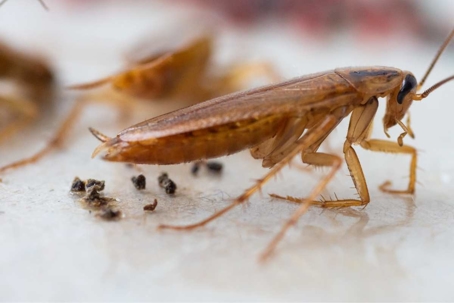
Do Cockroaches Poop?
Yes, cockroaches do poop. Their droppings are a normal byproduct of digestion and are one of the clearest signs of an active cockroach infestation.
Cockroach Droppings
Cockroach (roach) droppings, also known as cockroach poop, excrement, feces, or frass, are not just unsanitary debris—they are a direct health hazard, infestation accelerant, and environmental contaminant that demands prompt identification and remediation:
Disease transmission through surface contamination: Cockroach droppings can contain bacteria such as Salmonella, E. coli, and Staphylococcus. When droppings are deposited on countertops, dishes, food packaging, or preparation surfaces, these pathogens can be transferred to humans and cause gastrointestinal illness.
Triggering asthma and allergy attacks: Proteins found in cockroach feces are a well-documented indoor allergen. When droppings dry and break down, they become airborne and can significantly worsen asthma symptoms, particularly in children, the elderly, and individuals with compromised respiratory systems.
Chronic indoor air quality degradation: Over time, accumulated droppings contribute to fine particulate matter in the air. This persistent allergen load can lead to long-term respiratory irritation, coughing, sinus issues, and reduced indoor air quality even without visible pests.
Food contamination and spoilage: Even small amounts of droppings render food unsafe for consumption. Cockroach feces introduce bacteria and digestive enzymes that contaminate stored goods, often requiring disposal of entire pantries or inventory in commercial settings.
Attraction and amplification of infestations: Cockroach droppings contain pheromones that signal safe harbor and food availability to other roaches. This chemical signaling accelerates population growth and makes infestations harder to control if droppings are not removed.
Indicator of hidden nesting and breeding sites: The presence of droppings often means roaches are nesting nearby—in walls, cabinets, appliances, or voids—allowing reproduction to continue unnoticed and increasing infestation longevity.
Increased risk in sensitive environments: In healthcare facilities, childcare centers, food service establishments, and multi-family housing, cockroach droppings pose heightened health and regulatory risks, including failed inspections, liability exposure, and reputational damage.
Persistent exposure to cockroach feces contributes to anxiety, disgust, and reduced sense of cleanliness or safety in living and working environments, particularly in homes with ongoing infestations.
What Do Cockroach Droppings Look Like?
Cockroach droppings are one of the most reliable indicators that roaches are currently living and feeding in a structure, even if the insects themselves are rarely seen due to their nocturnal behavior. Here is why it is important to be able to identify cockroach droppings:
It helps distinguish cockroaches from other pests: Roach droppings can be confused with mouse droppings, termite frass, or dirt. Correct identification prevents misdiagnosis and ensures the right pest—and the right treatment—is addressed.
It reveals infestation severity and activity level: The quantity, freshness, and distribution of droppings allow experienced professionals to determine whether the infestation is light, moderate, or severe and whether it is increasing or under control.
It pinpoints harborage and nesting areas: Cockroach feces are typically concentrated near hiding, breeding, and feeding zones. Identifying droppings helps target treatments precisely where roaches are living, not just where they’re seen.
It highlights health and sanitation risks: Cockroach droppings contain bacteria, allergens, and pathogens that contaminate surfaces and food. Identifying them early helps reduce disease risk and indoor air quality issues.
It prevents wasted time and ineffective treatments: Treating without proper identification often leads to repeated failures. Recognizing droppings ensures control efforts are strategic, efficient, and based on evidence rather than guesswork.
It supports professional documentation and accountability: In commercial settings, housing, healthcare, and food service environments, identifying droppings is essential for inspections, compliance, and demonstrating due diligence.
It enables earlier intervention, reducing long-term costs: Early identification allows infestations to be addressed before populations explode, limiting structural contamination, customer complaints, and costly corrective actions.
The ability to identify cockroach droppings turns suspicion into certainty—and certainty is the foundation of effective pest control.
What Shape Are Cockroach Droppings?
Cockroach droppings can appear in several distinct shapes, depending on the species and life stage:
Pepper-like specks – Very small, grainy dots commonly produced by German cockroaches and juveniles. Often scattered in clusters.
Cylindrical or rod-shaped pellets – Larger species (American cockroaches, Oriental cockroaches, Smokybrown cockroaches) produce short, blunt-ended pellets that resemble tiny mouse droppings. Under magnification, some larger pellet shaped droppings may show faint ridges or grooves along the surface.
Irregular smears or stains – Fresh droppings or droppings spread by movement can appear as dark smudges, especially on vertical surfaces or in tight harborages.
The shape, size, color, and location together are what allow reliable identification—not shape alone.
What Size Are Cockroach Droppings?
Cockroach droppings typically range from about 0.25 millimeters to roughly 6 millimeters in size, depending on the species and life stage. Small indoor species like German cockroaches produce droppings that look like fine black pepper or dust, while larger species leave short, cylindrical pellets closer in size to a grain of rice.
How Small Are Cockroach Droppings?
Cockroach droppings can be extremely small—down to about 0.25–0.5 millimeters, especially when produced by German cockroach nymphs (juveniles). At this size, they often look like fine black dust, soot, or pepper grains and are easy to overlook or mistake for dirt. Despite their tiny size, these droppings still indicate active feeding and nesting, and even very small specks can signal a well-established infestation.
How Big Are Cockroach Droppings?
Cockroach droppings can get as large as about 6–8 millimeters (¼–⅓ inch) long in the case of the largest species, such as American or Oriental cockroaches. These droppings are typically dark, blunt-ended, and cylindrical, and they are the ones most often mistaken for mouse droppings. Very large droppings usually indicate the presence of large-bodied outdoor or sewer-associated cockroaches, not small kitchen-infesting species.
What Color Are Cockroach Droppings?
Cockroach droppings can vary in color depending on factors such as the cockroach species, their diet, and the age of the droppings. The color may also change as the droppings age:
Are Cockroach Droppings Brown?
Cockroach droppings appear brown when they are fresh, partially digested, or exposed to moisture, which can lighten the naturally dark pigment. Over time, as the droppings dry and age, they usually darken, so brown droppings often indicate recent activity.
Are Cockroach Droppings Black?
Cockroach droppings are black when they are fully dried or older, which is typical for most indoor infestations. The dark color comes from the cockroach’s digestive waste and naturally dark excrement pigments. Black droppings are often found in areas where roaches frequently travel or hide, indicating active or past infestation sites.
Are Cockroach Droppings Gray?
Cockroach droppings can appear gray when they are old, weathered, or partially disintegrated. Over time, exposure to air, light, and cleaning activities can cause the dark pigments to fade, leaving droppings that look dusty or grayish, often blending with surfaces and becoming harder to notice.
What Do Cockroach Droppings Look Like?
In addition to their shape, size, and color, cockroach droppings have several distinct characteristics that can help identify them:
Texture: Dry droppings are hard, brittle, or crumbly, while fresh droppings may feel slightly soft or moist.
Surface appearance: They often have a granular or powdery look when broken down, and larger pellets may show faint longitudinal ridges.
Distribution patterns: Droppings are often found in clusters along travel paths, near hiding places, or in corners, indicating frequent roach activity.
Persistence: Droppings remain long after the roaches have been removed, making them a lasting indicator of infestation.
These characteristics make droppings recognizable even without considering their shape, size, or color.
Are Cockroach Droppings Hard?
Yes, cockroach droppings are typically hard or firm when dry. Fresh droppings may feel slightly moist or soft, but they quickly dry out and become gritty or pellet-like. This firmness helps them hold their shape, which is why they’re often mistaken for coffee grounds, black pepper, or mouse droppings depending on the cockroach species and size.
Where Are Cockroach Droppings Found?
Cockroach droppings are commonly found in areas where cockroaches are active, especially in places where they hide, nest, and feed. Identifying these areas can help you locate cockroach droppings in your home or business. Here are some common places where you might find cockroach droppings:
- Kitchen: Cockroaches are often attracted to kitchens because of the availability of food and water. Check in and around kitchen cabinets, drawers, pantry shelves, and countertops. Pay close attention to cracks, crevices, and corners.
- Bathroom: Bathrooms can provide moisture and hiding spots for cockroaches. Inspect areas around sinks, drains, and behind toilet fixtures.
- Appliances: Cockroaches may hide in or around appliances like refrigerators, stoves, and dishwashers. Check behind and underneath these appliances for droppings.
- Basements and Crawl Spaces: Dark and damp environments are attractive to cockroaches. Inspect corners, cracks in the walls or floor, and any cluttered areas.
- Utility Areas: Cockroaches can hide in utility rooms where pipes and drains provide water sources. Look near water heaters, washing machines, and utility sinks.
- Wall Voids: Cockroaches may crawl into wall voids through cracks or openings. You might find droppings in corners or along baseboards.
- Garages and Storage Areas: Cockroaches can enter through gaps in doors or walls. Check corners, shelves, and any stored items.
- Furniture: Cockroaches can hide in and around furniture, especially if it's rarely used or has dark crevices.
- Electronics: Cockroaches are known to infest electronic equipment. Inspect the back of TVs, computers, and other electronic devices.
- Pipes and Plumbing: Cockroaches can use plumbing pipes to move between areas. Look for droppings near pipes, drains, and sink areas.
Remember that finding cockroach droppings is a sign of a potential infestation, and it's important to address the issue promptly. If you discover cockroach droppings in your home or business, it's advisable to contact a pest control professional to assess the situation, implement effective control measures, and ensure proper sanitation practices to prevent further infestations.