
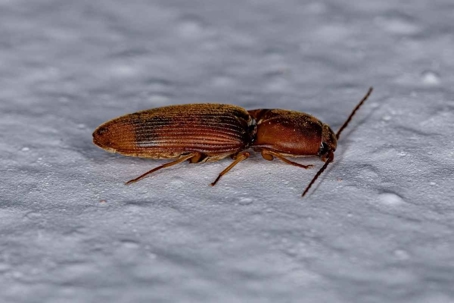
How To Get Rid Of Click Beetles
Getting rid of click beetles on your own involves a combination of prevention, habitat modification, and careful removal. While click beetles are generally more of a nuisance than a direct threat, their larvae (wireworms) can damage garden plants, so addressing them promptly is important. Here’s a thorough approach for homeowners or business owners:
Identify the Problem Areas
Indoors: Click beetles may enter homes or businesses at night, attracted to lights. Check windows, doors, and other entry points.
Outdoors: Focus on gardens, lawns, and areas with moist soil where wireworms might be feeding on roots.
Prevent Entry
Seal entry points: Ensure doors and windows are well-sealed, weather-stripping is intact, and any cracks in the foundation or siding are repaired.
Reduce outdoor lighting near entrances: Click beetles are attracted to bright lights at night, so using yellow “bug” lights or shielding exterior lights can reduce attraction.
Reduce Attractive Conditions
Remove debris and mulch: Click beetles like moist, decaying plant matter. Keeping gardens and yards tidy reduces hiding spots.
Proper irrigation: Avoid overwatering lawns and garden beds, as damp soil encourages wireworm survival.
Direct Removal
Manual capture: Indoors, you can sweep or vacuum adult beetles. Vacuuming is quick and prevents them from reproducing.
Sticky traps or light traps: Placing sticky traps near windows or under lights can catch beetles as they enter.
Control Larvae (Wireworms) in Soil
Crop rotation or soil disturbance: Turning over the soil or planting less susceptible plants in affected areas can reduce wireworm populations.
Baiting: Use pieces of carrot, potato, or corn buried a few inches in the soil for 1–2 weeks. Remove the bait and destroy any wireworms found.
Natural predators: Encourage birds or beneficial nematodes, which prey on wireworms, if managing a garden.
Sanitation
Indoor cleaning: Remove any decaying plant matter inside or near entryways.
Regular monitoring: Check periodically for beetle presence to catch infestations early.
While DIY methods can reduce numbers, severe infestations—especially in gardens or commercial settings—may require professional treatment. Professionals can target both adult beetles and larvae with more effective, targeted methods while minimizing environmental impact.
How To Get Rid Of Click Beetles Fast
If the goal is rapid reduction of click beetles, you need a strategy that targets both adult beetles and larvae (wireworms) simultaneously. Keep in mind that adults are easier to kill quickly, but the larvae live in the soil and can persist for years, so complete elimination takes persistence. Here’s a fast-acting approach:
Immediate Adult Control
Light traps: Adult click beetles are attracted to light at night. Setting up bright outdoor lights over a shallow water trap or sticky surface can catch many adults overnight. This provides quick reduction in the breeding population.
Hand collection: At night, inspect plants and remove beetles manually, dropping them into soapy water. Effective in small infestations.
Insecticide sprays: Use a contact insecticide labeled for beetles (pyrethroids like bifenthrin or permethrin). Spray on the plants and areas where beetles congregate. Sprays work almost immediately to kill adults on contact.
Rapid Larval (Wireworm) Reduction
Larvae are harder to eliminate because they live in soil. Fast action requires either chemical or biological intervention:
Chemical soil treatments: Insecticides containing chlorantraniliprole, bifenthrin, or carbaryl can reduce wireworms. Apply to soil or lawn following label rates. Water the soil lightly after application to move the insecticide into the root zone. This kills larvae more quickly than cultural measures alone.
Baiting for mass removal: Bury pieces of potato, carrot, or corn in soil for 2–3 days. Pull them up and destroy the larvae. Repeat in multiple locations. This is slower than chemicals but safer and effective for small areas.
Beneficial nematodes: Species like Steinernema carpocapsae attack wireworms. They take a few days to start working but are much safer than chemicals.
Environment Optimization for Rapid Control
Reduce moisture in problem areas. Wireworms thrive in damp soil; slightly drying out the soil can stress larvae and make insecticides more effective.
Remove decaying organic matter, mulch, and weeds where adults hide during the day.
How To Get Rid Of Click Beetles Permanently
Click beetles are challenging to eliminate permanently because their larvae (wireworms) can live in the soil for 2–5 years, meaning even if you remove adults quickly, new beetles will emerge later. Truly permanent control requires a multi-year, integrated approach that targets both adults and larvae while making the environment unfavorable for them to survive. Here’s the most effective strategy:
Eliminate Adults to Stop Reproduction
Manual removal: Collect adults at night using light traps or handpicking. This reduces egg-laying.
Light traps and sticky traps: Place around building perimeters and garden areas.
Targeted insecticide sprays: Use residual sprays on plants, fences, and garden borders to kill adults on contact and prevent them from laying eggs.
Note: Killing adults alone does not prevent new generations if larvae remain in the soil.
Destroy Soil-Dwelling Larvae (Wireworms)
Chemical larvicides: Insecticides such as chlorantraniliprole, bifenthrin, or carbaryl are effective for soil treatment. Apply according to the label, preferably during moist conditions so the chemical penetrates the soil.
Beneficial nematodes: Species like Steinernema carpocapsae or Heterorhabditis bacteriophora parasitize wireworms. They are slower than chemicals but reduce larval populations over time.
Baiting: Bury pieces of carrot, potato, or corn for 2–3 days, then remove and destroy larvae. Repeat multiple times in different areas to deplete populations.
Long-Term Environmental Management
Improve drainage: Wireworms thrive in moist, poorly drained soil. Correcting drainage and reducing standing water makes the environment less hospitable.
Remove decaying organic matter: Compost, mulch, and debris provide food and shelter for both adults and larvae.
Crop rotation: Avoid planting root vegetables or grasses repeatedly in the same area to disrupt the life cycle.
Maintain healthy turf and plants: Strong, healthy plants are less vulnerable to wireworm damage.
Monitoring and Follow-Up
Click beetle populations take multiple years to naturally decline. Even after initial control, monitor traps and soil for larvae yearly.
Reapply treatments as necessary, especially beneficial nematodes or chemical larvicides.
How To Get Rid Of Click Beetles Naturally
There are natural methods that can significantly reduce click beetle populations, but “getting rid of them completely” naturally is difficult, mainly because the larvae (wireworms) can live in soil for several years. Still, with persistence and integrated strategies, natural methods can suppress them effectively:
Beneficial Nematodes (Biological Control)
Species: Steinernema carpocapsae, Heterorhabditis bacteriophora.
How they work: These microscopic worms enter wireworms and release bacteria that kill the larvae within a few days.
Application: Apply to moist soil according to manufacturer instructions. Water soil after application to help nematodes penetrate the root zone.
Effectiveness: Can reduce larval populations significantly over 1–2 growing seasons. Safer for humans, pets, and plants than chemical treatments.
Predatory Insects and Animals
Ground beetles (Carabidae): Feed on wireworms and other soil pests. Encouraging these insects in gardens can naturally reduce larvae.
Birds: Chickens, ducks, and wild birds scratch soil and eat larvae. Free-range poultry in gardens can help lower wireworm numbers.
Trap Crops and Baiting
Baiting: Bury pieces of potato, carrot, or corn for 2–3 days. Wireworms will congregate around the bait, which you can then remove and destroy.
Trap crops: Plant small patches of highly attractive crops (e.g., corn or root vegetables) to lure wireworms and then remove them before they mature.
Effectiveness: Works well for small infestations, though labor-intensive. Repeated applications are needed.
Cultural and Environmental Control
Reduce soil moisture: Wireworms thrive in damp soil. Improving drainage or avoiding overwatering can stress larvae.
Remove decaying organic matter: Compost piles, mulch, and plant debris are attractive to adults for shelter and egg-laying. Removing these reduces breeding sites.
Crop rotation: Avoid planting root crops or grasses repeatedly in the same area; rotation disrupts the wireworm life cycle.
Physical Control
Handpicking adults: At night, click beetles can be collected manually.
Light traps: Attract adults with a light over a shallow water tray or sticky surface. Effective for reducing adult populations quickly.
Effectiveness of Natural Methods
Adults can be reduced relatively quickly with traps and handpicking.
Larvae reduction is slower; natural predators and nematodes work over 1–2 seasons.
Permanent eradication naturally is unlikely in a single season; you must combine multiple methods and repeat over time.
The Best Way To Get Rid Of Click Beetles
Our professional pest control is the most effective way to eliminate click beetles because we address both the adult beetles and their hidden larvae (wireworms), target their habitats systematically, and prevent recurrence. Here’s why hiring our experts is superior to DIY methods:
Accurate Identification
Click beetles are part of a large family, and their larvae can easily be mistaken for other soil pests. Our professionals can:
Identify the exact species.
Determine whether wireworms are present, which are far more damaging to lawns, gardens, and crops than adults.
Accurate identification ensures that control efforts are targeted and effective rather than a random guess.
Comprehensive Treatment
Adults: Our professionals can remove adults indoors and treat points of entry to prevent further infestations.
Larvae (wireworms): These live in soil and feed on plant roots. Our professionals use targeted treatments, often including environmentally safe soil treatments or baiting strategies that homeowners often cannot apply effectively.
Hidden habitats: Click beetles hide in soil, mulch, and plant debris. Our experts know where to look and how to treat these areas thoroughly.
Safer and More Effective Pesticides
Our professional-grade products are stronger, more effective, and applied in a way that reduces risk to humans, pets, and non-target insects.
Our professionals know the correct dosages, application methods, and timing to maximize effectiveness and minimize environmental impact.
Preventive Measures
Sealing cracks, improving drainage, and reducing soil moisture are critical long-term strategies. Our professionals implement these alongside treatments to prevent repeat infestations.
We can recommend landscaping and irrigation adjustments that reduce suitability for wireworms.
Time and Cost Efficiency
DIY methods often require repeated effort and may not address the root of the problem, especially hidden larvae. Our professional treatments can reduce the infestation quickly and prevent expensive plant or structural damage over time.
Expert Monitoring
Our professionals provide ongoing protective services to ensure treatments continue to work.
Ongoing services also allow early detection of any returning beetles, preventing small problems from becoming full-blown infestations.
Our professional pest control doesn’t just react to the visible click beetles—we eliminate the underlying problem and implement strategies to keep them from coming back, saving time, money, and frustration for homeowners and business owners alike.
Get Rid Of Click Beetles With Miche Pest Control
Hiring our team of professionals at Miche Pest Control is an investment in long-term protection, expertise, and peace of mind. Here’s why:
- Personalized Service and Local Expertise: We know the specific pest pressures in the area. Our technicians understand the environment, climate, and building types common to the area, allowing them to provide targeted, effective treatments.
- High-Quality, Comprehensive Solutions: As a full-service provider, we don’t just treat surface problems; we address the root causes. From inspections and prevention to exclusion and ongoing maintenance, we deliver complete, integrated pest management (IPM) programs designed to both eliminate infestations and prevent future ones.
- Accountability and Reliability: We live and die by our reputation. We rely on trust, referrals, and repeat business, meaning we're committed to doing the job right the first time and providing exceptional customer care.
- Faster Response Times: We respond quickly to emergencies and schedule services sooner than large, national chains. Especially when you’re dealing with urgent pest issues, that speed matters.
- Customized Treatment Plans: We tailor our services to your property’s specific needs instead of using one-size-fits-all chemical treatments. This results in safer, more effective pest control that minimizes environmental impact and reduces unnecessary pesticide use.
- Highly Trained, Experienced Technicians: We invest in training, certification, and continuing education for our technicians. We stay current on the latest pest biology, control techniques, and safety standards.
- Long-Term Prevention and Value: Our focus on providing quality service means fewer callbacks, longer-lasting protection, and better value over time. Instead of repeated, temporary fixes, you get strategic solutions that protect your home or business for the long run and provide better peace of mind.
Hiring our team means you get expertise you can trust, faster service, safer and more effective treatments, and long-term results that protect both your property and your peace of mind. Contact us today!