Carpenter Bees
Are Carpenter Bees Harmful?
Carpenter bees (Xylocopa), also known as wood boring bees, are generally not considered dangerous to humans, but these bees can be a nuisance and potentially cause damage under certain circumstances. Here are some ways in which carpenter bees might be considered problematic or pose minor risks:
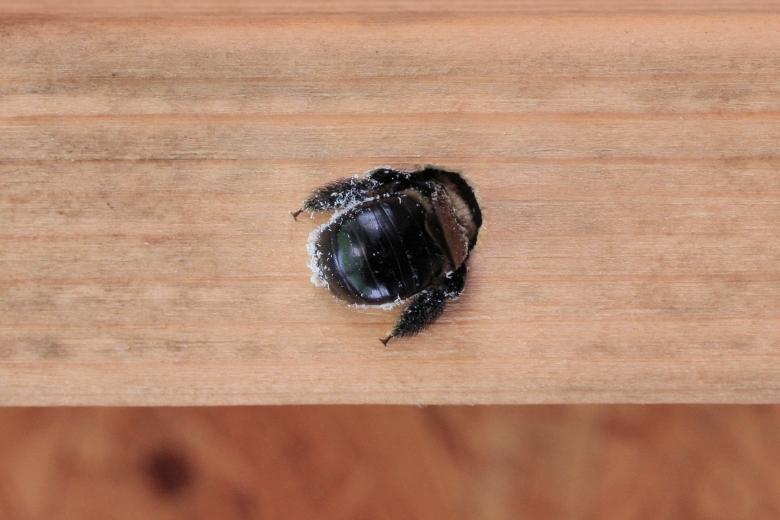
- Wood Damage: Carpenter bees are named for their nesting behavior, which involves boring holes into wood to create nesting chambers. Over time, their activities can weaken wooden structures, such as eaves, decks, fences, and even wooden furniture. While carpenter bee damage is usually minimal and primarily cosmetic, it can be a concern for property owners and require costly repairs.
- Nuisance: For some people, the presence of carpenter bees around their homes or gardens can be a nuisance, especially if they are drilling holes in wooden structures. The constant buzzing of these bees around nesting sites can be bothersome.
- Territorial Behavior: Male carpenter bees can be territorial and may hover around their nesting sites. They are generally not aggressive, but they might approach humans who come too close. While male carpenter bees lack stingers, their buzzing and close proximity can be intimidating to some individuals.
- Potential for Stings: Female carpenter bees do possess stingers, but they are not prone to stinging. They will only sting if they feel directly threatened or cornered. While their stings are generally mild and not as painful as those of other bee species, individuals with bee allergies or sensitivities should exercise caution.
- Allergies: In rare cases, individuals may have allergies to bee stings, and even a mild sting can lead to an allergic reaction. Anyone with known bee allergies should take care when in the vicinity of carpenter bees and seek immediate medical attention if stung.
Carpenter bees are generally not aggressive, and their interactions with humans are minimal, though they can cause damage to homes and businesses over time.
Learn more: Do Carpenter Bees Bite? || What Do Carpenter Bees Look Like? || What Do Carpenter Bees Eat?
Carpenter Bee Removal
Carpenter bees may look harmless, but they can cause surprisingly serious problems if they’re left alone. Here’s why it’s important to deal with them promptly:
- Structural Damage Adds Up Fast: Carpenter bees don’t eat wood, but they excavate tunnels to create nesting galleries. Over time—especially with repeat activity from new generations—those tunnels expand. This can weaken trim, decks, siding, soffits, pergolas, and other wooden structures. Softwoods like cedar, pine, and redwood are particularly vulnerable.
- They Return to the Same Sites Every Year: Carpenter bees often come back to the exact spots where they were born. What starts as a single springtime hole can become a network of large, interconnected galleries over multiple seasons. That’s when homeowners start facing expensive repairs.
- Woodpeckers Will Make the Damage Worse: A big problem many people don’t expect: woodpeckers. They love carpenter bee larvae and will aggressively rip open wood to get to them. A half-inch bee entrance hole can suddenly become a massive gouge after woodpeckers attack.
- Mess, Staining & Aesthetic Issues: Carpenter bees leave behind sawdust-like frass and yellow staining near the entrance holes. On painted or stained wood, this can ruin the finish and make exterior structures look neglected.
- Increased Activity Near People and Pets: Male carpenter bees can be territorial and hover near doorways, decks, and outdoor living areas. While they don’t sting, the intimidation factor is real—and females can sting if handled or threatened.
Stopping the infestation before nesting season (or treating active galleries properly) prevents the cycle from continuing. The longer carpenter bees are allowed to drill and reuse galleries, the more expensive the eventual repairs become.
Learn more: How To Get Rid Of Carpenter Bees
Carpenter Bee Control
Hiring our professionals for carpenter bee control is often the best decision because carpenter bees are not only a nuisance, but they can also cause structural damage to your home or business over time. While DIY sprays and traps may provide temporary relief, they usually don’t address the root of the problem—active galleries inside the wood and the bees’ tendency to return year after year. Our professionals bring the expertise, tools, and proven methods that eliminate the infestation and prevent re-infestation. Here are some of the reasons to consider our professional carpenter bee control services:
- Protecting Your Property: Carpenter bees bore into untreated or unpainted wood to create tunnels where they lay eggs. Over time, repeated nesting weakens wooden structures such as decks, siding, railings, fences, and eaves. Our professionals know how to locate and treat active galleries, protecting the integrity of your property.
- Comprehensive Treatment: DIY methods often only address visible activity. Our professionals apply targeted treatments inside the tunnels, ensuring the bees inside are eliminated, then seals entry points to stop reuse. This dual approach provides lasting results.
- Prevention of Recurring Infestations: Carpenter bees are known to return to the same areas year after year. Our professionals not only remove active infestations but also apply preventive measures, such as residual insecticides, repellents, and exclusion techniques, reducing the chance of future damage.
- Safety Considerations: Carpenter bees can seem aggressive when threatened, especially males hovering near nests. Carpenter bee females are capable of stinging. Our professionals are trained to handle infestations safely without putting you, your family, or pets at risk.
- Expert Knowledge: Carpenter bees can sometimes be mistaken for bumblebees or other species. Our professionals correctly identify the pest, ensuring the treatment is effective and that non-target, beneficial pollinators are preserved.
- Cost-Effectiveness: Hiring our professionals is often far less expensive than repairing structural wood damage caused by untreated or recurring infestations.
Our professional carpenter bee control ensures thorough elimination, long-term protection, and peace of mind—something DIY solutions rarely achieve.
Learn more: Spraying For Carpenter Bees
Learn more: Trapping Carpenter Bees
Carpenter Bee Exterminators
Hiring our local exterminators for carpenter bee problems has several advantages—especially for this pest, where regional knowledge and hands-on follow-through make a huge difference. Here’s why homeowners get better results with our local exterminator team than with a national brand:
Our Local Pros Know the Wood, Weather, and Bee Behavior in The Area
Carpenter bee activity varies by region—different wood types, humidity levels, nesting seasons, and construction styles all influence how and where they drill. Our local technicians deal with your specific conditions every day, so they know:
- Which exterior woods are most targeted in your region
- Typical nesting timelines
- Common hiding spots on homes built in your area
- Local factors that drive reinfestations (tree lines, sunlight, moisture, etc.)
This allows for faster diagnosis and more precise treatments.
More Personalized and Thorough Work
For successful elimination, carpenter bees typically require gallery-specific treatment, not a general spray. Our local exterminators:
- Inspect all holes individually
- Treat and seal galleries properly
- Return for follow-ups as needed
- Offer prevention steps tailored to the home
National franchises often use standardized, high-volume routes where the tech has limited time and less flexibility to address intricate bee tunnels.
Better Accountability and Consistency
With our local exterminator team, you typically get the same technician or a small team who knows your property and what was done previously. With national brands, you often get rotating techs, making it harder to maintain:
- Continuity of treatment
- Accurate tracking of recurring carpenter bee sites
- Accountability for workmanship
Our local exterminators rely heavily on our reputation, so our follow-through is stronger.
More Flexible Treatment Options
Carpenter bee control isn’t one-size-fits-all. Our local exterminators provide:
- Wood repairs
- Custom sealing
- Bee blocks or traps
- Preventive stain/paint recommendations
- Seasonal service plans focused specifically on wood-boring pests
National brands are typically limited to standard service packages, which often don't actually include carpenter bee treatments.
Faster Response Times During Peak Season
Carpenter bees appear suddenly in spring, and timing matters.
Our local team can:
- Schedule quickly, and
- Return promptly if new holes appear
Our local providers don’t need to route requests through a national call center.
Often Better Pricing and Better Value
National brands carry corporate overhead and licensing fees, which can translate into higher prices for basic treatments. Our local exterminators provide:
- Competitive pricing
- More included services
- Longer guarantees for carpenter bee work
And since carpenter bees often require follow-up, a strong guarantee matters.
You Support a Business That Lives in the Same Community
While not a technical pest-control benefit, many homeowners choose our local team because:
- The money stays in the community
- They can speak directly with the owner
- The relationship is long-term and trust-based
For problems like carpenter bees—where long-term prevention is key—this goes a long way.
Carpenter Bee Solutions
Our exterminators use Integrated Pest Management (IPM) to control carpenter bees because these bees bore into wood to create nests, potentially causing structural damage over time. IPM begins with a thorough inspection to identify active nesting sites, assess the extent of infestation, and determine access points. Management strategies combine targeted interventions, such as applying dust or liquid insecticides directly into nesting tunnels, with preventive measures like sealing existing holes, applying wood treatments, and painting or staining exposed wood to deter future nesting. Physical exclusion and habitat modification, such as removing or protecting vulnerable wooden surfaces, further reduce the likelihood of reinfestation. Regular monitoring ensures that new activity is detected early and that control measures remain effective. By integrating inspection, targeted treatment, prevention, and ongoing monitoring, IPM provides a precise, long-term, and environmentally responsible solution for managing carpenter bee populations.
Where Are Carpenter Bees Found?
Carpenter bees are widely distributed and can be found in various regions around the world. They are typically associated with habitats where suitable nesting sites and flowering plants for foraging are available. Here are some common places where you might find carpenter bees:
- Wooden Structures: Carpenter bees are known for their nesting behavior, which involves boring holes into wood to create chambers for their offspring. Carpenter bee nests are often found in wooden structures such as eaves, decks, fences, and wooden furniture. Look for round, perfectly drilled holes, about a half-inch in diameter, on the surface of the wood.
- Trees and Logs: Carpenter bees may also nest in trees, dead logs, and tree branches, especially if the wood is relatively soft and easy to excavate.
- Gardens and Yards: These bees are attracted to gardens and yards with abundant flowering plants. They play a vital role in pollination, so they are often seen visiting flowers in search of nectar and pollen.
- Parks and Forested Areas: Carpenter bees can be found in natural environments, especially if there are suitable nesting sites and a variety of flowering plants.
- Rural and Urban Areas: Carpenter bees are adaptable and can be found in both rural and urban settings. In urban areas, they may nest in wooden structures, while in rural areas, they can be found in wooden barns, fences, and natural wood sources.
- Geographic Distribution: The specific species of carpenter bees can vary by geographic region. Different species are found in North America, Europe, Asia, Africa, and other parts of the world. It's essential to consider the local bee species when identifying carpenter bees in a particular area.
When trying to locate carpenter bees, it's essential to keep in mind that they are generally not aggressive and rarely sting, unless directly provoked or handled. However, if their nesting sites are causing damage to wooden structures, you may need to take measures to deter or relocate them. Additionally, providing alternative nesting sites, such as carpenter bee houses, can help minimize damage to your property while supporting these essential pollinators.
Carpenter Bee Life Cycle
The life cycle of carpenter bees, like many other solitary bee species, follows a pattern of complete metamorphosis, consisting of four main stages: egg, larva, pupa, and adult. Here is the life cycle of carpenter bees:
- Egg Stage: The life cycle of a carpenter bee begins when a female carpenter bee locates a suitable nesting site, typically a hole bored into wood. The female lays an egg at the end of the tunnel or chamber she has created. Each chamber contains a single egg, and she may create multiple chambers within the same tunnel. Before laying the egg, the female provisions the chamber with a mixture of pollen and nectar. This stored food will serve as the larva's nutrition.
- Larva Stage: After hatching from the egg, the carpenter bee larva begins to feed on the stored pollen and nectar. The larva grows and undergoes several molts to increase in size. It eventually spins a silk-like cocoon around itself to enter the pupal stage. The larval stage can last several weeks to several months, depending on environmental conditions and species.
- Pupa Stage: Inside the protective cocoon, the larva undergoes metamorphosis into an adult bee. During this stage, the bee undergoes significant changes in its body structure and physiology. The pupal stage can also vary in duration, with some species overwintering as pupae.
- Adult Stage: Once the metamorphosis is complete, the adult carpenter bee chews its way out of the cocoon and emerges from the nesting site. The newly emerged adult bee is typically covered in hairs and can be pale at first but darkens as it dries and matures. Adult carpenter bees are ready to forage for nectar and pollen from flowers, which they use for their nutrition and also play a crucial role in pollinating plants. Mating occurs during the adult stage, with male carpenter bees staking out territories around nesting sites to attract females for reproduction. The adult stage of carpenter bees can last several weeks to a few months, depending on the species and environmental conditions.
Carpenter bees are most active during the spring and early summer when they are building nests and foraging for food.

Hear From Our Happy Customers
-
"Very Knowledgeable"
The tech that arrived was courteous, professional, and very knowledgeable. He was Great.
- Uerial I. -
"Exceeds Expectations"
I can’t say enough positive things about this company... The tech that came out, Jarvis went above and beyond my expectations. Thank you guys, I will continue using your services.
- Jake M. -
"Great Communication"
Tech was on time, communication was great, and he accommodated my needs.
- Alonzo W. -
"Professional & Considerate"
I’m pleased with Miche services. Jarvis came today. Professional and considerate. Thank you!
- Judy B. -
"Wonderful Service"
Wonderful service. Jarvis is great. Took care of everything I needed. Thank you!
- Henry P. -
"Fantastic & Patient"
Jarvis was fantastic and patient. He answered my questions with an in-depth explanation and addressed all of my areas of concern. Would love for him to be my assigned tech going forward. Well done!
- Yonnette M.