
How To Get Rid Of Drywood Termites
Getting rid of drywood termites on your own is extremely challenging, but not impossible if the infestation is small and localized. Unlike subterranean termites, drywood termites live entirely inside dry wood, without needing contact with soil. Because these termites hide deep within structural timber, furniture, and framing, most DIY treatments are limited in scope and effectiveness. However, homeowners and business owners can attempt the following methods to manage minor infestations:
Identify All Infested Areas
Identifying all drywood termite–infested areas in a structure requires a systematic, room-by-room and structure-wide inspection approach, because these termites often remain hidden inside wood and only reveal themselves through subtle external signs. Unlike subterranean termites, drywood termites live entirely within the wood they infest, so the goal is to map all evidence of activity, not just obvious damage.
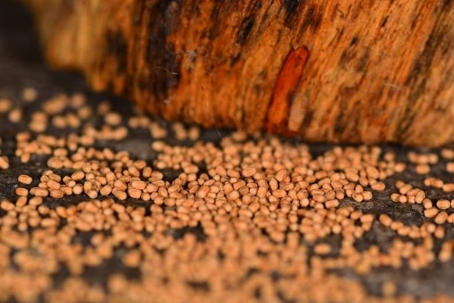
Start by inspecting common entry and high-risk wood components, especially in attics, eaves, roof framing, fascia boards, trim, window and door frames, hardwood flooring, furniture, and exposed structural beams. Look for frass (dry, pellet-like droppings), which is one of the most reliable indicators; it often accumulates in small piles beneath kick-out holes or along baseboards, window sills, or attic joists. Fresh frass tends to be lighter and more uniform, while older accumulations may appear darker or mixed with dust. You should also look for tiny “kick-out” holes in wood surfaces—these are where termites push waste out of their galleries.
Next, examine wood surfaces for blistering, slight depressions, or hollow-sounding areas. Tap wood with a screwdriver or similar tool; infested wood often sounds hollow or papery because termites consume wood from the inside out while leaving a thin surface layer intact. Pay close attention to painted or finished wood, where subtle bubbling, distortion, or unexplained cracking can indicate internal tunneling.
In attics and upper structures, inspect roof rafters, trusses, and soffits, since drywood termites frequently establish colonies in warm, dry upper areas. Use a flashlight to check joints and hidden corners where frass may collect unnoticed. In living spaces, focus on window casings, door frames, baseboards, and furniture, especially older or unfinished wood pieces. Furniture infestations are common because items are often stored undisturbed for long periods.
A full inspection should also include checking multiple floors and structural zones in sequence, because infestations can be isolated or spread across several colonies in different areas of the building. Mapping findings on a floor plan helps identify clusters of activity, which often correspond to separate colonies rather than one continuous infestation.
Because drywood termites often hide deep within wood and produce minimal external signs, a complete assessment may require advanced detection methods in more severe or unclear cases. These can include moisture-independent detection tools such as acoustic emission devices, infrared imaging (for heat or density anomalies), or professional probing techniques to confirm internal galleries without unnecessary damage.
Finally, it’s important to distinguish between active and old infestations. Fresh frass, clean-looking pellets, and recent kick-out holes suggest active colonies, while dusty, compacted, or weathered material may indicate past activity. However, even inactive galleries can be structurally compromised and may still need treatment or repair.
In practice, identifying all infested areas is a process of pattern recognition across the entire structure, not just spotting isolated damage—because multiple hidden colonies can exist in different wood elements at the same time, especially in older buildings or structures with untreated or exposed wood.
Apply Spot Treatments
For drywood termites, “spot treatment” is only effective when it targets a confirmed, localized gallery or object, because these termites live entirely inside wood and don’t rely on soil contact. The most reliable spot-treatment options are non-repellent liquid termiticides, direct injection treatments, and borate-based wood treatments, each used in specific situations depending on access and severity.
The most commonly used professional-grade spot treatment is direct injection of non-repellent liquid termiticides (such as fipronil- or imidacloprid-based formulations labeled for structural termites). These products are injected directly into kick-out holes, gallery voids, or drilled access points using specialized equipment. The goal is to force the active ingredient into the colony’s tunnel system so termites contact it as they move through treated wood. Because these products are non-repellent, termites do not avoid them, allowing transfer within the colony. This method works best when the infestation is localized and the gallery system can be reliably accessed.
Another effective option for accessible wood is borate-based treatments (disodium octaborate tetrahydrate products). These can be applied as surface sprays or injected into exposed wood, but they are most effective when applied to unfinished or raw wood, since borates penetrate and remain in the wood structure, making it toxic to termites feeding within. Borates are more of a preventive and early-stage treatment tool; they work best when applied to exposed framing, attic wood, or during repairs when infested wood is opened up.
For highly localized infestations in furniture or small structural items, aerosol foam or crack-and-crevice termiticide formulations labeled for drywood termites can be used in combination with drilling. These foams expand into voids, improving contact with internal galleries, but they still require precise placement and confirmation of active infestation zones.
In some cases, heat or microwave spot treatment systems are used as non-chemical alternatives, especially for furniture or isolated framing sections. These methods raise the internal wood temperature high enough to kill termites throughout the gallery system, but they require specialized equipment and careful monitoring to ensure lethal penetration throughout the infested area.
Spot treatments only work when the infestation is small and fully located, because drywood termites often exist in multiple hidden colonies within a structure. If activity is widespread or cannot be fully mapped, spot treatment alone may leave untreated colonies behind, allowing reinfestation. In those cases, more comprehensive approaches (such as fumigation or whole-structure treatment strategies) are typically required.
The most effective spot treatment tools are direct-injected non-repellent termiticides, borate treatments for exposed wood, and targeted foam or heat applications, all of which depend heavily on accurate identification of active galleries and precise application into the termite’s internal wood network.
Reduce Conditions Favoring Infestation
Drywood termite infestations are strongly tied to dry, stable wood that remains undisturbed for long periods, especially in warm environments where colonies can develop slowly inside structural or decorative wood. Unlike subterranean termites, they do not need soil or constant moisture, so the conditions that favor them are more about access, wood quality, and lack of disturbance than obvious dampness.
The most important favorable condition is exposed or accessible dry wood, particularly unfinished, weathered, or aging lumber in attics, roof framing, fascia boards, window and door trim, eaves, furniture, and structural beams. Wood that has small cracks, voids, or previous damage is especially attractive because it provides easy entry points for swarmers. Another key factor is long-term dryness combined with warmth, which is why infestations are common in upper portions of buildings (attics and rooflines) and sun-exposed exterior wood. Drywood termites also thrive in low-disturbance environments, since colonies can develop for months or years inside wood without obvious external signs; rarely handled furniture, stored lumber, and hidden structural cavities are particularly vulnerable.
A second set of conditions involves entry opportunities during swarming events. Drywood termite reproductives fly into structures through open vents, gaps in siding, unscreened attic openings, soffits, or poorly sealed window and door frames. Once inside, they only need a small crack or rough wood surface to begin a colony. Buildings with poor sealing and unprotected vents or roof edges are therefore much more susceptible.
To eliminate these conditions, the focus should be on reducing access, improving wood resistance, and eliminating undisturbed nesting opportunities. Start by sealing structural entry points: close gaps in siding, fascia, soffits, and roof edges; install or repair fine mesh screening on attic and crawl space vents; and ensure windows, doors, and utility penetrations are tightly sealed. This significantly reduces the chance of swarmers entering and establishing colonies.
Next, address wood vulnerability. Replace or treat exposed, unfinished, or damaged wood—especially in attics, eaves, and exterior trim. Applying borate-based wood preservatives to accessible framing and structural wood helps make it unpalatable or toxic to termites over time. Painting or sealing exposed wood surfaces also reduces entry points by blocking cracks and surface porosity.
Reducing long-term harborage conditions is equally important. Limit stored wood materials in attics, basements, or garages, and avoid leaving cardboard, old furniture, or untreated lumber in undisturbed areas. Regular inspections and occasional disturbance of attic and structural spaces help eliminate the “undisturbed zone” advantage drywood termites rely on.
Environmental control plays a supporting role. While they do not require moisture, excess heat and sun exposure on unprotected wood increases risk, so maintaining proper exterior finishes, protective coatings, and physical barriers (such as cladding or flashing) helps reduce suitability over time.
Drywood termite risk is driven by accessible, dry, undisturbed wood and easy entry points during swarming, and it is reduced most effectively by sealing openings, treating or replacing vulnerable wood, and eliminating long-term, untouched wood environments where colonies can develop unnoticed.
Use Heat Treatments
Heat treatments can be effective for drywood termite infestations, but their success depends heavily on precision, penetration, and infestation layout. Drywood termites live entirely inside wood galleries, so the goal of heat treatment is to raise the internal temperature of all infested wood to a level that is lethal to termites—typically around 120–140°F (49–60°C) sustained long enough to penetrate the deepest galleries.
When properly performed, whole-structure or localized heat treatments can kill termites in all life stages (eggs, nymphs, and adults) without the use of chemicals. This makes heat one of the more environmentally clean options and especially useful for furniture, attic framing, or isolated structural zones where full coverage can be achieved.
However, effectiveness is highly dependent on even heat distribution throughout the infested material. Drywood termite colonies often exist deep inside thick framing members, wall voids, or clustered structural areas where heat may not penetrate uniformly. If any section of the colony remains below lethal temperatures, it can survive and re-establish activity. This is the primary limitation: heat is only as good as its reach, not just the surface temperature achieved in the space.
Heat treatments are most reliable in open, accessible structures (attics, exposed framing, garages), smaller, contained infestations, furniture or isolated wood items, and buildings where contents can be carefully staged or removed to allow uniform heating. They are less reliable when infestations are hidden in multiple structural zones, there are thick masonry or insulated barriers that trap cooler pockets, colonies are spread across complex framing systems, and moisture or dense materials prevent consistent heat transfer.
Another important consideration is logistics and preparation. Whole-structure heat treatments typically require sealing the structure and using high-output heating systems with extensive monitoring to ensure all zones reach and maintain lethal temperatures. Temperature sensors are placed throughout the building to confirm that no “cold spots” remain where termites could survive.
In terms of durability, heat treatment can be very effective when executed correctly, but it does not leave a residual protective barrier. That means reinfestation is still possible if entry points and conducive conditions are not addressed afterward. For this reason, heat is often paired with follow-up measures such as sealing entry points, improving wood protection (e.g., borate treatments on exposed wood), and ongoing inspections.
Heat treatments are a highly effective eradication tool when infestations are localized and heat penetration can be verified throughout all infested wood, but they are less dependable in complex or widespread infestations unless carefully engineered and monitored.
Monitor and Re-Treat
Periodic monitoring and, when necessary, re-treatment of drywood termite infestations is important because these termites are not eliminated simply by stopping visible activity in one location—their biology and hidden nesting behavior make them capable of persisting or re-establishing in other parts of a structure without obvious warning signs.
Drywood termites live entirely inside wood and often form multiple, separate colonies within the same building. Even when one colony is successfully treated, others may remain undetected in different framing members, furniture, or inaccessible voids. Because they produce very subtle external signs, a “finished” infestation can actually be incomplete, with residual colonies continuing to feed and expand unnoticed. Monitoring helps detect these hidden pockets of activity before they spread further.
Re-treatment becomes necessary because many control methods—especially localized injections, foam applications, or spot treatments—are highly targeted rather than structural in scope. These methods may eliminate termites in a specific gallery system but do not provide protection across the entire building. If untreated colonies exist nearby or if new swarmers enter later, reinfestation can occur in the same or adjacent wood. Periodic inspection ensures that any resurgence is caught early, when treatment is still limited and manageable.
Another key reason is that drywood termites can remain dormant or low-activity within wood for long periods, especially in unfavorable conditions. This can make an infestation appear resolved when, in reality, a small surviving population persists and resumes activity when conditions improve. Monitoring helps distinguish between truly inactive damage and ongoing, slow colony activity.
Environmental and structural changes also contribute to risk over time. Buildings experience wood aging, cracking, moisture changes, and small shifts in sealing integrity, all of which can create new entry points for swarmers or expose previously protected wood. Periodic monitoring ensures that new vulnerabilities are identified before they are exploited.
Re-treatment is sometimes necessary because no single intervention guarantees complete penetration of all internal galleries, especially in complex structures. Heat, chemical, or borate treatments can be highly effective, but verification through follow-up inspections is essential to confirm full colony elimination.
Ongoing monitoring and occasional re-treatment are critical because drywood termite infestations are often multi-site, hidden, and capable of reappearing, and long-term control depends on ensuring that no surviving colonies or new entries are left unaddressed after initial treatment.
While these methods can help with minor or surface-level infestations, DIY efforts rarely reach deep colony chambers hidden within walls, beams, or attics. Termites can survive and spread undetected, leading to severe structural damage over time.
If the infestation affects multiple rooms, structural timbers, or inaccessible areas, our professional termite control — particularly whole-structure fumigation — is the only way to ensure complete eradication.
The Best Way To Get Rid Of Drywood Termites
Our professional termite control is by far the most effective, reliable, and long-term solution for eliminating drywood termites because these termites often live deep inside wood structures, where DIY treatments cannot reach. Our professional exterminators use advanced tools, proven insecticides, and structural treatments designed to eliminate the entire colony — not just surface-level termites. Here’s why hiring our licensed termite control specialists is the best course of action:
Complete Colony Elimination
Drywood termites live in isolated colonies within walls, floors, attics, and furniture, often without visible entry points. For drywood termite infestations, our professionals use whole-structure fumigation (tenting). This method fills the entire building with a lethal gas that penetrates every piece of wood and kills termites throughout the structure — including hidden galleries that DIY methods can’t access. This technique eradicates entire colonies, ensuring there are no survivors left to re-infest the structure.
Access to Professional-Grade Termiticides
Our licensed professionals have access to EPA-approved termiticides and foams that are far stronger and longer-lasting than consumer products. We can inject these products into walls, voids, and wood structures in precise quantities that ensure safety and full coverage. Our professional-grade borate and non-repellent termiticides also create residual protection that keeps termites from returning for years.
Prevention and Long-Term Protection
Our professional termite control doesn’t just remove existing infestations — we also include preventive measures such as:
- Treating exposed wood with borate solutions.
Sealing structural cracks and entry points.
Recommending improvements in ventilation and moisture control.
Setting up long-term monitoring and warranty plans to ensure your home or business remains termite-free.
We also provide renewable warranties or protection plans, which provides peace of mind and cost savings if termites reappear.
Safety and Structural Expertise
Termite fumigation and chemical application require extensive training, safety equipment, and certification. Our professionals know how to handle and apply fumigants and insecticides safely, ensuring there’s no risk to people, pets, or property. We also understand how to evaluate wood integrity, identifying whether termite damage has weakened structural components — something most property owners are not equipped to assess.
Guaranteed Results and Documentation
We provide written inspection reports, documenting where and how treatments were performed. This professional documentation not only provides assurance but can also be valuable for insurance claims or property sales, proving that the structure has been properly treated and inspected.
Drywood termites can silently destroy a property from the inside out, and DIY methods rarely reach their hidden colonies. Our professional termite control delivers:
Full structural coverage
Proven elimination methods
Safety, precision, and peace of mind
Long-term protection against re-infestation
While homeowners can attempt spot treatments for minor issues, our professional termite control ensures total eradication and lasting defense against one of the most destructive wood-infesting pests.
Get Rid Of Drywood Termites With Miche Pest Control
Hiring our team of professionals at Miche Pest Control is an investment in long-term protection, expertise, and peace of mind. Here’s why:
- Personalized Service and Local Expertise: We know the specific pest pressures in the area. Our technicians understand the environment, climate, and building types common to the area, allowing them to provide targeted, effective treatments.
- High-Quality, Comprehensive Solutions: As a full-service provider, we don’t just treat surface problems; we address the root causes. From inspections and prevention to exclusion and ongoing maintenance, we deliver complete, integrated pest management (IPM) programs designed to both eliminate infestations and prevent future ones.
- Accountability and Reliability: We live and die by our reputation. We rely on trust, referrals, and repeat business, meaning we're committed to doing the job right the first time and providing exceptional customer care.
- Faster Response Times: We respond quickly to emergencies and schedule services sooner than large, national chains. Especially when you’re dealing with urgent pest issues, that speed matters.
- Customized Treatment Plans: We tailor our services to your property’s specific needs instead of using one-size-fits-all chemical treatments. This results in safer, more effective pest control that minimizes environmental impact and reduces unnecessary pesticide use.
- Highly Trained, Experienced Technicians: We invest in training, certification, and continuing education for our technicians. We stay current on the latest pest biology, control techniques, and safety standards.
- Long-Term Prevention and Value: Our focus on providing quality service means fewer callbacks, longer-lasting protection, and better value over time. Instead of repeated, temporary fixes, you get strategic solutions that protect your home or business for the long run and provide better peace of mind.
Hiring our team means you get expertise you can trust, faster service, safer and more effective treatments, and long-term results that protect both your property and your peace of mind. Contact us today!