
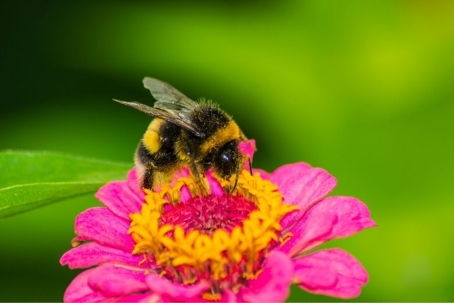
What Do Bumblebees Eat?
Bumblebees are herbivorous insects that primarily feed on nectar and pollen. The diet of these bees is essential for their survival and serves as a vital component in the pollination of various plants. Here is what bumblebees eat:
Nectar as a primary energy source: Bumblebees mainly eat nectar, a sugary liquid produced by flowering plants. Nectar provides carbohydrates that fuel flight, temperature regulation, and daily activity. Worker bumblebees visit hundreds of flowers per day, using their long tongues to access nectar from both shallow and deep blossoms.
Pollen for protein and nutrients: Pollen is the most important solid food for bumblebees. It supplies protein, amino acids, fats, vitamins, and minerals necessary for larval development and adult health. Workers collect pollen on specialized leg structures called pollen baskets and transport it back to the nest to feed developing larvae and the queen.
Larval diet differences: Bumblebee larvae do not forage themselves. They are fed a mixture of pollen and nectar prepared by adult workers. This diet supports rapid growth and proper development into healthy adult bees.
Seasonal variation in food use: Early in the season, nectar is especially critical because queens emerging from hibernation need quick energy to establish new colonies. As the colony grows, pollen demand increases dramatically to support larval production. Late in the season, nectar once again becomes vital as new queens and males prepare for mating and overwintering.
Preferred plant sources: Bumblebees favor nectar- and pollen-rich wildflowers such as clover, wild lupine, vetch, sunflowers, bee balm, and asters. They are generalist foragers, meaning they feed on a wide variety of flowering plants rather than relying on a single species.
No consumption of insects or human food: Bumblebees do not eat other insects, pests, or human foods like sugar scraps, meat, or waste. Their diet is entirely plant-based, relying exclusively on floral resources.
Water intake: While they obtain most moisture from nectar, bumblebees may occasionally drink water, especially during hot or dry conditions, to maintain hydration and regulate body temperature.
Dependence on continuous floral availability: A steady supply of blooming plants throughout the growing season is essential for bumblebee survival. Gaps in nectar and pollen availability can weaken colonies, reduce reproduction, and increase mortality, which is why habitat loss significantly impacts bumblebee populations.
Bumblebees are highly effective pollinators, and their feeding habits play a crucial role in the reproduction of flowering plants. They transfer pollen from one flower to another while seeking nectar, thereby facilitating fertilization and the production of seeds. This ecological relationship is essential for the diversity and survival of many plant species and, by extension, for ecosystems as a whole.
Do Bumblebees Eat Nectar?
Yes, bumblebees indeed consume nectar as a significant part of their diet. Nectar is a sugary liquid produced by flowers, and it serves as the primary source of energy for bumblebees:
High-sugar nectar (moderate concentration): Bumblebees most commonly feed on nectar with sugar concentrations in the mid range (roughly 30–50%). This balance allows efficient energy intake without the nectar being too thick to drink, supporting sustained flight and temperature regulation.
Long-tubed flower nectar: Because bumblebees have relatively long tongues compared to many other bees, they preferentially feed on nectar from deep or tubular flowers. These nectar types are often inaccessible to smaller insects and provide rich, less-contested food sources.
Wildflower nectar: Native wildflowers are among the most important nectar sources for bumblebees. Plants such as clover, vetch, bee balm, wild lupine, foxglove, and penstemon produce nectar well suited to bumblebee feeding behavior and nutritional needs.
Legume family nectar (Fabaceae): Bumblebees strongly favor nectar from legumes such as clover, alfalfa, and vetch. These plants produce abundant nectar and are structurally compatible with bumblebee size and strength, making them highly efficient feeding targets.
Early-season nectar sources: In spring, bumblebees are most likely to consume nectar from early bloomers such as willow, crocus, lungwort, and wild mustard. These nectars are essential for queens emerging from hibernation when few other food sources are available.
Late-season flowering nectar: In late summer and fall, bumblebees rely heavily on nectar from plants like goldenrod, asters, and sunflowers. These nectar sources are critical for fueling new queens and males before mating and overwintering.
Native over ornamental nectar: While bumblebees will visit some garden ornamentals, they are far more likely to feed on nectar from native or non-hybrid plants. Many modern ornamental varieties produce little usable nectar, whereas native plants reliably provide higher nutritional value.
Broad spectrum, not single-source nectar: Bumblebees are generalist feeders, meaning they do not rely on one specific nectar type. They actively consume nectar from a wide variety of flowering plants, allowing colonies to adapt to changing landscapes and seasonal bloom patterns.
These insects have evolved to be effective pollinators, and in the process of collecting nectar, they inadvertently transfer pollen from one flower to another, aiding in the reproduction of flowering plants. This mutually beneficial relationship between bumblebees and plants is vital for both the bumblebee's sustenance and the plants' reproductive success.
Do Bumblebees Eat Pollen?
Yes, bumblebees do consume pollen as part of their diet. Pollen is a rich source of protein and other essential nutrients for bumblebees. They collect and store pollen using their specialized mouthparts and transport it back to their nests.
Protein-rich pollen with balanced amino acids: Bumblebees preferentially collect pollen that is high in protein (typically 15–30% or higher) and contains a complete amino-acid profile. This type of pollen supports larval growth, immune function, and the development of strong workers and queens.
Native wildflower pollen: Native plants produce pollen that bumblebees have evolved to digest efficiently. Pollen from wildflowers generally has higher nutritional compatibility than pollen from highly bred ornamental plants, which may be nutritionally diluted or inaccessible.
Legume family pollen (Fabaceae): Bumblebees are especially likely to collect pollen from legumes such as clover, vetch, lupine, alfalfa, and pea plants. These pollens are protein-dense and produced in large quantities, making them highly efficient food sources for colonies.
Open or buzz-pollinated flower pollen: Bumblebees favor pollen from flowers that allow easy access or require buzz pollination (sonication), a behavior bumblebees specialize in. Plants like tomatoes, blueberries, cranberries, and peppers release pollen only when vibrated, giving bumblebees a competitive advantage.
Early-season pollen sources: In spring, bumblebees—especially founding queens—seek pollen from early-blooming trees and plants such as willow, maple, poplar, hellebore, and dandelion. These pollen sources are essential for starting colonies when few alternatives exist.
Late-season pollen sources: Toward the end of the season, bumblebees rely on pollen from plants like goldenrod, asters, sunflowers, and ironweed. This pollen is critical for producing healthy males and new queens before mating and overwintering.
Large, coarse pollen grains: Bumblebees are well suited to collecting larger, heavier pollen grains that smaller bees struggle with. Their dense body hair and strong flight muscles make them efficient collectors of pollen types that other pollinators may avoid.
Low preference for hybrid ornamental pollen: Many modern ornamental flowers produce little usable pollen or pollen with poor nutritional value. Bumblebees are far less likely to rely on these and instead concentrate on plants that offer reliable, nutrient-dense pollen.
Diverse pollen sources rather than a single type: Bumblebee colonies thrive best when workers collect pollen from many different plant species. This dietary diversity improves larval survival, strengthens disease resistance, and increases overall colony success, making habitat diversity crucial for bumblebee populations.
Bumblebees have a structure called a "pollen basket" on their hind legs. This basket allows them to carry and transport pollen efficiently. Once they gather pollen from flowers, they mix it with nectar and form small pellets, which are taken back to the hive. Inside the hive, bumblebees feed the pollen to their developing larvae. The protein from the pollen is crucial for the growth and development of the bumblebee brood. Pollen is an important dietary component for bumblebees, especially when it comes to nourishing their offspring.
Do Bumblebees Drink Water?
Yes, bumblebees do drink water as part of their dietary requirements. Water is essential for various functions in a bumblebee colony. Here are some key reasons why bumblebees drink water:
- Temperature Regulation: Bumblebees use water to regulate the temperature inside their nest. They collect water and distribute it within the hive, where it can be evaporated to cool the nest during hot weather or to maintain the humidity level.
- Hydration: Just like any other organism, bumblebees need water to stay hydrated. They may collect water from various sources, including puddles, dew on leaves, or even damp soil. Bumblebees have specialized mouthparts for drinking, which allows them to access and carry water back to the nest.
So, while nectar and pollen are the primary components of their diet, water plays a vital role in their colony's survival and is collected and used for various purposes.
Do Bumblebees Eat Honey?
Bumblebees do not normally consume honey. Unlike honey bees, they do not produce or store true honey and have no biological reliance on it as a food source.
They consume nectar instead: Bumblebees feed directly on fresh flower nectar, which provides the sugars they need for energy. Nectar is digested immediately or stored only briefly inside the colony for short-term use.
No long-term food storage behavior: Bumblebee colonies are seasonal and relatively small. Because they do not survive winter as a colony (only new queens overwinter), they do not need large, preserved food reserves like honey.
Limited nectar storage, not honey: Bumblebees may store small amounts of nectar in wax pots inside the nest, but this nectar is not processed into honey. It is used quickly and lacks the low moisture content and enzymes that define true honey.
They can consume honey if forced or provided: In artificial or captive situations, bumblebees can drink honey or sugar solutions because they are physiologically able to digest sugars. However, this does not reflect their natural diet or behavior.
Honey bees evolved specifically to convert nectar into honey to survive winter as a large colony. Bumblebees evolved a different strategy: short-lived colonies, minimal food storage, and reliance on continuous access to flowers during the active season.
What Do Bumblebees Eat In The Winter?
At the end of the growing season, all worker bumblebees and males die. They do not overwinter and therefore do not eat anything during winter months.
Only newly mated queens survive the winter: The sole members of a bumblebee colony that live through winter are the newly mated queens produced late in the season. These queens enter a dormant state and overwinter alone.
Queens do not actively feed during winter: Overwintering queens do not eat nectar, pollen, honey, or any other food during winter. Their metabolism slows dramatically, and they remain inactive in a state known as diapause.
Energy comes from stored body fat: Before winter begins, queens build up substantial fat reserves by feeding heavily on nectar and pollen in late summer and fall. These internal fat stores supply all the energy needed to survive winter dormancy.
Sheltered overwintering locations: Queens overwinter underground or in well-insulated locations such as soil, leaf litter, compost, rodent burrows, or rotting wood. These environments protect them from extreme temperatures and reduce energy use.
No food storage behavior supports overwintering: Bumblebees do not store food specifically for winter. Unlike honey bees, they do not rely on stored honey or pollen to survive cold months, as the colony itself does not persist through winter.
Spring feeding resumes after emergence: When temperatures warm in spring, queens emerge from dormancy and immediately begin feeding on early-season nectar and pollen. This feeding restores energy reserves and allows the queen to begin forming a new colony.
Successful overwinter survival depends on adequate fall nutrition and access to safe overwintering sites. Lack of late-season flowers or undisturbed ground directly reduces the number of queens that survive to start new colonies the following year.
Do Bumblebees Eat Insects?
Bumblebees are strictly herbivorous. They do not prey on, kill, or consume insects at any stage of their life cycle.
Their diet is entirely plant-based: Bumblebees feed exclusively on nectar (for carbohydrates and energy) and pollen (for protein, fats, vitamins, and minerals). These two resources fully meet their nutritional requirements.
Larvae are also not insect-fed: Bumblebee larvae are fed by adult workers a mixture of pollen and nectar. They are never provisioned with insects, insect parts, or animal protein.
No predatory or scavenging behavior: Unlike wasps, hornets, or some ant species, bumblebees do not hunt or scavenge. They lack the behavioral and anatomical traits needed to capture or process prey.
Occasional confusion with other insects: Bumblebees are sometimes mistaken for yellowjackets or hornets, which do consume insects and pests. This confusion can lead to the false assumption that bumblebees are beneficial for insect control.
No role in pest population reduction: Because they do not eat insects, bumblebees do not reduce pest populations directly. Their ecological value lies in pollination, not predation.
Bumblebees evolved mouthparts, digestive systems, and foraging behaviors specifically adapted for collecting nectar and pollen, not for chewing or digesting animal tissue.