
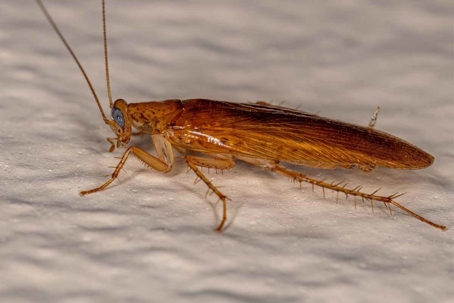
Can Wood Cockroaches Bite?
Wood cockroaches (Parcoblatta species) are not known to bite people. These cockroaches are harmless and generally prefer to stay outdoors in decaying wood, under bark, or in leaf litter. Unlike household pest cockroaches such as German cockroaches or American cockroaches, wood roaches do not seek out food or shelter inside homes and show no interest in human skin or food sources.
Do Wood Cockroaches Bite?
Wood cockroaches are not known to bite in any situation. They are shy, non-aggressive insects that avoid people and prefer to remain outdoors. Their mouthparts are not adapted for biting animals or humans—they are designed for chewing decomposing plant material.
Even in rare cases where someone picks one up or accidentally traps it against their skin, a wood cockroach will not bite as a defensive reaction. Instead, it will struggle to escape or play dead.
Wood Cockroach Bites
Since wood cockroaches do not actually bite people, there are no true medical risks associated with their “bites.” However, in rare cases where someone experiences mild skin irritation after contact with a wood cockroach, a few minor issues could occur — though these are not caused by a bite itself.
Potential risks include:
Mild skin irritation or redness: Caused by the insect’s spiny legs or accidental scratching while brushing it off.
Allergic reactions: People who are sensitive to cockroach allergens (from saliva, feces, or shed skins) might develop slight itching or a rash after handling one.
Secondary infection: If a person scratches irritated skin excessively, bacteria could enter the area and cause minor infection, though this is uncommon.
Wood cockroaches do not transmit diseases, inject venom, or feed on human blood. Any irritation from contact is superficial and short-lived.
What Do Wood Cockroach Bites Look Like?
Because wood cockroaches don’t bite people, there’s no true “bite mark” to identify. However, when someone mistakes another irritation for a wood cockroach bite, the mark usually looks like a small red bump or patch of mild inflammation, similar to:
A minor rash or small pimple-like spot
A slightly raised, pink area that may itch briefly
A tiny scratch or abrasion, often caused by brushing the insect off or contact with its spiny legs
These marks typically fade within a day or two and don’t spread, blister, or become painful. If the area becomes swollen, very itchy, or infected, it’s more likely due to another insect (like a mosquito, flea, or bed bug) rather than a wood cockroach.
What To Do About Wood Cockroach Bites
If you believe a wood cockroach has bitten you—or caused minor skin irritation after contact—there’s no need for concern. These insects don’t actually bite, so any reaction is most likely due to mild irritation or an allergic response. You can easily treat it at home using the following steps:
Wash the area thoroughly with soap and warm water to remove any dirt or potential allergens.
Apply a cold compress to reduce any redness, swelling, or itching.
Use a topical treatment such as hydrocortisone cream, calamine lotion, or an over-the-counter antihistamine to relieve itchiness or discomfort.
Avoid scratching the area to prevent secondary infection.
Monitor for unusual symptoms—if you notice increased swelling, pain, or signs of infection (such as pus or warmth around the spot), consult a healthcare provider.
In almost every case, the irritation subsides quickly on its own. If you continue to see cockroaches indoors, it may indicate a moisture issue or gaps allowing outdoor wood cockroaches to enter, which our pest control professionals can help identify and seal. Contact us to learn more!