
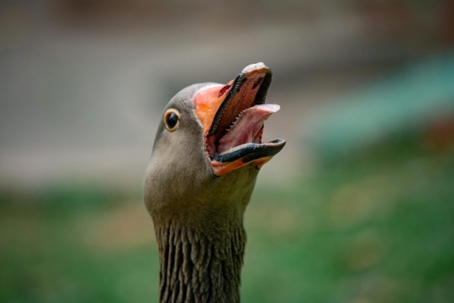
Do Geese Bite?
Geese are generally not aggressive toward humans or pets unless they feel threatened or are protecting something important to them. Situations where these birds are most likely to bite include:
Nesting Season (Spring–Early Summer): During this period, adult geese become highly territorial around their nests and goslings. Approaching too closely can trigger aggressive behavior, including biting, hissing, and flapping wings.
Protecting Goslings: Even after hatching, adult geese will defend their young vigorously. Any movement perceived as a threat near goslings can provoke bites or lunges.
Feeding Time: Geese that are accustomed to being fed by humans may bite if they mistake hands for food or if someone tries to take food away.
Cornered or Trapped Geese: Geese are more likely to bite if they feel they cannot escape. This includes situations where pets or humans inadvertently block their path.
Aggressive Individuals or Flocks: Some geese, particularly domestic or urban populations, can develop aggressive tendencies if they have learned to associate people or pets with food or feel threatened by repeated human presence.
While geese bites are typically not severe, they can cause puncture wounds, scratches, or bruising. Pets, especially small dogs or cats, can also be at risk if a goose perceives them as a threat.
Goose Bites
Goose bites are usually not life-threatening, but they can carry several risks, ranging from mild irritation to more serious complications if not properly treated:
Puncture wounds or scratches: Geese have strong beaks that can break the skin.
Bruising or minor lacerations: Especially if a goose strikes with wings while biting.
Pain and swelling: Localized pain, redness, and swelling are common around the bite site.
Infection: Goose beaks can carry bacteria from water, soil, or food sources, which can enter the wound. Common bacteria include E. coli, Salmonella, and Staphylococcus species. Signs of infection include redness spreading around the wound, warmth, pus, or increased pain.
Allergic Reactions: Rare, but some individuals may have an allergic reaction to proteins in goose saliva or dander. Symptoms could include swelling beyond the bite area, itching, or, very rarely, more systemic reactions.
Transmission of Zoonotic Diseases: While uncommon, geese can carry diseases that are transmissible to humans, including Campylobacter and Pasteurella. Proper wound care reduces this risk.
Secondary Trauma: Sudden goose attacks can cause people or pets to fall, trip, or injure themselves while trying to escape.
For pets, it’s important to check for puncture wounds and consult a veterinarian if there’s any bleeding, swelling, or behavioral changes.
What Do Goose Bites Look Like?
Goose bites can vary in appearance depending on the force of the bite and whether the skin was broken. Typical characteristics include:
Surface Marks: Shallow scratches or abrasions caused by the edges of the beak. Red or inflamed streaks where the beak grazed the skin.
Puncture Wounds: Small, circular or oval punctures where the beak penetrated the skin. May bleed slightly, especially if the bite was forceful.
Swelling and Redness: The area around the bite may become swollen, red, and tender to the touch. Mild bruising is common due to pressure from the beak or flapping wings.
Pain and Tenderness: Immediate stinging or sharp pain at the bite site. Pain may persist for a few hours to a couple of days depending on severity.
Secondary Signs: If the bite breaks the skin, pus or infection can develop if not properly cleaned. Scratches may leave linear marks that resemble small cuts.
In pets, goose bites often appear as puncture wounds, scratches, or localized swelling, usually on the head, back, or legs if the goose was defending territory or goslings. Proper cleaning and monitoring for infection are important even for minor-looking bites.
What To Do About Goose Bites
If you get bitten by a goose, immediate and proper care is important to prevent infection and reduce complications. Here’s what to do:
Get to a Safe Area
Move away from the goose to avoid additional bites or attacks.
Keep calm and avoid sudden movements—geese can become more aggressive if they feel threatened.
Stop Any Bleeding
Apply gentle pressure with a clean cloth or sterile gauze if the bite is bleeding.
Elevate the affected area if possible to reduce blood flow and swelling.
Clean the Wound Thoroughly
Rinse the bite under running water for several minutes to remove debris or bacteria.
Wash the area with mild soap and water.
Avoid harsh scrubbing, but make sure the wound is free of dirt.
Apply an Antiseptic
Use an antiseptic solution (like iodine, hydrogen peroxide, or alcohol-based disinfectant) to reduce bacterial contamination.
Cover the wound with a sterile bandage or dressing.
Control Pain and Swelling
Over-the-counter pain relievers (e.g., acetaminophen or ibuprofen) can help reduce pain and inflammation.
Applying a cold pack for 10–15 minutes can also help with swelling.
Monitor for Infection
Watch for signs such as:
Increasing redness or warmth around the bite
Swelling or throbbing pain
Pus or fluid oozing from the wound
Fever or chills
If any of these occur, seek medical attention promptly.
Seek Professional Medical Care
Deep or severe bites should be evaluated by a doctor immediately.
Tetanus vaccination: If your tetanus shot is not up to date (usually within the last 10 years, or 5 years for high-risk wounds), you may need a booster.
Antibiotics may be prescribed if there is a high risk of infection.
Prevent Future Bites
Avoid approaching geese during nesting season or around goslings.
Keep a safe distance and do not feed wild geese.
Teach children and pets to stay away from aggressive geese.