
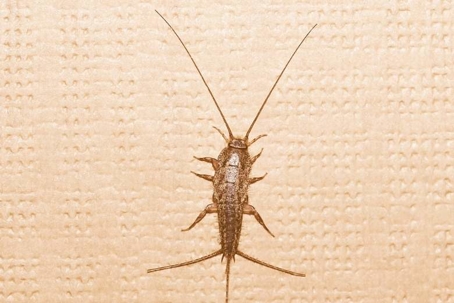
Do Firebrats Bite?
Firebrats (family Thermobia, related to silverfish) are very unlikely to bite humans. They are small, wingless bristletails that primarily feed on starchy materials like paper, glue, and fabrics. Unlike some insects, they do not have mandibles capable of breaking human skin in any significant way.
The only scenarios where a “bite” might theoretically occur are extremely rare and incidental—for example:
If a firebrat is handled roughly or pressed against the skin, it might pinch very lightly with its mandibles.
In highly unusual situations where a person is immobile and there’s a large infestation, there could be minimal irritation, but this is more of a pinching sensation than a true bite.
In practical terms, firebrats do not pose a biting risk. Any irritation associated with them is usually due to allergic reactions to shed scales or feces, not direct biting.
Firebrat Bites
Firebrat “bites” are essentially a non-issue because firebrats almost never bite humans. The risks associated with these very rare, incidental pinches are minimal, if they exist at all. To break it down:
Skin irritation – In the extremely unlikely event a firebrat’s mandibles pinch the skin, it might cause minor redness or slight irritation, similar to a tiny pinch. No swelling or significant tissue damage occurs.
Infection risk – Because firebrats do not pierce the skin or inject any saliva or venom, the risk of infection from a bite is negligible. Any skin irritation could theoretically become infected only if scratched aggressively.
Allergic reactions – The primary health concern with firebrats is not biting, but exposure to their shed scales, feces, or body parts. These can trigger allergic reactions, asthma, or respiratory irritation in sensitive individuals.
Psychological discomfort – Seeing a large number of firebrats crawling on surfaces or in stored items can cause stress or anxiety, but this is not a direct physical health risk.
What people sometimes perceive as “bites” from firebrats are usually minor pinches or allergic reactions, and they are far less significant than the health issues caused by an infestation itself.
What Do Firebrat Bites Look Like?
Actual firebrat “bites” are extremely rare and minor, but when people report them, what they describe is usually more of a pinching sensation than a true bite. Because firebrats don’t normally feed on skin or blood, there’s no typical bite mark like you’d see with mosquitoes, bed bugs, or fleas.
If a firebrat incidentally pinches the skin, you might notice:
Tiny red spots or superficial marks – usually one or two pinprick-sized spots, not clusters.
Mild redness or irritation – sometimes a slight raised area, but generally painless.
No bleeding – the mandibles are too small to break skin in any meaningful way.
Quickly fading symptoms – any redness or irritation usually disappears within a few hours.
Most often, what people think are firebrat bites are actually:
Allergic reactions to shed scales or feces, which can appear as small red bumps or itchy patches.
Scratches or irritation from handling infested materials like paper, books, or clothing.
So if you see multiple itchy bumps, clusters of bites, or persistent irritation, it’s more likely caused by another pest rather than firebrats.
What To Do About Firebrat Bites
If you suspect you’ve been bitten or pinched by firebrats, the steps to take are mostly precautionary, because true bites are extremely rare and harmless:
Clean the area – Wash the skin gently with soap and warm water to remove any potential contaminants. This is standard first aid and prevents irritation or infection.
Apply a mild antiseptic or anti-itch cream – If there’s slight redness or irritation, a topical antiseptic or over-the-counter hydrocortisone cream can reduce discomfort.
Avoid scratching – Scratching can worsen irritation or introduce bacteria, even though the risk from firebrat contact is minimal.
Monitor for reactions – True allergic reactions to firebrats are uncommon, but if you notice significant swelling, hives, or respiratory symptoms, seek medical attention.
Inspect your environment – Firebrats thrive in warm, humid areas with starchy materials like paper, cardboard, or dried food. Reducing humidity, sealing cracks, and cleaning infested materials will help prevent future contact.
Consider pest control measures – While bites are not a major concern, a large infestation can damage household items. Non-toxic traps, sticky barriers, or our professional pest control services can eliminate the population efficiently. Contact us to learn more.
Essentially, the “bite” itself poses no real health risk, but addressing the infestation is the most important step.