
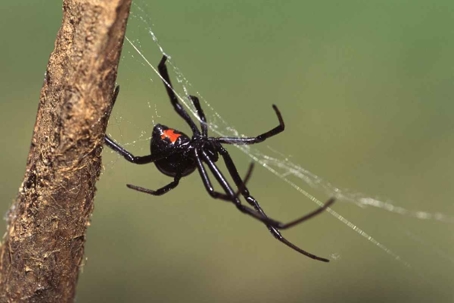
Do Black Widow Spiders Bite?
Black widow spiders are generally not aggressive toward humans. These spiders tend to bite only under specific circumstances. The situations most likely to lead to a black widow bite include:
Accidental contact: Most bites occur when a spider is unintentionally pressed against the skin. This often happens when reaching into dark, undisturbed areas such as woodpiles, sheds, garages, attics, crawl spaces, or under rocks.
Protecting their eggs or web: A female black widow may bite if she feels her web or egg sac is threatened. Disturbing a web or moving an object in their territory increases the risk.
Clothing or gloves handling: Putting on clothes, gloves, or shoes that have been left in areas where black widows live can provoke a defensive bite.
Cleaning or moving stored items: Moving boxes, firewood, or other objects that have been sitting undisturbed in dark corners can disturb a spider and trigger a bite.
Cornered or trapped spiders: If a black widow is trapped between your skin and another surface, such as when rolling over in bed on an infested mattress or during manual work, it may bite defensively.
In general, bites are rare because black widows prefer to stay hidden. Most bites occur in situations where humans inadvertently invade the spider’s territory or fail to check areas before handling objects.
Are Black Widow Spiders Venomous?
Yes, black widow spiders are venomous. Their venom is medically significant and far more potent than that of most common household spiders. Here’s what you should know:
- Venom Composition and Potency: Black widow venom contains a neurotoxin called alpha-latrotoxin. This compound affects nerve endings by causing an excessive release of neurotransmitters. While the venom is powerful, bites are uncommon and rarely life-threatening with modern medical care.
Most healthy adults recover fully, but the bite can cause intense symptoms. Young children, older adults, and individuals with underlying health issues may face greater risk.
Black Widow Spider Venom
Black widow spider venom is a highly potent neurotoxic mixture, with its most significant component being alpha-latrotoxin. This toxin targets the nervous system by forcing nerve cells to release large amounts of neurotransmitters all at once. That sudden chemical dump overstimulates the nerves and muscles, which leads to the intense symptoms associated with a black widow bite.
The venom acts quickly, spreading through the lymphatic system and interfering with normal communication between nerves and muscles. Because it’s neurotoxic rather than cytotoxic, it doesn’t cause the kind of widespread tissue destruction seen with some other spiders. Instead, it triggers systemic effects such as muscle rigidity, cramping, and autonomic nervous system overstimulation.
Although the venom is medically significant, the actual amount injected during a typical defensive bite is usually small. Most healthy adults experience painful but temporary symptoms, while more vulnerable individuals—such as children, older adults, or those with cardiovascular concerns—may react more strongly. Modern medical care, including supportive treatment and antivenom for severe cases, makes serious outcomes rare.
Black Widow Spider Bites
Black widow spider bites can be medically significant, though they are rarely fatal with modern medical care. The severity depends on factors such as the person’s age, health, and the amount of venom injected. Here’s a detailed breakdown:
Severity of Black Widow Bites
Mild to moderate cases: Some bites may cause only localized pain, redness, or swelling at the bite site. Often, a small puncture mark may be visible, but not always.
Systemic (more severe) cases: Venom contains neurotoxins (latrotoxins) that can affect the nervous system, potentially causing systemic symptoms. Symptoms usually appear within 30–60 minutes of the bite but can take a few hours.
Common Symptoms
Pain: Intense, cramping pain at the bite site that can spread to the abdomen, back, or chest.
Muscle spasms and cramps: Often severe and can mimic acute abdominal conditions.
Nausea, vomiting, or sweating: May occur alongside muscle pain.
Restlessness, anxiety, or agitation in some cases.
Elevated blood pressure or heart rate: Rarely severe but more concerning in children or older adults.
High-Risk Groups
Children and elderly adults: More vulnerable to serious systemic effects.
Individuals with chronic health issues: Cardiovascular or neuromuscular conditions may increase complications.
Potential Complications
Severe muscle cramping or rigidity that can impair movement.
Hypertension or tachycardia in sensitive individuals.
Respiratory distress: Rare, but possible in severe envenomations.
Secondary infections: Rarely, if the bite site is scratched or becomes infected.
Treatment Considerations
Medical evaluation is strongly recommended for suspected black widow bites, particularly for children, elderly, or those with underlying conditions.
Pain relief and muscle relaxants may be administered.
Antivenom exists but is usually reserved for severe cases due to potential side effects.
Monitoring vital signs and symptoms until improvement is typical.
While most healthy adults experience moderate discomfort, black widow bites can escalate to significant systemic symptoms, making timely medical attention important.
What Do Black Widow Spider Bites Look Like?
Black widow spider bites can be subtle at first, which sometimes makes them hard to identify without knowing the context of a bite. Here’s what to expect visually and physically:
Immediate Appearance
Small puncture marks: Usually one or two tiny red marks where the fangs penetrated the skin.
Mild redness or swelling: Often localized around the puncture site.
Slight itching or burning: Some bites may feel like a pinprick or mild sting initially.
Within a Few Hours
Increasing redness and swelling: The area may become more pronounced.
Central blistering: Rarely, a small blister may form, but black widow bites often do not develop large blisters like brown recluse bites.
Skin may appear shiny or taut due to localized swelling.
Additional Signs Beyond the Bite Site
Spreading pain: Intense cramping or radiating pain can extend from the bite to the abdomen, back, or shoulders.
Muscle rigidity or spasms: This is a hallmark of envenomation, often appearing several hours after the bite.
Systemic symptoms: Nausea, sweating, or rapid heartbeat may accompany visual changes but are not visible at the bite site.
Key Differentiators
Black widow bites are usually less visually dramatic than other spider bites, like brown recluse bites.
The real “signature” is pain and systemic effects, rather than skin appearance.
In essence, a black widow bite might initially look like a tiny, slightly red spot, but the surrounding pain and cramping often reveal its seriousness.
What To Do About Black Widow Spider Bites
If you are bitten by a black widow spider, immediate and careful action is crucial, even if the bite initially seems mild. Here’s a step-by-step guide:
Stay Calm and Assess
Try to remain calm—stress can worsen symptoms.
Note the time of the bite and the location. If possible, safely capture or photograph the spider for identification, but do not risk another bite.
Clean the Bite
Wash the area gently with soap and water to reduce the risk of infection.
Apply a mild antiseptic if available.
Control Pain and Swelling
Apply a cold pack or ice wrapped in cloth for 10–15 minutes at a time to reduce pain and swelling.
Keep the affected limb elevated if possible.
Over-the-counter pain relievers (acetaminophen or ibuprofen) can help manage discomfort.
Immobilize and Monitor
Limit movement of the bitten limb to slow venom spread.
Monitor for systemic symptoms such as severe abdominal pain or cramping, muscle spasms or rigidity, nausea, vomiting, or sweating, rapid heart rate or high blood pressure.
Children, elderly adults, and people with chronic health conditions are at higher risk for severe reactions.
Seek Medical Attention
Call a doctor or go to the emergency room immediately, especially if any systemic symptoms develop.
Bring identification of the spider if possible—this helps doctors determine treatment.
Medical professionals may administer pain management or muscle relaxants, antivenom in severe cases (rarely needed, but life-saving if indicated), and monitoring for complications such as elevated blood pressure or respiratory distress
Avoid Home Remedies
Do not attempt to cut, suck, or apply harsh chemicals to the bite.
Avoid constrictive bandages or tourniquets unless specifically instructed by medical personnel.
Black widow bites are rarely fatal in healthy adults, but they can cause significant pain and systemic effects. Prompt medical evaluation is essential, particularly for children, older adults, or anyone with underlying conditions. Early intervention reduces complications and speeds recovery.