
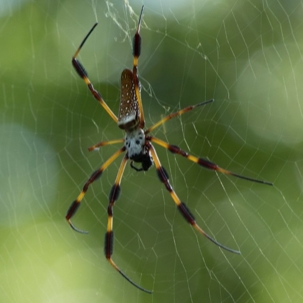
Are Banana Spiders Poisonous Or Venomous?
Golden silk orb-weavers, commonly referred to as banana spiders, are venomous, not poisonous.
Are Banana Spiders Poisonous?
No, banana spiders (golden silk orb-weavers) are not poisonous. Their bodies do not contain toxins that are harmful if touched or ingested. The danger they pose comes only from their venomous bite, not from being eaten or handled.
Are Banana Spiders Venomous?
Yes, banana spiders (golden silk orb-weavers) are venomous. They use venom to subdue insects, their primary prey, but the bite of a banana spider is generally harmless to humans. Symptoms from a bite are usually mild, including localized pain, redness, or swelling, and severe reactions are extremely rare. These spiders are non-aggressive and only bite if provoked, making them more of a beneficial predator than a threat.
Banana Spider Venom
Banana spider (golden silk orb-weaver) venom (poison) is a complex mixture of proteins and peptides primarily designed to immobilize and digest insect prey. It is neurotoxic to insects but generally has only mild effects on humans.
Enzymatic Components: The venom contains enzymes such as proteases and hyaluronidases, which help break down tissues of prey and facilitate the spread of venom. These enzymes contribute to the local pain and swelling when a human is bitten.
Neurotoxic Peptides: Small neurotoxic peptides in the venom interfere with nerve signaling in insects, causing paralysis. In humans, these peptides are much less potent, which is why bites rarely produce serious systemic effects.
Other Proteins: The venom also includes various non-enzymatic proteins that aid in prey immobilization and digestion, as well as minor compounds that may deter predators.
Effect on Humans: In humans, the venom usually causes localized symptoms such as redness, swelling, mild pain, and sometimes a burning sensation. Severe reactions are rare and mostly limited to allergic responses.
The venom is highly efficient for capturing insects, allowing the spider to subdue prey larger than itself and maintain its role as a natural pest controller.
Does Banana Spider Venom Hurt?
Yes, banana spider (golden silk orb-weaver) venom can cause pain at the bite site. Most bites produce a mild to moderate stinging or burning sensation, often accompanied by redness and tenderness. The discomfort is usually temporary, lasting a few hours to a day, and rarely requires medical treatment.
Does Banana Spider Venom Itch?
Yes, banana spider (golden silk orb-weaver) venom can cause itching at the bite site. The mild inflammatory response triggered by the venom often leads to localized itching, sometimes accompanied by redness or slight swelling. This itching is generally short-lived and resolves within a day or two.
Signs Of Banana Spider Envenomation
Banana spider (golden silk orb-weaver) venom usually causes mild, localized symptoms in humans:
Local Pain and Discomfort: Immediate pain or a stinging sensation at the bite site. Pain is typically mild to moderate and usually subsides within a few hours.
Redness and Swelling: The area around the bite may become red, inflamed, and slightly swollen. Swelling is usually localized and does not spread far from the bite site.
Itching or Burning: Some bites cause a burning or tingling sensation that may last several hours. Mild itching can also occur as the venom interacts with skin tissues.
Minor Systemic Effects (Rare): Headache, nausea, or general fatigue may occur in very sensitive individuals, but this is uncommon. Severe allergic reactions are extremely rare.
Banana spider bites are generally not dangerous, causing only temporary discomfort and minor skin reactions.
Does Banana Spider Venom Cause Swelling?
Yes, banana spider (golden silk orb-weaver) venom can cause swelling at the bite site. The venom’s enzymes and proteins trigger a mild inflammatory response in human tissue, leading to localized redness, puffiness, and sometimes tenderness. This swelling is usually limited to the area around the bite and typically resolves within a day or two without serious complications.
What To Do About Banana Spider Envenomation
Banana spider bites are rarely serious. Proper care focuses on managing mild local symptoms and monitoring for allergic reactions. Here’s what to do:
Immediate Cleaning: Wash the bite area thoroughly with soap and cool water to remove any residual venom or dirt. Pat the area dry with a clean towel.
Reduce Pain and Swelling: Apply a cold compress or ice pack (wrapped in a cloth) to the bite for 10–15 minutes at a time. Elevate the affected limb if possible to help reduce swelling.
Topical Relief: Over-the-counter antihistamine creams or hydrocortisone cream can help with itching and redness. Oral antihistamines (e.g., cetirizine or diphenhydramine) may reduce itching or mild allergic reactions.
Pain Management: For discomfort, acetaminophen or ibuprofen can be taken according to package instructions.
Monitor for Unusual Symptoms: Watch for severe swelling, spreading redness, fever, intense pain, or signs of infection. Rarely, allergic reactions may cause hives, difficulty breathing, or dizziness. Seek emergency medical attention if these occur.
Avoid Provoking Spiders: Keep the area clear of banana spiders and wear gloves when gardening or handling debris to prevent additional bites.
Healing Timeline: Most symptoms resolve within 1–2 days, with minimal lasting effects. If redness or swelling worsens after 48 hours, consult a healthcare provider.
Care is mainly supportive and symptomatic, as banana spider venom is mild in humans. Serious complications are extremely uncommon.