
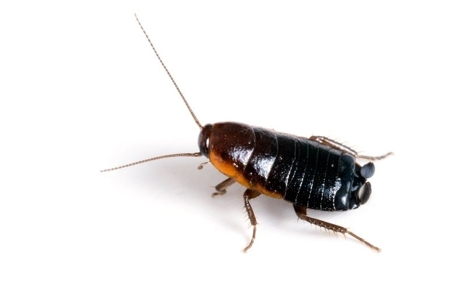
What Do Water Bugs Eat?
Water bugs are opportunistic scavengers with a strong preference for decaying, damp, or fermented organic matter. Their diet revolves around anything that provides moisture and a reliable nutrient source. In practical terms, they target:
Rotting plant debris: wet leaves, mulch, compost, and any organic buildup around foundations or basements.
Decomposing food scraps: especially those high in starches, sugars, and grease.
Sewage and gutter residue: they thrive on the organic sludge found in drains, floor traps, and damp crawl spaces.
Pet food and spilled human food: even small residues in kitchens, pantries, or outdoor feeding areas.
Trash and recycling buildup: particularly moist garbage or unwashed containers.
Because they’re slower and less agile than other cockroach species, they gravitate toward easily accessible, moisture-rich food sources rather than hunting or climbing for dry materials. This preference for wet, decaying matter is why they’re commonly found in basements, crawl spaces, sewer lines, and outdoor areas with poor drainage.
Do Water Bugs Eat Sewage?
Yes—water bugs do in fact feed on materials found in sewage. They’re strongly drawn to the organic residue present in sewer lines, floor drains, and other wet, decaying environments. What they’re actually consuming isn’t the water itself but the organic matter suspended in sewage, such as decomposed food waste, fats, proteins, microbial films, and other nutrient-rich sludge.
Their biology is perfectly suited for this kind of environment: they tolerate high moisture, low light, and unsanitary conditions, and they rely on slow-moving or stationary food sources. This is why water bugs commonly enter structures through gaps near sewer penetrations, damaged drain lines, and damp utility areas.
Do Water Bugs Eat Trash?
Yes, they do. Water bugs readily feed on trash, especially when it contains moist, decomposing, or greasy material. What attracts them most is:
Wet food scraps
Fermenting or rotting leftovers
Grease-soaked paper or packaging
Unwashed cans or containers
Organic sludge that builds up at the bottom of trash bins
Because their diet is built around damp, decaying organic matter, a trash can—especially one with moisture or residue—is an ideal food source. This is why keeping trash sealed, dry, and frequently emptied is such an important part of controlling water bugs around structures.
Do Water Bugs Eat Human Food?
Yes. Water bugs will absolutely eat human food whenever they can access it. They’re not picky, and once they find a source that’s easy to reach and has enough moisture, they’ll feed on it just like they would any other organic material. They’re especially drawn to foods with starches, sugars, fats, and proteins—bread, pastries, fruit, leftovers, grease residues, and even small crumbs on floors or counters. Dry foods are less attractive unless they’ve absorbed moisture, which is why spills, leaks, and condensation become powerful magnets. Their ability to survive on tiny amounts of residue means even minimal contamination can sustain them, making sanitation and moisture control essential parts of prevention.
Do Water Bugs Eat Pet Food?
Water bugs will go after almost any pet food, but their strongest attraction is to items that hold moisture, carry strong odors, or develop a soft, fermenting surface as they sit out. Softened or oily foods mimic the damp, decaying organic material they naturally seek. Wet cat food, moist dog kibble, leftover pet gravy, and any feed that absorbs humidity overnight are high-value targets. Even dry kibble becomes appealing once it absorbs moisture from a water bowl nearby, a leaking sink, or the general humidity of basements, garages, and crawl spaces. Foods with fish, poultry, or high-fat formulations tend to draw them more aggressively because they break down quickly and produce the kind of scent profile that signals an easy meal. Outdoor pet bowls, especially those left out overnight, are some of the most common hotspots because they combine warmth, moisture, and consistent food access—conditions water bugs are highly adapted to exploit.
Do Water Bugs Eat Dog Food?
They’ll eat virtually any dog food, but certain types attract water bugs much more strongly because of moisture, aroma, and the way the food breaks down over time. Their strongest draws are:
- Wet or canned dog food: This is the top attractant. Its high moisture content, rich smell, and soft texture mimic the decaying organic material they naturally feed on. Even dried crust around the bowl remains appealing.
- Moist or semi-moist dog food (pouches, soft chunks, “fresh” blends): Anything with added moisture, oils, or soft binders becomes a prime target. Once exposed to air, these foods ferment quickly—making them even more attractive.
- Dry kibble that gets humid or softened: Standard kibble isn’t their first choice when it’s completely dry, but once it absorbs moisture—from a water bowl, humidity, or overnight outdoor exposure—it becomes highly appealing. Flavored kibble (beef, chicken, fish) is even more attractive due to stronger fats and scent profiles.
- High-fat, high-protein formulations: Performance blends, puppy food, and fish- or poultry-based recipes break down faster and produce a stronger odor, which increases attraction.
Crumbs under appliances, leftover particles inside storage bins, and stale kibble at the bottom of bags can sustain them easily, especially when humidity is high.
Do Water Bugs Eat Cat Food?
Cat food tends to contain higher protein and fat levels, stronger aromas, and more moisture than most dog food formulations, and those traits line up perfectly with what water bugs seek in a food source. Soft textures and high moisture mimic the decaying organic material they naturally feed on, so wet cat food becomes a powerful draw—especially once it has sat out for a while and begun to ferment.
Dog food is certainly attractive too, particularly high-fat or fish-based varieties, but in direct comparison, moist cat food generally produces a stronger and faster response. Dry kibble from either species is less appealing when fresh, but once humidity softens it, both become viable food sources.
Do Water Bugs Eat Plants?
They don’t typically feed on living, healthy plants. Water bugs are scavengers, and what they’re really after is decaying or fermenting plant material, not fresh foliage. In outdoor environments, they’re most likely to consume:
Rotting leaves collected in gutters, mulch beds, foundation plantings, and damp corners of the yard.
Decomposing mulch, especially wood mulch that stays wet and breaks down into a soft, organic layer.
Decayed stems or fallen plant debris under shrubs, around downspouts, or in shaded garden beds.
Compost material, particularly vegetable scraps or wilted vegetation that has started to ferment.
Their feeding behavior is tied tightly to moisture and decomposition, so they gravitate toward plant matter that is already breaking down. They generally avoid fresh plant tissues because those don’t offer the soft texture or microbial activity they rely on for nutrients.
Do Water Bugs Eat Compost?
They’re most drawn to compost materials that stay wet, warm, and rich in decaying organic matter—the exact conditions that mirror their preferred natural habitat. Water bugs gravitate toward compost types that break down quickly and produce strong microbial activity. The most attractive categories include:
High-moisture kitchen scraps: These break down quickly, stay wet, and generate strong microbial activity—conditions water bugs naturally seek. Fruit and vegetable scraps, coffee grounds, tea bags, and soft produce create a fermenting layer that provides easy, nutrient-rich feeding.
High-protein or high-fat organic waste: As these materials decompose, they produce richer odors and more intense biological activity. Even small residues from meat, dairy, or oily foods can become powerful attractants once they start breaking down in a warm, damp compost environment.
Rotting plant debris: Wet leaves, grass clippings, and softened plant stems replicate the decaying vegetation these insects feed on outdoors. When these materials sit in a pile and retain moisture, they create a soft, decomposing layer water bugs find particularly appealing.
Anaerobic, waterlogged compost pockets: Poor airflow and excess moisture create slimy, low-oxygen zones that resemble sewer and drain environments. These soggy pockets develop thick organic sludge, making them ideal for water bugs seeking protected, nutrient-dense feeding sites.
Green-heavy, unbalanced compost: When compost contains too many nitrogen-rich greens and not enough dry browns, it becomes overly wet and heats up quickly. This imbalance accelerates decomposition and produces the kind of damp, fermenting material that reliably attracts water bugs.
Compost with good airflow, ample dry browns, and proper moisture management is far less attractive because it stays drier, more fibrous, and less odor-rich.