
What Do Silverfish Eat?
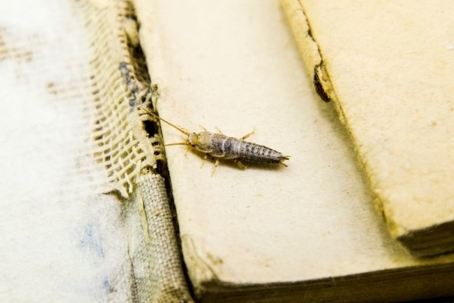
Silverfish feed on materials rich in starch, sugars, and certain proteins. In homes, these bristletails are drawn to items like paper, books, glue, wallpaper paste, cardboard, and stored documents because the adhesives and cellulose provide ideal nutrition. They also consume natural fibers such as cotton, linen, and silk, especially if those items contain traces of sweat, skin cells, or food residue. Pantry goods like flour, oats, and dried cereals can attract them as well, along with pet food, dead insects, and even dust that contains microscopic carbohydrates. Their broad diet allows them to survive in many environments, which is why they’re such persistent household pests.
Do Silverfish Eat Paper?
Yes, silverfish eat paper. In fact, paper and anything containing cellulose are some of their preferred food sources. They’re especially drawn to:
Books, book bindings, and pages
Magazines and newspapers
Cardboard and file folders
Wallpaper and wallpaper paste
Envelopes and stored documents
They don’t just eat the paper itself—they also seek out the glues, adhesives, and starch-based pastes used in bindings and packaging, which are even more nutritious for them.
If you have papers or books stored in humid, dark, or undisturbed areas, those conditions make them even more vulnerable, since moisture supports both silverfish activity and the growth of microscopic mold they also feed on.
Keeping humidity low, sealing stored documents, and using airtight bins can help prevent damage.
Do Silverfish Eat Books?
Silverfish are most likely to damage any books that contain plenty of cellulose, starches, or adhesives, but certain types are especially vulnerable because of the materials used in their pages, bindings, and glues. Here are the books at highest risk:
- Older Books (Pre-1980s Especially): Older publishing methods used starch-based glues, natural adhesives, and higher-cellulose papers, all of which silverfish readily eat. Antique or vintage books are prime targets.
- Hardcovers With Traditional Bindings: Hardcover books often contain starch-based binding glue, cloth or paper-covered boards, and decorative endpapers. These materials are highly attractive food sources.
- Books With Uncoated or High-Cellulose Paper: Textbooks, novels, and older paperbacks with porous, matte pages tend to draw silverfish more than glossy modern paper.
- Books Stored in Damp or Humid Conditions: Moisture increases both mold growth and silverfish activity. Books in basements, attics, garages, and closets are at much higher risk.
- Books With Residues or Contamination: Anything stored in areas where dust, skin cells, or food particles settle can attract them. Even tiny residues are enough.
- Archival Items and Documents: Scrapbooks, diaries, sheet music, old records in paper sleeves, and collections stored for years without disturbance often show the worst damage.
- Types of books they’re less likely to eat: Modern glossy magazines and books printed on heavily coated, clay-treated paper are less appealing because the coating makes cellulose harder to access.
If you're trying to protect a collection, the most effective measures are lowering humidity, keeping books off the floor, storing rare items in sealed containers, and avoiding long-term storage in damp, dark areas where silverfish thrive.
Do Silverfish Eat Cardboard?
Yes, silverfish do eat cardboard. Cardboard is made from cellulose, which is one of their primary food sources. They’re especially attracted to:
Corrugated cardboard boxes (the softer inner layer is easier for them to chew)
Storage cartons kept in humid or dark areas
Cardboard that has glue, labels, or tape residues
Old or damp cardboard, which may also hold mold—another silverfish food source
Because cardboard is often used for long-term storage in basements, attics, and closets, it creates an ideal combination of food, shelter, and humidity, making it a common place to find activity.
If you’re storing items long-term, switching from cardboard to plastic, sealed containers can significantly reduce silverfish attraction and prevent damage.
Do Silverfish Eat Wallpaper?
Yes, silverfish can eat wallpaper. They’re not usually after the decorative surface itself—they’re after the starches, cellulose, and adhesives that hold wallpaper to the wall. Traditional wallpaper pastes, especially older or non-synthetic ones, are rich in starch and make an excellent food source for them.
They’re most likely to damage:
Older wallpaper that used starch-based paste
Wallpaper with paper backings (cellulose-rich)
Damp or poorly ventilated areas, where the paste softens and mold can grow
Loose seams or edges, which give them easy access to the adhesive layer
If the wallpaper is peeling, bubbled, or the room is humid, silverfish can exploit those spots and feed behind the surface. Reducing moisture and sealing gaps typically helps stop the issue.
Do Silverfish Eat Fabrics?
Silverfish do eat certain fabrics, but only when those fabrics contain natural fibers or organic residues they can digest. They’re not interested in the fiber itself so much as the starches, sugars, and proteins that are part of the material or its finishes.
They commonly feed on:
Cotton, linen, and other plant-based fibers, especially if the fabric is starched or holds body oils, sweat, or food traces.
Silk and rayon, which contain natural proteins or cellulose.
Wool blends, if the blend includes plant-based fibers or has appealing residues in the weave.
Heavily starched clothing or linens, because starch is a prime food source for them.
They generally do not eat pure synthetics like polyester or nylon, but they may still nibble at the surface if a fabric has any edible residues or natural blends mixed in.
If you're seeing fabric damage and suspect silverfish, controlling humidity, removing clutter, and storing susceptible textiles in sealed containers will help cut off both food sources and hiding spots.
Do Silverfish Eat Cotton?
Yes, silverfish do eat cotton. Cotton is a natural cellulose-based fiber, and cellulose is one of their primary food sources. While they don’t typically chew through clean cotton as aggressively as they do paper or adhesives, they will readily feed on cotton garments and linens when any of the following are present:
Body oils, sweat, or skin cells trapped in the fabric
Food stains or crumbs
Starch-based laundry products (a major attractant)
Dust or organic residues accumulated during storage
High humidity, which softens fibers and may allow mold to grow—another food source
This is why stored cotton clothing, bedding, and table linens kept in dark, humid, or infrequently disturbed places often show silverfish damage.
Regular washing, lowering humidity, and storing cotton items in sealed containers can help prevent feeding and fabric deterioration.
Do Silverfish Eat Linen?
Yes, silverfish do eat linen. Linen, like cotton, is made from natural cellulose fibers, and cellulose is one of their key food sources. While they may not attack pristine linen as aggressively as paper or starchy materials, they will readily feed on it when certain conditions make the fabric more appealing.
They are most likely to damage linen when it contains:
Body oils, sweat, or skin cells absorbed into the fibers
Food residue or drink spills
Starch from laundry products, which is a major attractant
Dust or other organic particles that collect during storage
Moisture or mild mold growth, both of which increase feeding
Linen items at highest risk include stored bedding, tablecloths, napkins, summer clothing, and heirloom linens kept in humid, dark, or seldom-disturbed spaces.
Do Silverfish Eat Rayon?
Yes, silverfish can eat rayon. Even though rayon is a manufactured fabric, it’s made from processed cellulose, and cellulose is one of the main components silverfish digest easily. That makes rayon more vulnerable than fully synthetic fibers like polyester or nylon.
They’re most likely to feed on rayon when:
The fabric has body oils, sweat, or skin cells trapped in it
There are food stains or drink residues present
The garment was treated with starch, either in manufacturing or laundering
It’s stored in a humid, dark, or rarely disturbed area
The material has begun to grow light mold, which they also consume
Rayon blouses, dresses, scarves, and stored vintage pieces are common targets.
Do Silverfish Eat Silk?
Yes, silverfish do eat silk. Silk contains natural proteins that make it a suitable food source for them, especially when the fabric carries additional organic residues that increase its nutritional value.
They’re most likely to damage silk when the material has:
Body oils, sweat, or skin cells absorbed into the fibers
Food or drink residues, even tiny amounts
Starch from manufacturing or laundering, which is highly attractive
Light mold growth in humid conditions
Dust or organic particles that settle on stored garments
Silk items at the highest risk include scarves, blouses, ties, dresses, lingerie, and vintage garments stored in dark, warm, or humid areas—conditions where silverfish thrive.
Do Silverfish Eat Clothes?
Silverfish are most likely to eat clothing made from natural fibers, especially when those items contain starch, sugars, proteins, or organic residues. They go after the nutritional components, not the fabric itself, so anything with edible finishes or contamination becomes a target.
The items most at risk include:
- Starched Clothing: Starch is one of their favorite foods. Dress shirts, table linens, or vintage garments that were heavily starched are highly attractive.
- Cotton and Linen Garments: Natural plant fibers contain cellulose, which silverfish can digest. T-shirts, bed sheets, summer dresses, and cotton underwear are vulnerable—especially if they have sweat, body oils, or food traces.
- Silk Clothing: Silk contains natural proteins they’ll readily consume. Scarves, blouses, ties, or stored formalwear can be at risk.
- Rayon and Other Cellulose-Based Fabrics: Although man-made, rayon comes from processed cellulose, making it a suitable food source.
- Fabric Blends with Natural Fibers: Any polyester-cotton or other mixed blend can become appealing if the natural portion is accessible or the garment has organic residues.
- Stored or Vintage Clothing: Anything kept in dark, undisturbed, humid areas—attics, basements, spare closets—is especially vulnerable because silverfish thrive in those conditions.
If you’re worried about clothes being eaten, storing susceptible items in sealed containers, reducing humidity, and limiting food or skin-oil residues through regular washing will significantly reduce the risk.
Do Silverfish Eat Polyester?
Silverfish don’t eat polyester itself because it’s a synthetic fiber with no nutritional value for them. However, they may still damage polyester items if the fabric is blended with natural fibers or has residues they can feed on, such as food particles, body oils, starch-based sizing, or contaminants from storage. They can also graze on the surface if there are traces of natural materials in the dyes or finishes. So while polyester isn’t a true food source, it can still suffer incidental damage when silverfish explore it for anything edible.
Do Silverfish Eat Mold?
Yes, silverfish do eat mold. Fungi are actually one of their natural food sources, especially in damp, poorly ventilated areas where mold grows easily. Moist environments support both mold growth and the humidity silverfish need to survive, so the presence of mold can make a space even more attractive to them. Removing excess moisture, improving airflow, and addressing any mold issues can significantly reduce silverfish activity.