
How To Get Rid Of Carpenter Ants
Carpenter ants are one of the more destructive pests you can encounter, since they don’t just invade homes for food—these ants tunnel into wood to build their nests, which can compromise the structure of your property. Getting rid of them requires a combination of locating the nest, eliminating the colony, and preventing future infestations. Here’s how to get rid of carpenter ants:
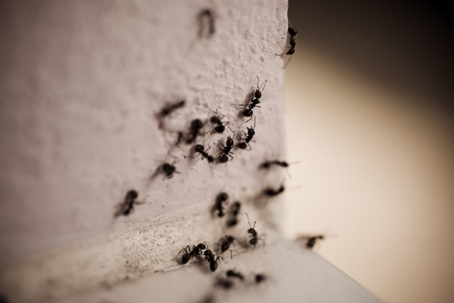
Identify the infestation: Before taking action, confirm that the ants are carpenter ants. Look for large black or reddish-black ants, approximately 1/4 to 1/2 inch long. Check for sawdust-like material called frass near wooden structures, hollow-sounding wood, and ant trails, especially near moisture-prone areas like sinks, windows, or roof eaves.
Locate the nest: Carpenter ants often nest in moist or decayed wood. Inspect areas such as window frames, door frames, attic beams, crawl spaces, and wooden siding. Outdoors, check stumps, firewood piles, or decayed tree roots. Tracking ant trails at night with a flashlight can help pinpoint the colony’s entry points and main nest.
Eliminate moisture sources: Moist wood attracts carpenter ants. Repair leaky pipes, faucets, roof leaks, and any water damage. Ensure proper ventilation in attics and crawl spaces. Dry out wet wood or replace severely damaged areas to make the environment less hospitable to ants.
Remove or reduce food sources: While carpenter ants primarily eat other insects and sugary substances, reducing access to food can discourage activity. Keep food sealed, clean up spills promptly, and manage garbage and compost bins near the structure. Remove potential outdoor attractants, such as pet food left outside or rotting fruit.
Use baits strategically: Commercial carpenter ant baits containing boric acid, hydramethylnon, or fipronil are effective. Place them along ant trails and near suspected nesting areas. Carpenter ants carry the bait back to the colony, gradually eliminating workers, larvae, and the queen. Be patient—baiting may take several weeks to show significant results.
Apply targeted insecticides: For immediate reduction, use a perimeter insecticide labeled for carpenter ants, such as a residual spray along foundations, entry points, and around windows and doors. Avoid spraying inside walls unless specifically designed for such use, as improper application can scatter ants and worsen the problem.
Remove accessible nests: If you locate a satellite or main nest in accessible wood, remove the infested wood or apply a dust insecticide directly inside the nest. Boric acid dust or diatomaceous earth can be applied into wall voids using a flexible injection tool. Always follow safety instructions for dust or liquid insecticides.
Seal entry points: After treatment, caulk cracks, gaps, and crevices around windows, doors, foundations, and rooflines to prevent reentry. Pay special attention to areas where electrical, plumbing, or HVAC systems penetrate the building.
Monitor and maintain: Even after active treatment, continue monitoring ant activity for several months. Replace baits as needed, check for new frass deposits, and maintain dry, well-ventilated conditions. Early detection of any recurrence is critical to preventing a full reinfestation.
Consider professional follow-up: While the steps above are effective for minor infestations, carpenter ants can be highly persistent, especially in structural wood. Our licensed pest control professionals perform a thorough inspection, locate hidden colonies, and apply treatments not available to homeowners for a more permanent solution.
The way to get rid of carpenter ants is to locate the nest, use slow-acting baits and dust treatments, eliminate moisture problems, and seal entry points. If you can’t find the nest—or if you’re dealing with recurring infestations— our professional treatments are the most effective long-term solution.
How To Get Rid Of Carpenter Ants Fast
If speed is your primary goal, you need to combine methods that both eliminate existing ants immediately and target the colony at its source. Carpenter ants are challenging because killing only visible ants does not affect the queen or satellite nests, so a strategic approach is required. Here’s the fastest-action strategy:
Immediate knockdown with contact insecticides: Use a fast-acting spray (pyrethroid-based or deltamethrin) directly on visible ants and along trails. This kills ants on contact and reduces the visible population quickly, giving you immediate relief. Focus on entry points, around windows, doors, and baseboards.
Use liquid or gel baits containing slow-acting toxins: Products with boric acid, fipronil, or hydramethylnon are carried back to the nest by worker ants. While contact sprays work fast, baits are what actually eliminate the queen and the colony, which is essential for long-term control. Place baits along trails and near suspected nest locations. For fastest results, use multiple bait stations and check them daily.
Locate and treat the main nest: Carpenter ants nest in moist or decaying wood. If you can find the nest, applying a dust insecticide (boric acid or diatomaceous earth) directly into the voids can kill the queen and larvae quickly. For accessible nests, removing the infested wood entirely accelerates eradication.
Eliminate conducive conditions: Dry out any damp wood, fix leaks, and improve ventilation. Moisture attracts carpenter ants and slows treatment effectiveness if not addressed.
Combine residual sprays and perimeter treatment: Apply a long-lasting residual insecticide along foundations, entry points, and potential outdoor nest sites. This prevents new ants from entering while baits and direct nest treatments take effect.
Continuous monitoring and retreatment: Check for new activity daily. Replace baits as needed and reapply sprays or dusts in problem areas. Fastest results come from aggressive, repeated treatment rather than a single application.
The fastest eradication happens when you combine contact sprays for immediate kill, baits for colony elimination, and direct nest treatment if accessible. Sprays alone may reduce visible ants, but the colony can survive and return.
How To Get Rid Of Carpenter Ants Permanently
Permanently eliminating carpenter ants requires a colony-focused, multi-pronged approach, because simply killing the ants you see will not remove the queen or satellite nests. Here’s a strategy that maximizes your chances of long-term eradication of carpenter ants:
Accurate identification of the infestation: Confirm that the ants are indeed carpenter ants. Look for large black or reddish-black ants, frass (sawdust-like debris), and hollow-sounding wood. Proper identification ensures you’re using treatments designed specifically for carpenter ants rather than general ant control methods, which often fail.
Locate the colony: Carpenter ants rarely live exclusively outdoors; they often establish satellite nests in moist or decayed wood inside structures. Tracking trails at night or using non-toxic food baits can help pinpoint the main and satellite nests. Permanent solutions require treatment at the source.
Eliminate moisture and conducive conditions: Moist, rotting, or soft wood is the primary attractant. Repair leaks, replace water-damaged wood, and improve ventilation in attics, crawl spaces, and basements. Dry wood and remove decaying debris to make your property inhospitable. Without addressing these conditions, ants may simply reestablish elsewhere.
Use slow-acting toxic baits strategically: Baits containing boric acid, hydramethylnon, or fipronil are carried back to the colony by worker ants, killing larvae and the queen over time. Place baits along trails and near suspected nesting areas. Unlike sprays, baits address the root of the infestation and are the most reliable method for permanent elimination.
Direct nest treatment: If a nest is accessible, dust insecticides or targeted liquid treatments directly into the colony can kill the queen and larvae. For nests in structural wood, removal of the affected wood may be necessary. This step is critical for permanently removing established colonies.
Perimeter and residual treatments: Apply residual insecticides along building perimeters, baseboards, and entry points. This prevents new ants from entering and protects against satellite nests that may emerge outside. Using residuals in combination with baits reinforces the colony-focused approach.
Regular monitoring and follow-up: Even after aggressive treatment, continue inspecting for activity for several months. Replace baits as needed, monitor trails, and address new moisture or wood issues immediately. Carpenter ants reproduce slowly, so repeated checks ensure the colony has been completely eradicated.
Professional intervention for severe infestations: Large or hidden infestations may require professional assessment. Our pest control specialists can locate inaccessible nests, use advanced treatments like injected dusts or foams in wall voids, and guarantee long-term results. This is often the only way to ensure total, permanent elimination in complex structures.
Permanent control depends on eliminating the colony, addressing moisture issues, and preventing reentry. Baits targeting the queen and larvae, direct nest treatments, and habitat modification are far more effective than sprays alone, which only kill workers temporarily.
How To Get Rid Of Carpenter Ants Naturally
Natural methods for carpenter ant control can be helpful, but it’s important to understand their limitations. Unlike chemical treatments, natural solutions rarely guarantee complete eradication, especially if there is an established colony with a queen and satellite nests. They are most effective for small infestations, prevention, or as part of an integrated approach. Here are some natural strategies that have real impact:
Diatomaceous earth (food-grade)
How it works: Diatomaceous earth damages the ants’ exoskeletons, causing dehydration and death.
Application: Sprinkle in cracks, wall voids, and along ant trails. Reapply after cleaning or moisture exposure.
Effectiveness: Slower than chemical dusts and works mainly on workers, but can reduce colony size if used consistently.
Boric acid-based baits
How it works: A small amount of boric acid mixed with sugar, honey, or peanut butter is carried back to the nest. It kills larvae and the queen over time.
Application: Place in shallow containers along ant trails and near nesting sites. Ensure pets or children cannot access.
Effectiveness: Among natural approaches, this is one of the most effective colony-level treatments, though results take days to weeks.
Essential oils (peppermint, tea tree, citrus, or orange oil)
How it works: Strong scents repel ants and can disrupt trail pheromones. Orange oil in particular can kill exposed ants on contact.
Application: Spray diluted oils (10–20 drops per cup of water) along entry points, baseboards, and window sills.
Effectiveness: Repellent effect is temporary and does not kill the colony; best used as a preventive or in combination with baits.
Boiling water or steam for outdoor nests
How it works: Directly pouring boiling water over accessible outdoor nests can kill some ants. Steam cleaners can also penetrate wood surfaces.
Application: Use carefully to avoid damage to plants or structures.
Effectiveness: Works for small, accessible nests but does not reach hidden indoor colonies.
Physical exclusion and habitat modification
How it works: Removing rotting wood, trimming tree branches away from structures, repairing leaks, and sealing cracks eliminates nesting sites.
Effectiveness: Essential for preventing re-infestation, but does not directly kill an existing colony.
Sticky barriers or traps
How it works: Sticky traps capture foraging ants, allowing monitoring and reducing worker populations.
Effectiveness: Reduces visible ants temporarily but does not impact the queen or nest. Useful for early detection or as a supplement to baits.
Among natural methods, boric acid baits combined with habitat correction have the highest potential to eliminate a colony over time. Other methods like essential oils, diatomaceous earth, and traps are supportive—they help reduce activity and prevent re-entry but are rarely sufficient alone for permanent eradication.
The Best Way To Get Rid Of Carpenter Ants
Our professional pest control is the best way to get rid of carpenter ants because these ants are exceptionally difficult to locate, eliminate, and prevent without expert training, specialized tools, and proven treatment methods. Carpenter ants don’t eat wood like termites do—they excavate it to create nesting galleries. This means their primary nest is often hidden deep inside wall voids, attics, crawl spaces, or even outdoor trees, while satellite colonies spread throughout the structure. As a result, DIY sprays or baits typically only kill the visible foragers, leaving the parent colony intact and allowing the infestation to persist or return. Here’s why our professional pest control provides the most effective, long-term solution:
Expert Identification and Inspection: Our professionals can accurately identify carpenter ants and differentiate them from other ant species that require different treatments. We know how to trace foraging trails, frass deposits (wood shavings), and moisture conditions to locate hidden nests both indoors and outdoors.
Targeted Treatment Strategies: Our pest control experts use non-repellent insecticides, baits, and dust formulations specifically designed for carpenter ants. These professional-grade products reach deep into colonies, ensuring the entire nest—including the queen—is eliminated.
Comprehensive Colony Elimination: Rather than treating just the surface or entry points, our professionals target both the parent and satellite colonies, preventing re-infestation and achieving total eradication.
Advanced Equipment and Technology: We use advanced methods to detect and treat infestations where DIY methods can’t reach.
Prevention and Long-Term Protection: Our professional services don’t stop at elimination—we include recommendations and treatments to seal entry points, reduce wood-to-soil contact, and control the moisture issues that attracted carpenter ants in the first place.
Safety and Environmental Considerations: Our licensed professionals use EPA-approved products applied safely and precisely, minimizing risks to humans, pets, and the environment while maximizing effectiveness.
Guaranteed Results and Follow-Up: We provide warranties and maintenance plans that ensure carpenter ants won’t return, giving homeowners peace of mind and protecting their property investment.
Our professional pest control combines scientific expertise, precision tools, and comprehensive strategies that DIY efforts simply can’t match. It’s the most reliable way to eliminate carpenter ants completely and safeguard your home from future damage.
Get Rid Of Carpenter Ants With Miche Pest Control
Hiring our team of professionals at Miche Pest Control is an investment in long-term protection, expertise, and peace of mind. Here’s why:
- Personalized Service and Local Expertise: We know the specific pest pressures in the area. Our technicians understand the environment, climate, and building types common to the area, allowing them to provide targeted, effective treatments.
- High-Quality, Comprehensive Solutions: As a full-service provider, we don’t just treat surface problems; we address the root causes. From inspections and prevention to exclusion and ongoing maintenance, we deliver complete, integrated pest management (IPM) programs designed to both eliminate infestations and prevent future ones.
- Accountability and Reliability: We live and die by our reputation. We rely on trust, referrals, and repeat business, meaning we're committed to doing the job right the first time and providing exceptional customer care.
- Faster Response Times: We respond quickly to emergencies and schedule services sooner than large, national chains. Especially when you’re dealing with urgent pest issues, that speed matters.
- Customized Treatment Plans: We tailor our services to your property’s specific needs instead of using one-size-fits-all chemical treatments. This results in safer, more effective pest control that minimizes environmental impact and reduces unnecessary pesticide use.
- Highly Trained, Experienced Technicians: We invest in training, certification, and continuing education for our technicians. We stay current on the latest pest biology, control techniques, and safety standards.
- Long-Term Prevention and Value: Our focus on providing quality service means fewer callbacks, longer-lasting protection, and better value over time. Instead of repeated, temporary fixes, you get strategic solutions that protect your home or business for the long run and provide better peace of mind.
Hiring our team means you get expertise you can trust, faster service, safer and more effective treatments, and long-term results that protect both your property and your peace of mind. Contact us today!