
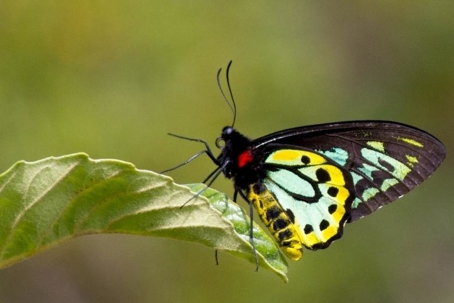
Do Butterflies Have Teeth?
No, butterflies do not have teeth. Their mouthparts are specialized for sipping liquids rather than chewing solid food. They have a long, coiled proboscis, which functions like a flexible straw, allowing them to drink nectar, tree sap, or other liquid substances. The proboscis can uncoil to reach deep into flowers, but it does not have any hard structures for biting or grinding.
Some caterpillars—the larval stage of butterflies—do have strong mandibles for chewing leaves, but once they metamorphose into adult butterflies, those chewing structures are lost. So adult butterflies are entirely toothless and rely solely on their proboscis for feeding.
Can Butterflies Bite?
Butterflies generally do not bite humans. They have mouthparts called a proboscis, which function like a straw, allowing them to sip nectar from flowers, fruit, or other liquids. Their mouthparts are not designed for biting or chewing, so they cannot bite in the way insects like mosquitoes, ants, or beetles can.
That said, there are rare exceptions where some species might appear to “bite,” but it’s usually not harmful. For example:
Certain tropical butterflies, like Heliconius species, may nibble on sweat, tears, or even blood to obtain salts and minerals, but these are not true bites—they are more like a probing with their proboscis.
Any sensation you feel from a butterfly landing on your skin is typically just gentle contact, not an actual bite.
Butterflies are harmless to humans in terms of biting—they may occasionally “taste” salty sweat, but they do not have the anatomy to cause real harm.
Do Butterflies Bite?
Butterflies “biting” humans is extremely rare, but it can happen in very specific circumstances—and even then, it’s not a true bite like from a mosquito or ant. The situations where it might occur are usually related to nutrient-seeking behavior rather than aggression. Here are the main scenarios:
Seeking salts or minerals from sweat or tears: Certain tropical butterflies, especially species like Heliconius, are attracted to sodium and other minerals. They may land on a person’s skin, fingernails, or even around the eyes to sip sweat or tears. This “nibbling” is done with their proboscis, not teeth, so it rarely breaks the skin or causes pain.
Feeding on open wounds or blood: Some butterflies in tropical regions are known to probe open cuts or sores to extract fluids containing salts or proteins. This is extremely uncommon and still not a dangerous bite—the proboscis is delicate and soft.
Attracted to fermenting substances on skin: Butterflies sometimes feed on sweat, cosmetics, or sugary residues (like lotion or perfume). If they probe skin to access these substances, it may feel like a gentle nibble, but it’s not a real bite.
Confused behavior or defensive contact: On very rare occasions, a butterfly might land on a person and flutter its proboscis in a way that feels like a bite, usually if it’s startled or trying to probe for food.
Even in these cases, butterflies cannot harm humans. Their proboscis is soft and straw-like, designed to suck liquids, not pierce skin. Any sensation from “biting” is usually harmless and temporary.
Butterfly Bites
Butterflies are harmless to humans and do not bite in the way that insects like mosquitoes or bed bugs do. They lack biting mouthparts — instead, they have a long, coiled proboscis designed for sipping nectar. However, there are a few uncommon situations where people might perceive irritation or minor “bite-like” reactions involving butterflies or their relatives:
Larval Contact (Caterpillars): The real risk comes from butterfly larvae, not adult butterflies. Some caterpillars — particularly those in families like Saturniidae or Megalopygidae — have urticating (stinging) hairs or spines that can inject mild toxins and cause skin irritation, redness, or allergic reactions.
Feeding Behavior Misunderstanding: In rare cases, butterflies may land on human skin to feed on sweat, attracted by the salts. This can cause mild tickling or irritation but does not constitute a true bite.
Allergic Reactions: People with sensitive skin or allergies might experience minor irritation if a butterfly’s legs or proboscis contact an open cut or sensitive area, but this is uncommon and not medically significant.
Secondary Reactions (Environmental): If a butterfly lands on dirty or contaminated surfaces before landing on human skin, there’s a small possibility of transferring bacteria, but this poses negligible health risk.
In summary, adult butterflies do not pose any biting or disease-related risk to humans. The only real caution is with certain caterpillars, whose defensive bristles can cause mild skin reactions if touched.
What Do Butterfly Bites Look Like?
A “butterfly bite” is essentially a myth in the traditional sense, because butterflies lack the physical ability to bite or pierce human skin. They do not have jaws or teeth—only a soft, straw-like proboscis for sipping liquids—so there’s no wound, mark, or visible reaction that results from normal butterfly contact.
However, in the extremely rare situations where a butterfly probes human skin for sweat, tears, or small wounds, here’s what you might notice:
No visible mark at all – In most cases, the proboscis is too delicate to leave any trace. You’ll just feel a light tickle or brushing sensation.
Mild redness or irritation – If the butterfly lingers on sweaty or sensitive skin, a small pink spot might appear—usually from skin sensitivity or mild rubbing, not an actual puncture.
Slight stinging or itching (very rare) – If a butterfly probes an existing cut or sore, it might cause brief discomfort, but this isn’t a true bite reaction.
If someone develops visible irritation, swelling, or an allergic reaction after a butterfly lands on them, it’s almost certainly due to a preexisting skin sensitivity, lotion, pollen, or another insect’s prior bite, not the butterfly itself.
What To Do About Butterfly Bites
If you believe you’ve been “bitten” by a butterfly — or more accurately, experienced irritation from one landing or possibly from contact with a caterpillar — there’s no need for alarm. Adult butterflies cannot break the skin or inject venom, so any reaction is typically mild and short-lived. Here’s what to do:
Clean the Area: Gently wash the affected skin with soap and warm water to remove any dirt, residue, or potential irritants.
Soothe Irritation: If there’s mild redness, itching, or discomfort, apply a cool compress or an over-the-counter hydrocortisone cream or calamine lotion to calm the skin.
Avoid Scratching: Try not to scratch the area, as this can worsen irritation or lead to infection if the skin breaks.
Watch for Allergic Symptoms: While rare, if you experience swelling, hives, or itching beyond the immediate area, take an antihistamine and monitor closely. If you ever develop difficulty breathing or widespread swelling (which would be highly unusual in this case), seek medical care immediately.
If It Was Actually a Caterpillar: If you touched a caterpillar with stinging hairs or spines, use tape to lift off any remaining hairs from your skin, then wash the area thoroughly. Apply a cold compress and a topical antihistamine or hydrocortisone cream if needed.
In most cases, any discomfort fades within a few minutes to a couple of hours. A butterfly “bite” does not transmit diseases or cause serious health problems.