
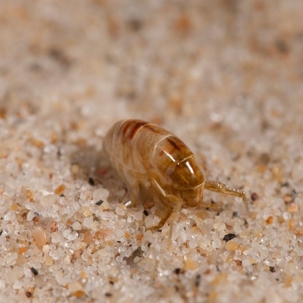
What Do Sand Fleas Look Like?
Sand fleas (referring to Tunga penetrans, also called chigoe fleas, or jiggers) are small, and can be easily confused with other insects or skin irritants. Knowing their appearance ensures that infestations or bites are correctly identified, which is crucial for effective treatment and avoiding unnecessary interventions for other conditions.
Early Detection Reduces Health Risks: Female sand fleas burrow into the skin, causing inflammation, itching, and potential secondary infections. Recognizing them early allows for timely removal and medical attention, minimizing complications such as bacterial infections or tetanus.
Effective Pest Control Measures: Understanding what sand fleas look like helps in assessing the environment for infestations. This knowledge guides proper preventive measures—such as treating floors, soil, or animal bedding—and ensures that control methods target the correct species rather than unrelated pests.
Public Health and Education: In areas where sand fleas are endemic, being able to identify them supports community awareness campaigns. Educating the public about their appearance and behavior reduces exposure and encourages proactive hygiene and protective practices, such as wearing shoes or treating pets.
Correctly identifying sand fleas allows for accurate documentation of infestations. This is important for pest management professionals and health authorities to track prevalence, assess risk factors, and implement strategic interventions effectively.
What Size Are Sand Fleas?
The typical adult sand flea (Tunga penetrans) is extremely small, usually 1–2 millimeters in length. They are tiny, flattened, and dark brown to black in color, making them hard to spot with the naked eye.
Engorged Female Sand Fleas: Once a female burrows into the skin, she swells as she lays eggs. In this state, she can reach up to 1 centimeter (10 mm) in diameter, forming a noticeable bump that looks like a small blister or wart.
Larvae and Pupae: Sand flea larvae are about 1–2 mm long and worm-like, while pupae are slightly larger and enclosed in a cocoon. These stages are found in soil or sand, not on the host.
An adult sand flea is smaller than a pinhead, while an engorged female is roughly the size of a small pea or a large sesame seed.
How Big Are Sand Fleas?
Once a female burrows into the skin and swells with eggs, she can grow substantially, reaching up to about 1 centimeter (10 millimeters) in diameter. This swollen size is what creates the noticeable bump or blister on the skin.
How Small Are Sand Fleas?
Unburrowed adult sand fleas are extremely tiny, typically 1 millimeter in length, which is smaller than the head of a pin. This makes them very difficult to see without close inspection.
What Color Are Sand Fleas?
Adult sand fleas are typically dark brown to black, with a slightly shiny, flattened body. Their small size and dark color help them blend into sandy or soil environments.
Engorged Female Sand Fleas (Burrowed in Skin): Once a female burrows into the host, her body swells with eggs and she becomes reddish to grayish-white in the center, often surrounded by inflamed, reddish skin. This color change makes the flea more noticeable under the skin.
Larvae and Pupae: Sand flea larvae are usually cream to pale white, worm-like, and semi-transparent. Pupae are slightly darker but remain a light brown or off-white color, often hidden in sand or soil.
The combination of size, location (on skin or in sand), and color—dark before burrowing, pale or reddish after burrowing—is key to distinguishing sand fleas from other insects or skin lesions.
What Shape Are Sand Fleas?
Adult sand fleas are flattened and oval-shaped, with a body adapted for jumping and clinging to hosts. Their bodies are laterally compressed, which allows them to move easily through sand and soil and attach to animals or humans.
Engorged Female Sand Fleas (Burrowed in Skin): Once a female burrows into the skin and swells with eggs, her shape becomes round or bulbous, resembling a small blister or wart. The body expands outward from the point of penetration, making the flea clearly visible under the skin.
Larvae: Sand flea larvae are elongated, worm-like, and cylindrical, without legs, which allows them to move through soil and organic matter.
Pupae: Pupae are oval or oblong, often slightly tapered at one end, and encased in a protective cocoon in the soil.
The change from a flattened, oval adult to a round, engorged female is the most distinct shape indicator for identifying sand fleas on hosts.
What Sand Fleas Look Like
In addition to size, shape, and color, sand fleas have the following physical characteristics:
Body Segmentation: Sand fleas have three main body parts like other fleas: head, thorax, and abdomen. The head is small with mouthparts adapted for burrowing (in females) or feeding (in males), and the thorax supports strong legs.
Legs and Movement: They have six legs, with the hind pair being exceptionally strong and adapted for jumping. This allows them to leap several times their body length, which is why they are often found “jumping” around sand or soil surfaces.
Exoskeleton Texture: Their exoskeleton is hard and chitinous, giving them durability while burrowing or moving through sand. Engorged females under the skin have a softer, more stretched exoskeleton.
Antennae and Sensory Organs: They possess short antennae used for sensing heat, movement, and chemical cues from hosts, which helps them locate humans or animals.
Mouthparts: Female sand fleas that burrow into skin have specialized piercing-sucking mouthparts, enabling them to embed themselves and feed on host tissue and blood. Males typically feed on organic debris rather than burrowing into hosts.
Behavioral Traits: Sand fleas are burrowing parasites. Females implant into the skin (usually feet or toes) and expand while laying eggs. They can be very difficult to detect until swelling occurs.
Egg-Laying Characteristics: A burrowed female produces tiny, oval eggs that are expelled through the skin’s surface. These eggs are sticky and fall into the surrounding environment, contributing to further infestations.
What Do Sand Flea Pupae Look Like?
Sand flea pupae are oval or oblong in shape and are encased in a protective silken cocoon. They are immobile and do not feed, as this is a transitional stage between larva and adult.
Color and Texture: Pupae are usually pale cream to light brown, sometimes with a slightly darker tint as the adult forms inside. The cocoon often collects particles of sand, soil, or debris, helping it blend into the environment.
Surface Features: The cocoon can appear fibrous or rough due to the incorporated sand or organic matter. The pupa inside is smooth and segmented, showing hints of developing legs, antennae, and body structures.
Size: Pupae are slightly larger than larvae, usually around 1–3 mm in length, depending on environmental conditions and the species.
Pupae remain buried in sand, soil, or organic debris, often in shaded or protected areas. They are sensitive to vibrations or light, which can trigger the emerging adult flea to leave the cocoon.
What Do Sand Flea Larvae Look Like?
Sand flea larvae are worm-like, elongated, and cylindrical. They have a smooth, segmented body that allows them to move easily through sand, soil, or organic matter.
Color: Larvae are typically cream, off-white, or translucent, which helps them blend into the sandy or soil environment where they develop.
Head and Mouthparts: The head is small and slightly darker than the body, equipped with simple chewing mouthparts used to feed on organic debris in the soil, rather than biting hosts.
Legs: Larvae do not have legs. They move by wriggling their segmented bodies, similar to small worms.
Size: They are usually 1–2 mm long, depending on their stage of development.
Larvae are found in dry, sandy soil or organic matter, where they feed and grow before forming pupae. They avoid light and stay buried to protect themselves from predators and desiccation.
What Do Sand Flea Eggs Look Like?
Size and Shape: Sand flea eggs are very small, oval, and smooth, often less than 1 millimeter in length, making them difficult to see without magnification.
Color: They are typically white or pale cream when freshly laid, which allows them to blend into sandy or soil environments.
Surface Texture: The eggs have a smooth, shiny surface and are slightly sticky, helping them adhere to soil particles, sand, or the host’s surroundings after being expelled from the female.
Location: Eggs are usually deposited in the environment near the host, such as sandy floors, bedding, or cracks in the ground. The female flea expels them from the skin while burrowed, and they fall into the surrounding soil.
Eggs hatch into larvae within a few days under suitable conditions (warmth, humidity, and organic matter). They are highly sensitive to dry or unsuitable conditions, which can prevent hatching.