
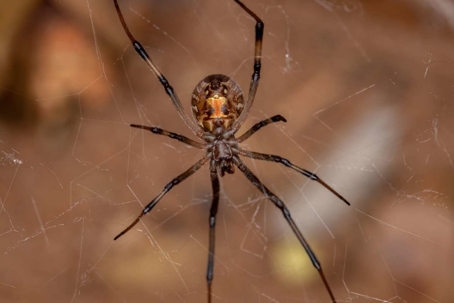
Are Brown Widow Spiders Poisonous?
No, brown widow spiders are not considered poisonous. The distinction here is important: “poisonous” means a substance causes harm when ingested, inhaled, or touched, whereas “venomous” means the animal injects venom through a bite or sting.
Are Brown Widow Spiders Venomous?
Yes, brown widow spiders are venomous. These spiders inject venom through their bites, which can cause localized pain, redness, and swelling. In most cases, symptoms are mild compared with black widow bites, though some people—especially children, the elderly, or those with compromised health—may experience more pronounced reactions such as muscle cramps, nausea, or headache. Serious complications are rare, and brown widow bites are generally not life-threatening.
Brown Widow Spider Venom
Brown widow spider venom is a complex neurotoxic substance that primarily affects the nervous system. Its main active components are latrotoxins, proteins that disrupt normal nerve signaling by causing excessive release of neurotransmitters such as acetylcholine and norepinephrine at nerve endings. This overactivation of nerves leads to the characteristic symptoms of widow spider envenomation.
Compared to the venom of black widows, brown widow venom is generally less potent, and its effects are usually milder. Typical local effects include pain, redness, and swelling at the bite site. Systemic symptoms, when they occur, may include muscle cramps, stiffness, nausea, and mild autonomic disturbances, but severe reactions are uncommon. The venom acts quickly at the site of injection, but because the quantity injected is usually small, serious complications are rare in healthy adults.
The venom’s potency can vary slightly depending on the spider’s size, age, and recent feeding, and individual sensitivity also plays a role in symptom severity.
Signs Of Brown Widow Spider Envenomation
Envenomation by a brown widow spider typically produces milder symptoms than a black widow bite, but the signs can still be noticeable. They can be divided into local and systemic effects:
Local Signs (at the bite site):
Immediate pain or a stinging sensation at the bite site.
Redness and swelling, sometimes forming a small blister.
Darkening or a “target” appearance around the bite in some cases.
Itching or mild tenderness in the area.
Systemic Signs (less common and usually mild):
Muscle cramps or stiffness, often around the abdomen, back, or legs.
Mild nausea or vomiting.
Sweating or chills.
Headache or general malaise.
Severe reactions are rare but can occur in children, the elderly, or people with compromised immune systems, and may include intense muscle pain, rapid heartbeat, or severe cramping.
Most brown widow bites resolve on their own within a few hours to a couple of days with basic wound care. Medical attention should be sought if symptoms worsen, spread, or if systemic signs appear.
What To Do About Brown Widow Spider Envenomation
If you are bitten by a brown widow spider, most cases are mild, but it’s important to respond promptly and appropriately. Here’s what to do:
Immediate First Aid
Move to a safe area to avoid additional bites.
Clean the bite site thoroughly with soap and water to reduce the risk of infection.
Apply a cold compress or ice pack (wrapped in a cloth) for 10–15 minutes at a time to reduce pain and swelling.
Elevate the affected limb if possible, especially if the bite is on an arm or leg.
Symptom Management
Pain relief: Over-the-counter pain medications such as acetaminophen or ibuprofen can help.
Antihistamines: If there is itching or mild swelling, an oral antihistamine may be beneficial.
Rest: Limiting movement of the affected area can reduce discomfort.
Monitor for Systemic Symptoms
Watch for more serious signs that indicate a stronger reaction:
Severe muscle cramps or stiffness, especially in the abdomen, back, or legs
Nausea, vomiting, or sweating
Rapid heartbeat or difficulty breathing
Seek Medical Attention If
You experience any severe systemic symptoms.
The bite area becomes increasingly red, swollen, or shows signs of infection (pus, warmth, spreading redness).
The pain is intense and not relieved by over-the-counter medications.
You are a child, elderly, or immunocompromised, as reactions may be more serious.
Medical Treatment Options
In rare cases, a doctor may administer muscle relaxants for severe cramps or pain management medications.
Tetanus vaccination may be updated if the wound is deep.
Hospital observation may be necessary for extreme systemic reactions, though this is uncommon for brown widow bites.
Most brown widow spider bites resolve within 24–72 hours with proper first aid and symptom management. Severe complications are very rare.