
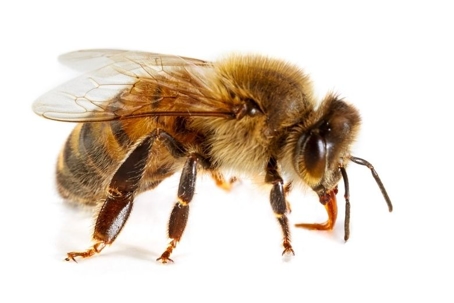
What Do Bees Look Like?
Bees are insects that come in various sizes and colors, but they share some common features. Typically, bees have segmented bodies consisting of three main parts: the head, thorax, and abdomen.
- Head: The head of a bee is usually small and round, housing important sensory organs like antennae and compound eyes. Bees have two large compound eyes on the sides of their head, which are made up of many tiny lenses. These eyes help bees detect light and movement.
- Thorax: The middle section of a bee's body is called the thorax. It's where the bee's six legs and two pairs of wings are attached. The wings are transparent and veined, allowing bees to fly. Their legs are equipped with specialized structures like pollen baskets on the hind legs for collecting pollen and stiff bristles for grooming.
- Abdomen: The abdomen is the bee's rear section and is typically longer than the thorax. It contains various organs and structures, including the stinger (in female bees), wax glands, and the digestive system. The abdomen is often striped or banded with alternating patterns of color, which can vary depending on the bee species.
Bees also have adaptations for gathering nectar and pollen from flowers. They have a long proboscis (a tube-like mouthpart) for sipping nectar, and they use their legs to collect and transport pollen, which sticks to their hairy bodies.
How Big Are Bees?
The size of bees varies significantly depending on the species, but most fall within a fairly predictable range.
Honey bees (Apis mellifera): Typically measure about ½ inch (12–15 mm) long. Queens are larger—around ¾ inch (18–20 mm)—while drones are about the same length but appear bulkier.
Bumble bees (Bombus spp.): Among the largest common bees, ranging from ½ to 1 inch (13–25 mm) long. Their bodies are robust and densely covered in fuzz.
Carpenter bees (Xylocopa spp.): Similar in size to large bumble bees, usually ¾ to 1 inch (19–25 mm), but less hairy and with a shiny, black abdomen.
Sweat bees (Halictidae family): Some of the smallest bees, typically ⅛ to ½ inch (4–12 mm) long. Many have a metallic green or blue sheen.
Leafcutter bees (Megachile spp.): Generally ⅜ to ⅝ inch (10–16 mm) long, with stout bodies and large jaws for cutting leaf material.
Bees can range anywhere from about ⅛ inch to over 1 inch (4–25 mm) long, depending on species and role (worker, queen, or drone).
What Color Are Bees?
Bees come in a wide range of colors depending on their species, but most share some common patterns and hues associated with their role in nature. Here are some examples of the coloration of different types of bees:
- Honey Bees (Apis mellifera): Typically golden brown with black bands across the abdomen. Their bodies have fine hairs that give them a slightly fuzzy look, and their coloration serves as a warning to predators. Queens are usually darker, while drones appear a bit more robust and golden.
- Bumble Bees (Bombus spp.): Usually black and yellow, though some species have orange, white, or even red bands. Their dense fuzz gives them a bright, velvety appearance. The specific color pattern can vary widely between species and regions.
- Carpenter Bees (Xylocopa spp.): Predominantly black with a metallic blue or green sheen on the abdomen. Unlike bumble bees, carpenter bees have smooth, shiny abdomens with little hair.
- Sweat Bees (Halictidae family): Often metallic green, blue, or bronze, though some are dull black or brown. These small bees are strikingly iridescent and among the most colorful bee species.
- Leafcutter Bees (Megachile spp.): Generally black or dark gray with pale bands of hair on the abdomen. They appear somewhat robust and dusty because of the fine pollen-collecting hairs on their underside.
- Mason Bees (Osmia spp.): Typically dark blue, green, or black with a metallic sheen. Their coloration and compact bodies make them resemble small carpenter bees.
Bees can be yellow, black, brown, orange, metallic green, or blue, often in banded or iridescent patterns. These colors are not just for show—they help bees regulate temperature, camouflage, or signal danger to predators.