
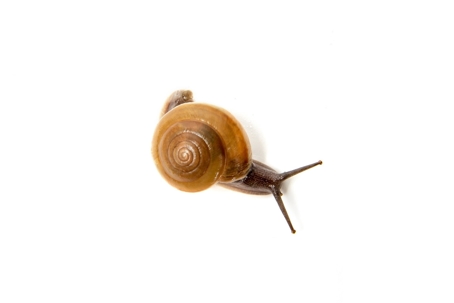
Can Snails Bite?
Snails generally do not bite humans in the way we think of bites from animals like insects or mammals. Most snails are herbivores or detritivores, feeding on plants, algae, or decaying matter.
Do Snails Have Teeth?
Yes, snails have teeth, but they are very different from human teeth. Most snails possess a radula, a ribbon-like structure, much like a tiny, rough tongue covered with thousands of tiny, chitinous teeth used to scrape, cut, or grind food before ingestion, not to attack or bite for defense. The number, shape, and arrangement of these teeth vary between species, reflecting their diet—herbivorous snails have more scraping teeth, while carnivorous or predatory snails, like cone snails, have specialized teeth adapted for capturing prey.
Snails don’t bite in a harmful or predatory way, but a scratch from the radula is possible, mostly for large species. If a large snail, like a giant African land snail, crawls on your skin, it might scrape you with its radula. This could feel scratchy or slightly irritating, but it’s not a venomous bite.
Do Snails Bite Humans?
If someone feels like a snail “bit” them, it’s almost certainly a perception rather than an actual bite, because snails don’t actively bite humans. Here are the main reasons this sensation might occur:
Radula scraping – Even though snails don’t bite, their radula (the tiny, tooth-like scraping organ in their mouth) can lightly scratch the skin when they crawl over it. On sensitive skin, this might feel like a tiny pinch or bite.
Slime irritation – Snail slime contains mucus and sometimes digestive enzymes. On sensitive or broken skin, contact with the slime can cause mild stinging, itching, or tingling, which could be misinterpreted as a “bite.”
Allergic or sensitivity reaction – Some people are more sensitive to snail slime. A mild localized reaction (redness, itching, slight swelling) might make it feel as though something bit them.
Psychological expectation – Snails are unusual creatures, and if someone is worried about contact, the brain may interpret a small touch or scrape as a bite, even though nothing harmful happened.
Confusion with other insects – If someone sees a snail and then feels a small sting or bite, it could actually be from an unnoticed insect or mite in the same area, and they mistakenly attribute it to the snail.
So, the sensation of a “snail bite” is almost always due to either radula scraping, slime irritation, or heightened sensitivity, not an actual bite.
Snail Bites
Snail bites themselves are extremely rare because most snails are slow, non-aggressive, and lack the anatomy to “bite” humans in a meaningful way. However, certain risks are associated with contact with snails, primarily due to disease transmission rather than the bite itself:
Parasitic infections: Some freshwater snails can carry parasitic worms, such as Schistosoma species, which cause schistosomiasis. Infection typically occurs through skin contact with contaminated water rather than from a bite, but handling infected snails could theoretically transfer parasites.
Bacterial infections: Snails can carry bacteria such as Salmonella, Aeromonas, or E. coli. If a snail scratches or comes into contact with broken skin, there is a small risk of bacterial infection.
Allergic reactions: Although extremely rare, contact with snail mucus could trigger an allergic reaction in sensitive individuals.
Tissue irritation: Snail slime on broken or sensitive skin might cause mild irritation, redness, or itching.
Snail “bites” are not medically significant in most cases. The real concern is indirect: handling snails with bare hands and then touching your mouth or open wounds could introduce bacteria or parasites.
What Do Snail Bites Look Like?
Snails don’t actually bite humans, so there is no true “snail bite” in the medical sense. However, contact with a snail—especially larger species—can sometimes cause minor skin reactions that people might mistake for a bite. Here’s what that can look like:
Scratches from the radula – The snail’s radula (tiny scraping teeth) may leave very small, superficial scratches or abrasions. These are usually faint, linear, or slightly rough marks that may redden briefly.
Mild irritation from slime – Snail mucus can sometimes cause redness, itching, or a slight rash on sensitive or broken skin. This is not a bite, but the irritation can feel like one.
Allergic-like reactions – Rarely, some people may develop a small raised bump or hives where the snail touched the skin. These are temporary and typically resolve within a few hours to a day.
No bleeding or puncture marks – Unlike insect or animal bites, contact with a snail does not produce puncture wounds or bleeding. Any marks are purely surface-level irritation.
If someone thinks a snail “bit” them, what they’re actually seeing is likely minor scratching, redness, or a mild allergic reaction, not a true bite.
What To Do About Snail Bites
If you believe you’ve been bitten or scratched by a snail—which is very uncommon—the steps are mostly about preventing infection and monitoring for unusual reactions, since snail “bites” themselves are usually minor:
Clean the area immediately: Wash the bite or scratch thoroughly with soap and warm water for at least 20 seconds. This helps remove any bacteria or parasites that may be on the snail’s skin or mucus.
Disinfect: Apply an antiseptic like hydrogen peroxide, iodine, or an alcohol-based solution to the area.
Protect the skin: Cover the bite with a clean bandage if it is an open wound or scratch.
Monitor for infection: Watch for redness, swelling, warmth, pus, or increasing pain over the next few days. Mild irritation or itching may occur from contact with snail slime.
Seek medical attention if needed: If the wound worsens or shows signs of infection. If you develop fever, spreading redness, or unusual symptoms like muscle pain or rash (rare but could indicate bacterial or parasitic infection).
Prevent future issues: Avoid handling snails with bare hands, especially if you have cuts. Wash hands thoroughly after any contact with snails. Contact us to learn about our professional snail control services.
In most cases, a “snail bite” is minor and heals on its own with proper cleaning.
Are Snails Poisonous?
Garden snails (common land snails): These snails are generally not poisonous to touch. However, they can carry parasites and bacteria, such as rat lungworm (Angiostrongylus cantonensis), which may cause serious illness if ingested raw or undercooked.
Freshwater and marine snails: Some marine snails produce venom or toxins. For example, cone snails have a venomous harpoon that can deliver neurotoxins potentially fatal to humans. Certain sea snails used in cooking can accumulate tetrodotoxin or other marine toxins, especially if harvested from polluted areas.
Edible snails (escargot): Snails prepared for human consumption are typically safe when properly cleaned and cooked, which removes most parasites and bacteria. Freezing and thorough cooking are essential to prevent infection from parasites.
Handling precautions: Avoid touching snails with bare hands if you have open cuts, as they can transfer bacteria. Always wash hands thoroughly after contact.
Most land snails are safe to handle. Some marine species are venomous, and all snails can carry parasites if eaten raw. Proper cleaning and cooking eliminate the majority of risks.
Are Snails Venomous?
- Most land snails are not venomous. They do not produce toxins capable of harming humans through touch or bites. The primary risk from land snails comes from parasites or bacteria, not venom.
Freshwater snails: The majority of freshwater snails are not venomous. Some species can carry parasites that cause diseases, such as schistosomiasis, but they do not inject venom.
Marine snails: Certain marine snails are venomous. Cone snails are the most notable; they have a specialized harpoon capable of injecting potent neurotoxins that can be fatal to humans. Other marine species may carry toxins accumulated from their diet, but most do not actively inject venom.
Edible snails: Snails intended for consumption (escargot) are not venomous if properly prepared. Cooking neutralizes potential toxins or parasites.
While land and freshwater snails are generally safe and non-venomous, certain marine snails, especially cone snails, can be dangerously venomous. Proper handling and awareness of species are essential.
Do Snails Sting?
The snails that can sting are primarily marine species, with cone snails being the most notable. Cone snails have a specialized harpoon-like tooth that injects potent venom containing neurotoxins, which can cause intense pain, paralysis, or even be fatal in rare cases. Other marine snails may carry toxins accumulated from their diet, but they generally do not actively sting humans. Land and freshwater snails do not sting; their risk to humans comes mainly from parasites or bacteria rather than venom.