
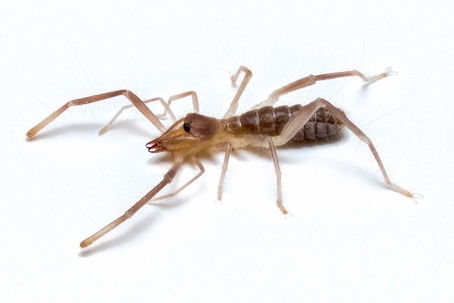
Are Camel Spiders Venomous?
Camel spiders, also commonly known as sun spiders, sun scorpions, and wind scorpions, are not venomous. Camel spiders are actually not spiders, and as such, they have no venom glands and no mechanism to inject toxins. Their reputation comes from their intimidating size and speed, but biologically they rely entirely on strong, fast-moving jaws to overpower prey, not venom.
A bite from a camel spider can be painful because of those powerful jaws, but it does not involve envenomation and is not medically dangerous beyond normal wound-care concerns such as preventing infection.
Camel Spider Venom
Camel spiders do not possess venom, so there is no true camel spider venom to describe. They have no venom glands, no venom ducts, and no delivery structures. Their biology is built around powerful, scissor-like jaws rather than chemical weaponry. Because of this, anything described online as “camel spider venom” is a myth. The only risks from a bite come from the mechanical force of their jaws and the possibility of secondary infection, not any toxic substance.
Are Camel Spiders Deadly?
Camel spiders do not possess venom that is harmful to humans. Unlike true spiders or scorpions, they rely on strong jaws to capture prey, not venom.
Painful Bites but Rarely Dangerous – Their bites can be painful, cause bleeding, and potentially lead to minor wounds, but they are not inherently life-threatening.
Risk of Secondary Infection – The main danger from a bite is infection, especially if the wound is not cleaned properly or if bacteria enter the bite site. This is typically the only scenario where serious complications could arise.
Aggressive Appearance, Not Lethality – Their large size and fast movement can make them appear menacing, but this is purely intimidation; they are not deadly.
Medical Attention Recommended – While fatalities from camel spider bites are virtually nonexistent, seeking treatment for severe bites, persistent pain, or signs of infection is important for safety.
Camel spiders are not deadly, but their bites should be treated responsibly to avoid infection.
Signs Of Camel Spider Envenomation
There are no signs of envenomation from camel spiders, because they do not produce or inject venom. If someone is bitten, any symptoms come strictly from the mechanical injury caused by their strong jaws, not toxins.
If a camel spider does bite, the only effects you will generally see are those typical of a minor skin wound. With that being said, if the bite gets infected, you could potentially experience the following symptoms:
Redness and Swelling – The area around the bite may become increasingly red and swollen beyond the initial bite site, often spreading outward.
Pain and Tenderness – Persistent or worsening pain at the bite location, sometimes throbbing or sharp, can indicate infection.
Pus or Discharge – Formation of yellow or green pus, or other unusual drainage from the wound, is a strong sign of bacterial infection.
Warmth Around the Bite – The skin surrounding the bite may feel noticeably warmer than the surrounding tissue, signaling inflammation.
Fever or Chills – Systemic symptoms like mild to moderate fever, chills, or general malaise may develop if the infection spreads.
Red Streaking – Red streaks extending from the bite site toward the body can indicate lymphangitis, a sign that the infection is spreading through the lymphatic system.
Swollen Lymph Nodes – Nearby lymph nodes, such as those in the armpit or groin, may become enlarged and tender.
Delayed Healing – The bite may fail to heal within the expected timeframe or may worsen over time, often with increased irritation or necrotic tissue.
Foul Odor – In some cases, a secondary infection may produce a noticeable foul smell due to bacterial activity.
Prompt medical attention is recommended if any of these signs appear to prevent complications and ensure proper wound management.
There are no systemic symptoms, no spreading pain, no neurotoxic or cytotoxic effects, and no systemic illness—because there is no venom involved.
What To Do About Camel Spider Envenomation
Since camel spiders cannot envenomate—because they have no venom at all—treatment is simply basic care for a minor bite wound. Here’s what to do if you’re bitten:
Clean the wound thoroughly: Wash the area with soap and water to remove dirt and reduce the risk of infection.
Apply an antiseptic: Use something like iodine or chlorhexidine to disinfect the bite site.
Control bleeding if necessary: Apply gentle pressure with a clean cloth or bandage.
Use a cold pack for pain or swelling: A cold compress can reduce discomfort and inflammation.
Cover with a sterile bandage: Keep the area clean and dry. Change the bandage daily.
Monitor for infection: Watch for increasing redness, warmth, swelling, pus, or worsening pain. These signs mean bacteria—not venom—are the concern.
Seek medical care if infection develops or if the bite is deep: A healthcare provider may prescribe antibiotics if needed.
Reduce camel spider populations: You can try to get rid of camel spiders on your own, or contact our team of exterminators for professional pest control services.
Camel spider bites are mechanically forceful but not toxic, so once the wound is cleaned and protected, recovery is typically straightforward.
Are Camel Spiders Poisonous?
Camel spiders are not poisonous.