
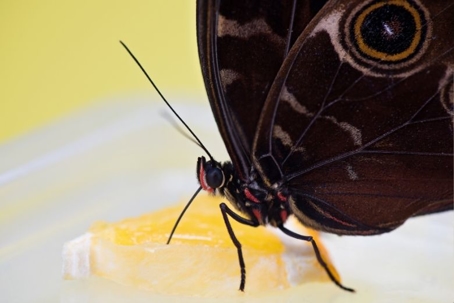
What Do Butterflies Eat?
Butterflies, like many other insects, go through a life cycle consisting of four stages: egg, larva (caterpillar), pupa (chrysalis), and adult. Their dietary preferences vary during these stages:
- Egg Stage: Butterfly eggs are typically laid on host plants, which provide food for the emerging caterpillar. The female butterfly selects the host plant carefully, as the caterpillar's diet is specific to the plant species.
- Larva (Caterpillar) Stage: This is the feeding stage of a butterfly's life. Caterpillars primarily consume plant material, specifically the leaves of the host plant on which they were laid. Their mandibles are adapted for chewing leaves and stems. Caterpillars have voracious appetites, and they feed continuously to fuel their growth.
- Pupa (Chrysalis) Stage: During the pupal stage, butterflies do not eat. Instead, they undergo a remarkable transformation, with their bodies restructuring inside the chrysalis.
- Adult Stage: Adult butterflies have a specialized diet consisting primarily of nectar from flowers. They use their proboscis, a long, tube-like structure, to sip nectar. They are attracted to flowers with bright colors and sweet scents. In addition to nectar, some species also feed on other fluids like rotting fruit, tree sap, or even minerals from puddles, a behavior known as "puddling."
Not all butterflies have the same dietary preferences, and their food sources can vary based on their species. Moreover, butterflies also play a role in pollination as they visit flowers for nectar, aiding in the reproduction of plants. This mutualistic relationship between butterflies and plants is crucial for the survival of both.
Do Butterflies Eat Plants?
Butterflies are highly diverse, and the plants they eat vary based on their species. The relationship between butterflies and plants is often specific, as different butterfly species have evolved to depend on particular host plants. Here are some examples of host plants for various butterfly species:
- Monarch Butterfly (Danaus plexippus): Milkweed species, such as common milkweed (Asclepias syriaca) and swamp milkweed (Asclepias incarnata).
- Swallowtail Butterflies (Papilionidae family): Different species of swallowtail butterflies have specific host plants. For example, the Eastern Tiger Swallowtail (Papilio glaucus) caterpillars feed on leaves of various trees, including tulip tree (Liriodendron tulipifera) and cherry tree (Prunus spp.).
- Painted Lady Butterfly (Vanessa cardui): Various thistles (Cirsium and Carduus species) and other plants like mallows (Malva species).
- Cabbage White Butterfly (Pieris rapae): Members of the Brassicaceae family, including cabbage, broccoli, and mustard plants.
- Black Swallowtail Butterfly (Papilio polyxenes): Plants in the Apiaceae family, including parsley (Petroselinum crispum) and dill (Anethum graveolens).
- Gulf Fritillary Butterfly (Agraulis vanillae): Passionflower vines (Passiflora species).
- Zebra Longwing Butterfly (Heliconius charithonia): Various passionflower vines, especially Passiflora incarnata.
These are just a few examples, and there are numerous butterfly species, each with its specific host plants. These host plants are crucial for the survival and development of butterfly caterpillars, as they provide the necessary food and nutrients during the larval stage. The relationship between butterflies and their host plants is an example of coevolution, where both the butterflies and plants have adapted to rely on each other for their mutual benefit.
Do Butterflies Eat Nectar?
Yes—nectar is the primary food source for most adult butterflies. They drink it through their proboscis, using the sugars for energy needed to fly, mate, and search for host plants. While nectar is the staple of their diet, many species also take in minerals from mud, tree sap, or overripe fruit to round out their nutrition.
Do Butterflies Eat Flowers?
Butterflies are known to feed on nectar from a wide variety of flowers. They are attracted to flowers with certain characteristics, such as bright colors, sweet scents, and easily accessible nectar. Here are some examples of flowers that butterflies commonly feed on:
- Butterfly Bush (Buddleja davidii): True to its name, this shrub is a favorite of many butterfly species. It produces clusters of small, nectar-rich flowers that attract a wide range of butterflies.
- Milkweed (Asclepias spp.): Milkweed plants are essential for monarch butterflies. Monarchs lay their eggs on milkweed, and both the caterpillars and adult butterflies feed on its nectar.
- Lantana (Lantana camara): Lantana is known for its vibrant clusters of tubular flowers that are particularly attractive to swallowtail and brush-footed butterflies.
- Zinnia (Zinnia spp.): Zinnias are popular garden flowers that produce bright, daisy-like blooms that are a favorite of swallowtail and painted lady butterflies.
- Coneflower (Echinacea spp.): Coneflowers have large, daisy-like flowers that provide nectar for various butterfly species, including swallowtails and fritillaries.
- Coreopsis (Coreopsis spp.): Coreopsis, also known as tickseed, produces yellow or orange daisy-like flowers that are a favorite of many butterflies, including the eastern tiger swallowtail.
- Verbena (Verbena spp.): Verbena's clustered, small, tubular flowers are a great nectar source for many butterfly species, including the hairstreaks and skippers.
- Joe-Pye Weed (Eutrochium spp.): Joe-Pye weed's pink or purple flower clusters attract a range of butterflies, including swallowtails and monarchs.
- Phlox (Phlox spp.): Phlox flowers are a source of nectar for various butterfly species, and they come in various colors, including white, pink, and purple.
- Marigold (Tagetes spp.): Marigolds produce vibrant orange and yellow flowers that are known to attract butterflies like the painted lady and the red admiral.
Plant a variety of flowers to provide a continuous nectar source for butterflies throughout their active season. Native plants are often preferred by local butterfly species, so consider incorporating native wildflowers into your garden to attract and support your local butterfly population. Providing a range of flowers with different blooming times and colors can also help ensure a constant food source for butterflies.
Do Butterflies Eat Fruit?
Adult butterflies primarily feed on nectar from flowers, and they do not typically consume fruit as a significant part of their diet. Nectar is their primary source of energy, providing the sugars they need for flight and survival. However, in some rare instances, butterflies may be observed feeding on fruit juices, especially when other nectar sources are limited. This behavior is more common in tropical regions and among certain butterfly species.
While adult butterflies primarily rely on nectar, their larval stage, the caterpillar, often feeds on plant leaves, and their choice of host plants can vary widely among species. Additionally, some butterflies may visit fruit for reasons other than feeding, such as seeking moisture or minerals found in rotting fruit. However, fruit consumption by adult butterflies is not a regular or significant part of their diet.
Do Butterflies Eat Fruit Juice?
They do. Many butterflies are drawn to the juice of overripe or fermenting fruit, which offers an easy source of sugars and moisture. You’ll often see them on fallen apples, peaches, berries, or bananas that have begun to break down. The softer the fruit, the easier it is for them to access the liquid, and the mix of natural sugars and minerals provides a useful supplement when nectar is scarce.
Do Butterflies Eat Tree Sap?
They do. While nectar is their main energy source, many butterfly species will also feed on tree sap when it’s available. Sap offers sugars along with minerals they can’t always get from flowers. You’ll often see this behavior in wooded areas where sap seeps from bark, wounds on trees, or spots where woodpeckers have drilled holes.
Do Butterflies Eat Leaves?
In the earlier stages of their life cycle as caterpillars (larvae), butterflies do eat leaves. Caterpillars are voracious herbivores and have specialized mandibles for chewing plant material. They feed on the leaves of specific host plants that vary depending on the butterfly species. The choice of host plant is crucial for the caterpillar's survival and development because different species of caterpillars have adapted to feed on particular plant species.
Butterflies, in their adult stage, do not typically eat leaves. Adult butterflies have a specialized mouthpart called a proboscis, which is a long, tubular structure that allows them to sip nectar from flowers. They are primarily nectar feeders, and their diet is centered around consuming the sugary nectar produced by flowering plants.
While adult butterflies do not eat leaves, caterpillars, which are the larval stage of butterflies, feed almost exclusively on leaves before they pupate and undergo metamorphosis into adult butterflies.
Do Butterflies Eat Animals?
Not in the sense of hunting or eating other animals like a predator. Adult butterflies feed only on liquids—nectar, sap, fruit juice, or mineral-rich moisture. However, some species do obtain nutrients indirectly from animal sources. For example, they may sip on fluids from animal droppings, sweat, or carrion to get salts and amino acids that aren’t present in nectar. This behavior is about nutrient supplementation, not consuming flesh.
Caterpillars, the larval stage, are strictly herbivorous and eat plant leaves, never other animals.
Do Butterflies Eat Carrion?
Yes, some butterfly species will feed on carrion, but it’s not their main food source. Certain butterflies, especially in tropical regions, are attracted to the fluids from decaying animals because they provide essential salts, amino acids, and minerals that nectar alone cannot supply. This behavior is similar to “puddling,” where butterflies extract nutrients from mud, dung, or other organic matter. So while they don’t eat the flesh itself, they do extract valuable nutrients from decomposing animal material.
Do Butterflies Eat Bird Droppings?
Yes, many butterflies do feed on bird droppings. This behavior is a form of “puddling,” where butterflies seek out sources of salts, amino acids, and other nutrients that aren’t available in nectar. Bird droppings are rich in these minerals, so butterflies will often land on them, sip the moisture, and extract what they need to support reproduction, flight, and overall metabolism.
What Can Butterflies Eat?
Feeding butterflies is not a common practice, as they primarily obtain their nutrition from natural nectar sources in the wild. However, if you come across a weakened or injured butterfly, or if you are raising caterpillars and want to provide food for them, you can offer a few solutions. Here are some options:
- Sugar Water Solution: Mix a solution of 10% sugar and 90% water. Use a cotton ball or a small piece of sponge soaked in this solution and place it near the butterfly. Ensure that the liquid is not too deep, so the butterfly can access it easily. This can provide a quick energy boost for a weakened butterfly.
- Overripe Fruit: Mash up overripe fruits, such as bananas or oranges, and place a small piece of the mashed fruit near the butterfly. Keep in mind that not all butterfly species are attracted to fruit, so this may not work for all butterflies.
- Artificial Nectar: You can make an artificial nectar solution using a mixture of water and honey (about 4 parts water to 1 part honey). Again, use a small cotton ball or sponge to make the solution accessible to the butterfly.
- Potted Plants: If you're raising caterpillars, ensure that you have the appropriate host plants available for them. For example, if you're raising monarch caterpillars, you'll need milkweed plants as their host plant. The caterpillars will consume the leaves of these plants.
Exercise caution and avoid overfeeding butterflies. They have delicate digestive systems, and overfeeding can lead to stress or injury. In the case of injured butterflies, it's often best to provide a suitable environment and time to recover. If you're raising caterpillars, it's essential to provide the correct host plants and monitor their development.
It is generally best to let butterflies find their own natural food sources, and interventions should be reserved for situations where a butterfly is injured or in distress. In most cases, butterflies are best observed and enjoyed in their natural habitat.
How Often Do Butterflies Eat?
The frequency of butterfly feeding can vary depending on factors such as species, environmental conditions, and individual butterfly health. Here are some key points to consider regarding the feeding frequency of butterflies:
- General Feeding Frequency: Adult butterflies feed relatively frequently, usually multiple times a day. They require a steady supply of nectar to sustain their energy for activities like flying, searching for mates, and laying eggs.
- Environmental Factors: The availability of nectar sources and environmental conditions play a significant role in how often butterflies feed. In favorable conditions with abundant flowers and nectar, butterflies may feed more frequently.
- Diurnal Feeding: Most butterflies are diurnal, meaning they are active during the day. They tend to feed during daylight hours when flowers are open and nectar is accessible.
- Short Feeding Sessions: Butterfly feeding sessions are relatively short, often lasting only a few seconds to a couple of minutes. They visit multiple flowers during each feeding session.
- Migratory Behavior: Some butterfly species, like the monarch butterfly, engage in long-distance migrations. During these journeys, they may fly continuously for hours or days without feeding. They rely on stored energy reserves during migration.
- Puddling Behavior: Male butterflies, in particular, may engage in puddling behavior, during which they gather on damp soil or other suitable substrates to extract essential minerals. This behavior is intermittent and can occur on a less frequent basis.
- Life Cycle Stage: Caterpillars (the larval stage) are constant feeders, as they need to consume plant material almost continuously to support their rapid growth.
- Life Span and Seasonal Differences: The feeding frequency can also vary based on the butterfly's life span. Some species may have relatively short adult life spans and need to feed more frequently, while others have longer adult lives.
Butterflies, as adults, typically feed multiple times a day, but the exact frequency can vary based on factors like the availability of nectar, environmental conditions, and the butterfly's specific needs. They have adapted to efficiently extract nectar from flowers during their short feeding sessions, which allows them to sustain their activities and reproductive efforts.