
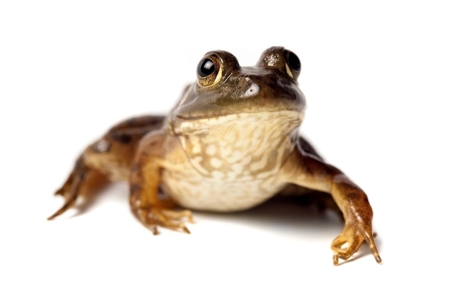
Do Frogs Poop?
Yes, frogs do poop. Like all animals with a digestive system, frogs process the food they eat and excrete waste.
What Do Frog Droppings Look Like?
Frog droppings have several physical characteristics beyond shape, color, or size that reflect the frog’s digestive process and diet:
Texture: Terrestrial frog droppings are usually firm or compact, holding together as cylindrical pellets. Aquatic frog droppings tend to be softer, moist, and sometimes stringy, dispersing easily in water.
Moisture content: Varies by species, diet, and habitat. Terrestrial species tend to produce drier droppings, while aquatic species’ droppings are more hydrated.
Consistency: Droppings can range from solid and pellet-like to pastelike or mushy, depending on water content and recent feeding. Hard, dry droppings indicate low water intake or dehydration.
Surface appearance: Often smooth, but may be slightly rough or granular due to undigested insect parts like exoskeletons or wings. Occasionally mucus-coated, which helps the feces pass through the cloaca more easily.
Segmenting or branching: Some droppings, especially in aquatic species, may appear as short connected segments or slightly branched strings, reflecting how fecal material exits the cloaca.
What Shape Are Frog Droppings?
Cylindrical or tubular: Most adult frog droppings are elongated and tube-like, reflecting the shape of the cloaca and intestines.
Pellet-like: In smaller frog species, droppings can appear as tiny, compact pellets similar to grains of rice.
Curved or slightly twisted: Some droppings may have a slight curve or twist due to how they are expelled from the cloaca.
Stringy or soft masses: Especially in aquatic frogs, droppings can be softer, sometimes forming short, string-like segments that disperse easily in water.
Speckled or textured: While not a distinct shape, some droppings appear irregular or speckled because of undigested insect parts like exoskeletons, wings, or legs.
What Size Are Frog Droppings?
Frog droppings can range widely in size, depending on the age and type of frog:
How Small Can Frog Droppings Be?
Frog droppings can be very small, especially in tiny species or juveniles.
Tiny frogs: Droppings can be as small as 2 mm long, about the size of a grain of rice or smaller.
Juvenile or newly metamorphosed frogs: Their droppings may be even smaller, sometimes just 1–1.5 mm, because their digestive tracts are very short and their meals tiny.
How Big Can Frog Droppings Be?
Frog droppings can reach up to 5–6 cm long and be quite thick, roughly the diameter of a pencil or slightly larger. Diet strongly affects size; a frog that has eaten many insects or a large prey item will produce larger, more substantial droppings.
What Color Are Frog Droppings?
The color of frog droppings can vary depending on the species of frog, their diet, and other factors. Frog droppings can be various shades of brown, green, or even black. The coloration is primarily influenced by the pigments present in the frog's diet and its digestive process. Here are some common color variations:
Are Frog Droppings Black?
Yes, frog droppings are often dark brown to black, especially in adult frogs that eat insects or other protein-rich prey. The dark color comes from digested food and waste products in the intestines.
However, they are not always pure black. Depending on the frog’s diet, species, and habitat:
Droppings can be dark brown, almost black.
They may appear greenish or olive if the frog consumes plant material, algae, or herbivorous prey.
Sometimes droppings are speckled or slightly lighter due to undigested insect parts.
So while black is common, the exact shade can vary.
Are Frog Droppings Brown?
Yes, frog droppings are commonly brown, ranging from light brown to very dark brown, almost black. The exact shade depends on factors like the frog’s species, diet, and whether it is terrestrial or aquatic.
Light to medium brown: Often seen in frogs that eat a mix of insects, small invertebrates, or some plant material.
Dark brown to almost black: Typical for adult frogs that consume mostly insects or protein-rich prey.
Speckled or mottled brown: Undigested parts of insects, like exoskeletons or wings, can create a textured appearance.
In general, brown is a typical color for frog droppings, though variations exist depending on diet and environment.
Are Frog Droppings Green?
Yes, frog droppings can sometimes appear green, though it’s less common than brown or dark brown. This usually happens when a frog’s diet includes plant material, algae, or herbivorous prey, which can give the feces a greenish tint.
Aquatic frogs that eat algae or plant matter often have softer, greenish droppings.
Terrestrial frogs generally produce darker brown droppings, but small amounts of green may appear if they have eaten insects with green body parts or vegetation.
So while green droppings are not the norm for most frogs, they can occur depending on diet and environment.
Are Frog Droppings White?
White frog droppings are not considered normal. Typically, healthy frog feces are brown, dark brown, or occasionally greenish, depending on diet. White droppings usually indicate an underlying health issue rather than a normal variation. Possible causes include:
Parasites: Many internal parasites (like protozoans or worms) can cause the feces to appear pale or chalky.
Fungal or bacterial infections: These can disrupt digestion, sometimes resulting in white or off-colored feces.
Kidney or liver problems: Metabolic or organ issues can lead to abnormal uric acid deposition, producing white, pasty droppings.
Dietary issues: A diet very high in calcium or certain supplements might occasionally create pale spots, but fully white droppings are usually pathological.
If white droppings are observed, especially if accompanied by lethargy, weight loss, or changes in appetite, it’s a sign that the frog should be examined by a veterinarian experienced with amphibians.
Are Frog Droppings Translucent?
No, frog droppings are not normally translucent. Healthy frog feces are usually opaque, ranging from dark brown to black, sometimes greenish or speckled, depending on diet.
If a frog’s droppings appear translucent or watery, it often indicates:
Excess water content: Aquatic frogs or frogs that have just eaten watery prey may produce softer, looser droppings that appear somewhat translucent.
Diarrhea: A sign of infection, parasites, or digestive upset, leading to unusually watery or translucent feces.
Dietary imbalance: Overconsumption of certain foods, especially very soft or water-rich foods, can temporarily change the consistency.
So while small amounts of moisture in droppings are normal, fully translucent droppings are generally a sign of a health or digestive issue rather than a typical characteristic.
How Do Frogs Poop?
Frogs poop through a process that is surprisingly efficient:
Digestion: After a frog eats—usually insects, worms, or small invertebrates—the food moves into the stomach, where digestive enzymes and acids break it down. From there, partially digested material enters the small intestine, where nutrients are absorbed.
Formation of waste: The indigestible parts of the meal, such as insect exoskeletons, move into the large intestine. Here, water is absorbed, and the remaining material becomes more solid, forming feces.
Excretion via the cloaca: Frogs do not have separate openings for excretion and reproduction; instead, they have a cloaca. This is a multipurpose cavity at the rear end of the body. The solid waste, along with urine, passes into the cloaca and is then expelled from the body through a muscular contraction.
Physical process: When a frog is ready to defecate, it usually crouches and slightly arches its body. Muscles in the cloaca contract to push the waste out. This can sometimes be accompanied by the release of urine, since the cloaca handles both functions.
Essentially, a frog’s poop is the endpoint of its digestive process, expelled through a specialized, multifunctional opening in a way that efficiently removes waste and conserves water.
Where Are Frog Droppings Found?
Home and business owners are most likely to find frog droppings in areas that provide moisture, shelter, and food for frogs. Key locations include:
Near water sources: Ponds, fountains, birdbaths, rain barrels, or drainage ditches attract frogs. Droppings are often found on the banks, nearby soil, or in shallow water.
Damp or shaded areas: Frogs seek cool, humid environments. Droppings can appear under shrubs, dense vegetation, mulch beds, or near garden edging that retains moisture.
Under outdoor structures: Frogs often hide under decks, porches, steps, or storage sheds during the day. Droppings may accumulate in these sheltered spots.
Near lights that attract insects: Frogs feed on insects, which are drawn to outdoor lighting. Droppings may be found close to doorways, patios, or around exterior lights, particularly at night.
Grassy or landscaped areas: Lawns, flower beds, and groundcover provide hiding places and hunting grounds. Droppings are often scattered across these areas, sometimes near stone or log borders.
Around entry points: Occasionally, frogs may enter basements, crawlspaces, or garages seeking cool, damp environments. Droppings in these areas indicate indoor presence.
Frog droppings are concentrated where food, water, and shelter intersect, and they are most visible in damp, shaded, or lightly trafficked areas rather than open, dry spaces.